Ritual of cutting off children's matted hair
Dieng Plateau, Central Java
The inhabitants of the Dieng Plateau of Central Java, have kept a rather strange ritual – of cutting off children's heavily matted hair (hair which we would now call 'dreadlocks'). People think this ritual dates back to the 14th century. Children with matted hair are said to be special, and under the protection of the goddess of the Southern Seas – Rata Kidul. Local people believe the more such children there are, the better the welfare of the community will be. So the more children with dreadlocks, the more the goddess will work for the community, to enrich the people who live there. This means that the matted hair can only be cut off during the period of a special festival – and only if the child asks for it. Cutting off the dreadlocks can be the key to their future well-being. At present, the hair-cutting day is determined as the main ritual in the Dieng Cultural Festival.


So the more children with dreadlocks, the more the goddess will work for the community
People prepare for the festival in advance – it consists of several stages, of which washing the hair is just the first. It's a process carried out at the Dharmasala Temple, near the shrine of Arjuna. These days the hair isn't actually washed – they just make the ceremonial motions of washing it. The child's head is washed in water from the holy well, which is considered sacred.


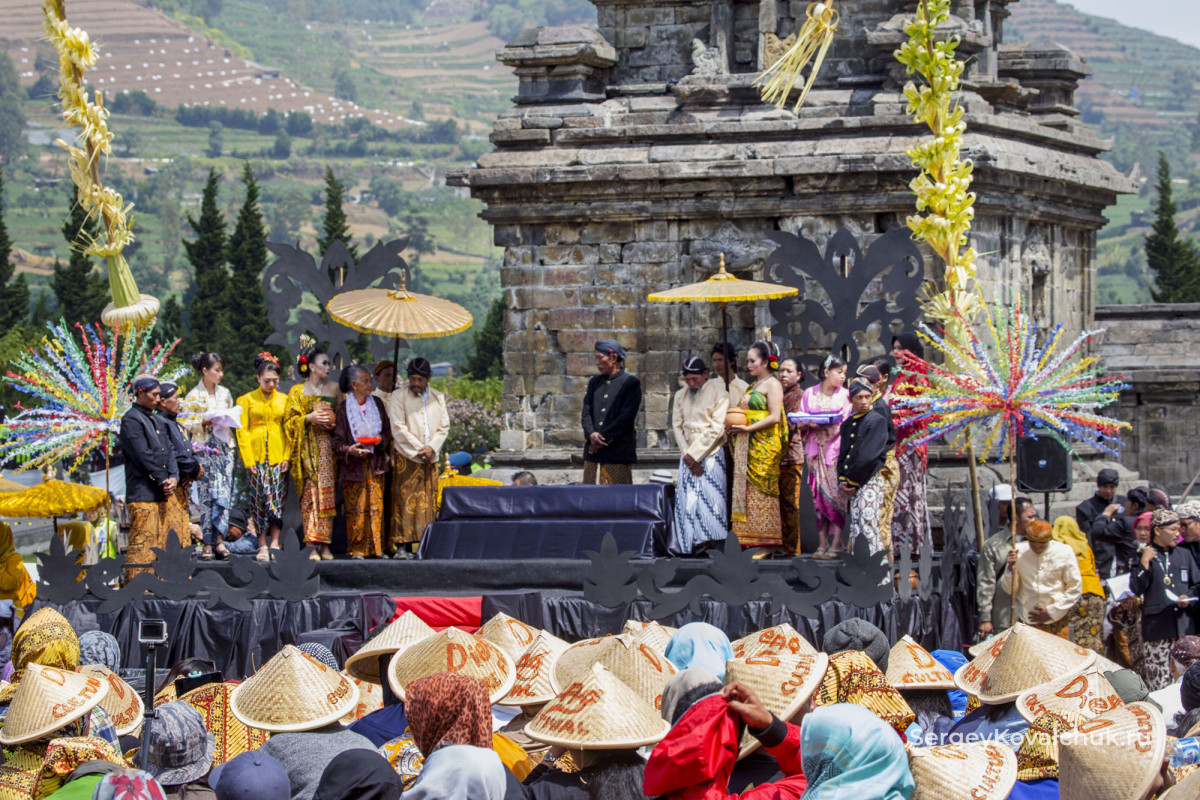
The hair-cutting itself happens right in front of the Arjuna shrine – where a large number of the festival's attendees gather. Worth mentioning that you will need a special ticket to be able to get to this location, and some other festival locations too. The ceremony is attended by VIPs, including government officials, and admission is by invitation only. Non-invited visitors can get a glimpse of the ceremonies, but through the gratings in the fence.
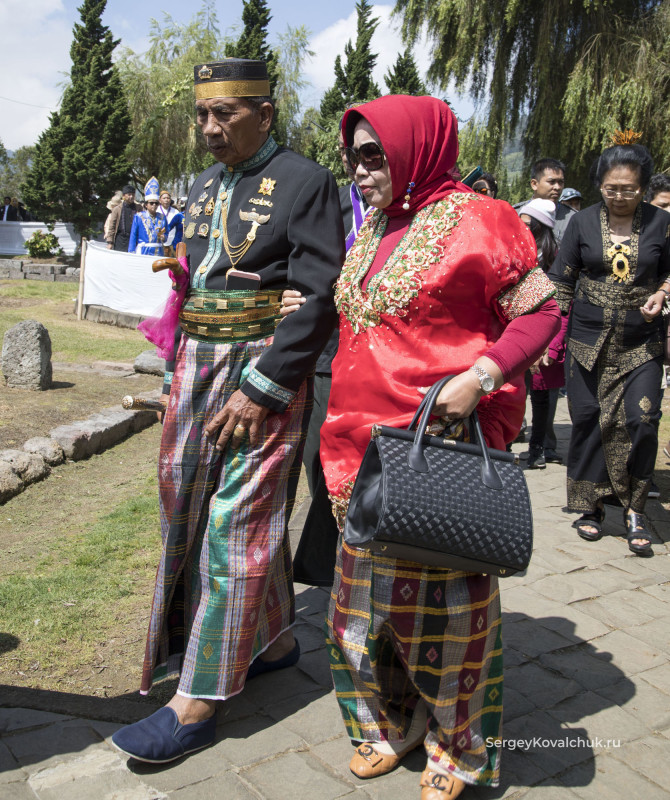
The ceremony is attended by VIPs, including government officials





In the small area known as the Dieng Plateau there are more than twenty active volcanoes – as well as smoking volcanic craters, bubbling geysers, and sulphuric lakes. The city of Dieng itself is situated at 2000 metres above sea level – in the caldera of an extinct volcano. There are three geothermal power plants, operated with boiling water, sunk into the plateau, and they distribute electricity to other regions. Since the earliest times, Dieng has been a site of cult worship, where people prayed to the spirits. Between the 8th and 13th centuries, it's estimated over 400 Hindu shrines were built here – yet only eight remain today. These small shrines are the oldest stone temples to be found in Java.