Cigar making
Cigars! Probably the most famous Nicaraguan product! About 140 thousand people live in Esteli, the center of cigar production. And most of the population is employed in the tobacco industry.
Driving through the city, you can see cigar factories of various sizes. And, the smaller the factory, the more beautiful it has a coat of arms-logo on the gate.
Cigar production is a rather complicated and rather harmful process for production workers, which has been developed to the modern state for several hundred years. The technology and culture of cigar production in Nicaragua came from Cuba.
And, before the cigar turns out to be a fan of smoke, it is necessary to perform many different technological operations.
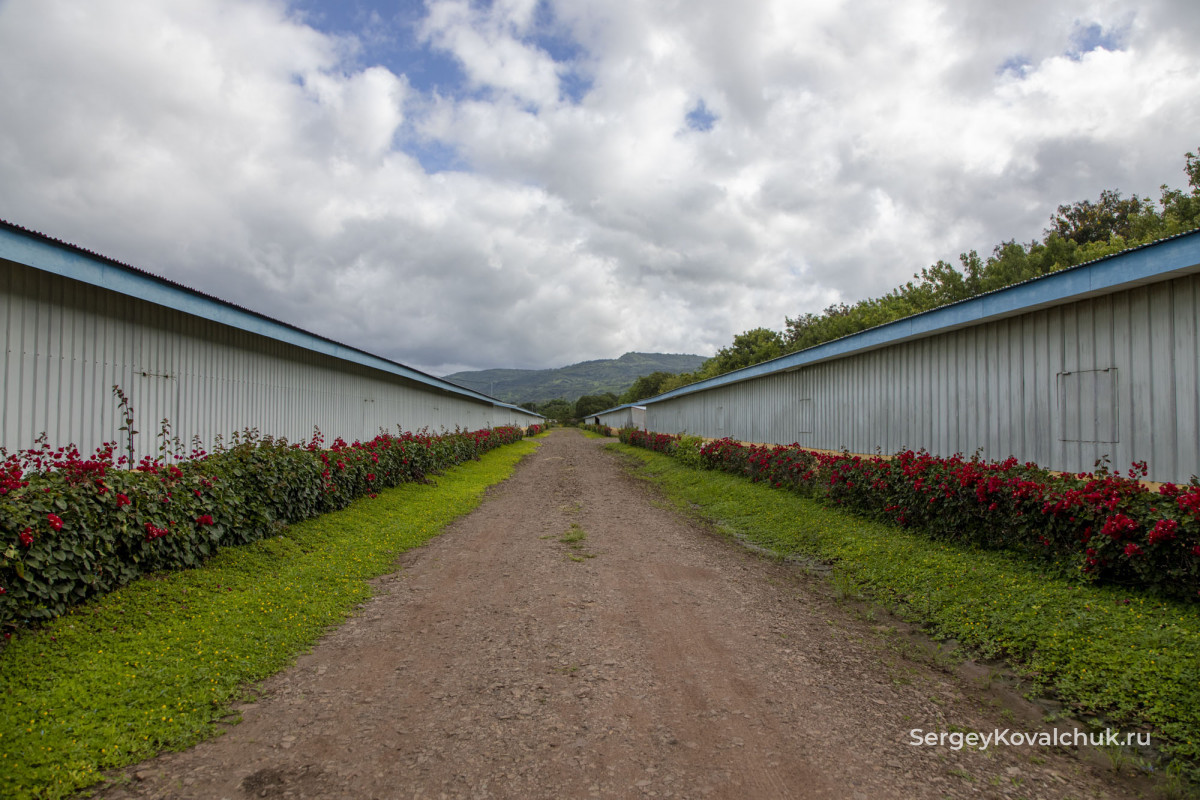
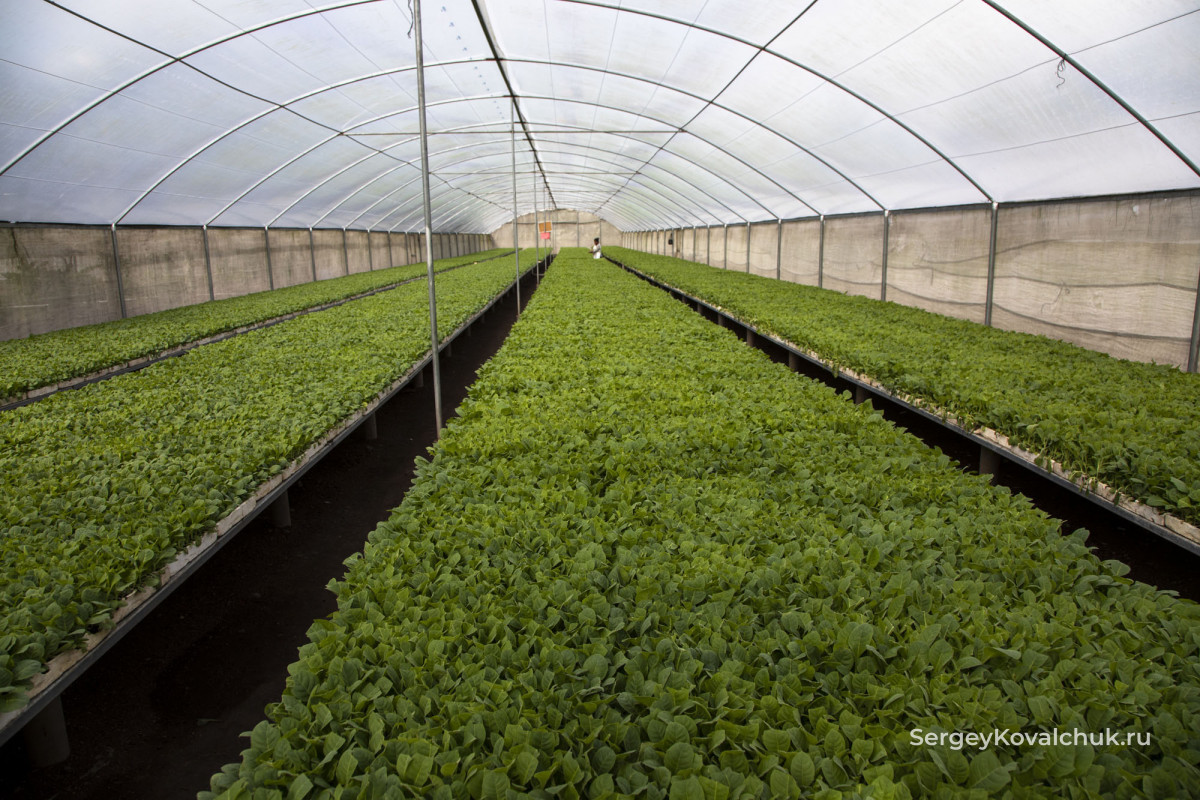
Of course, it all starts with growing tobacco! This is a multi-stage agricultural technology. Moreover, all operations are done manually. The first part of the process – the preparation of seedlings – takes place in closed greenhouses.
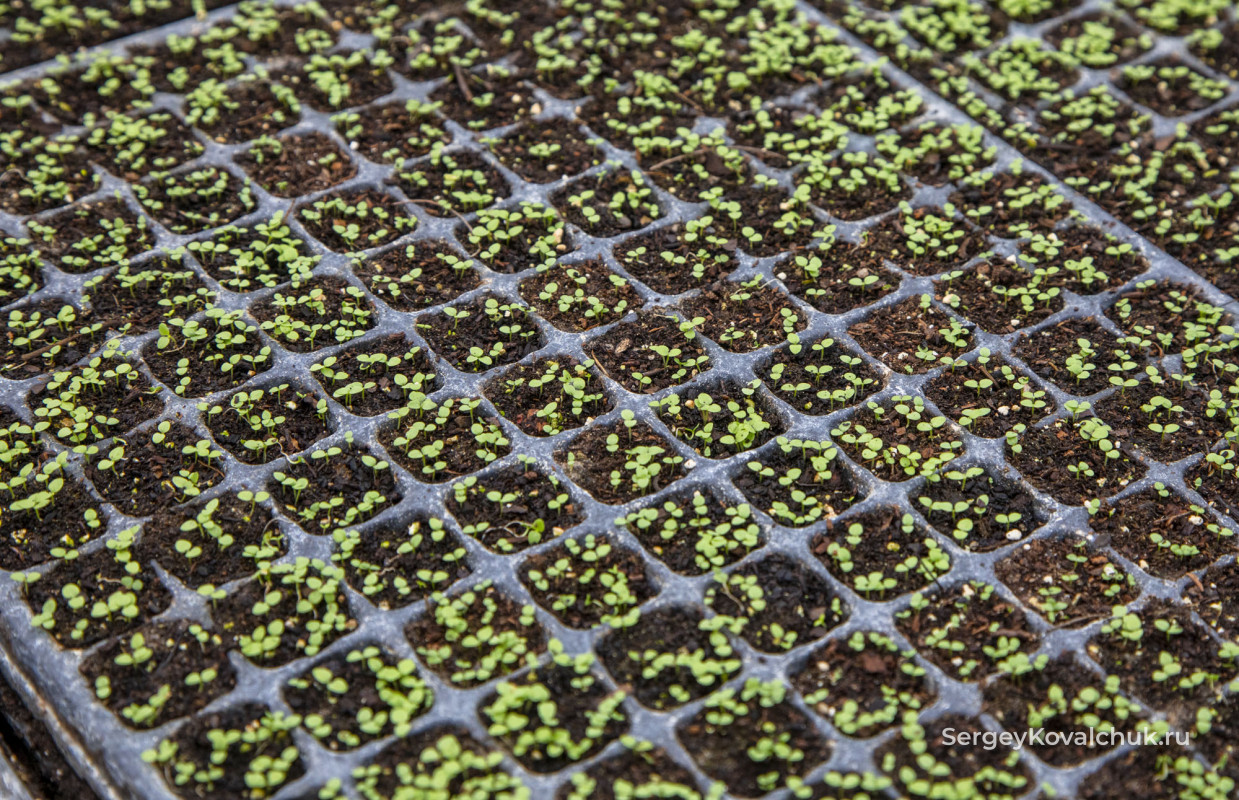
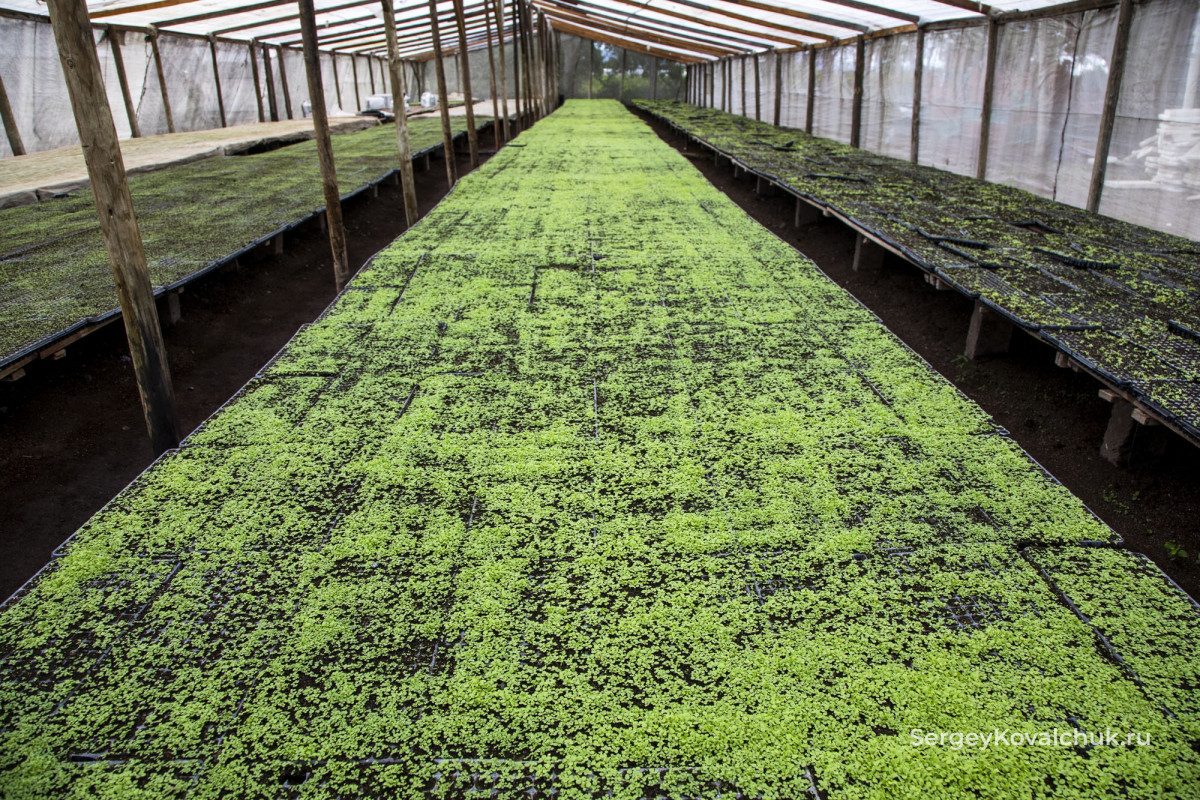
Seeds are sown and sprouted small green sprouts.
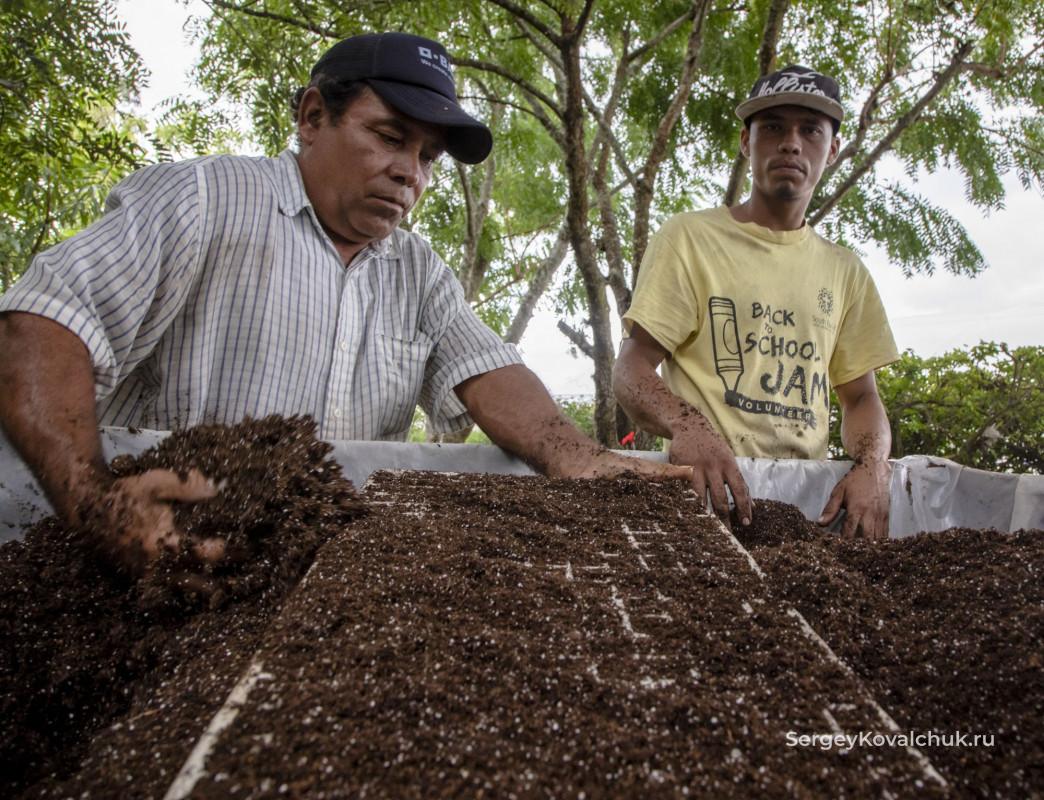
Men fill foam molds for seedlings with soil.
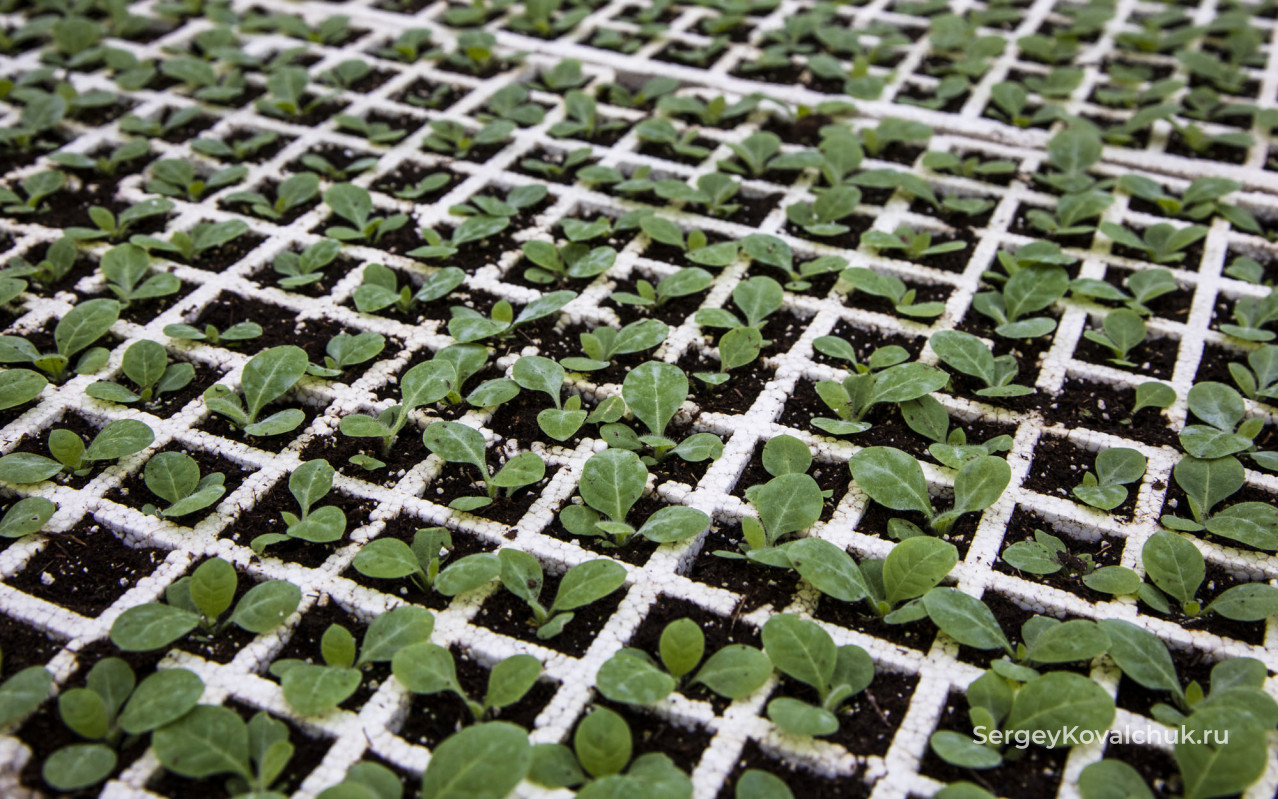
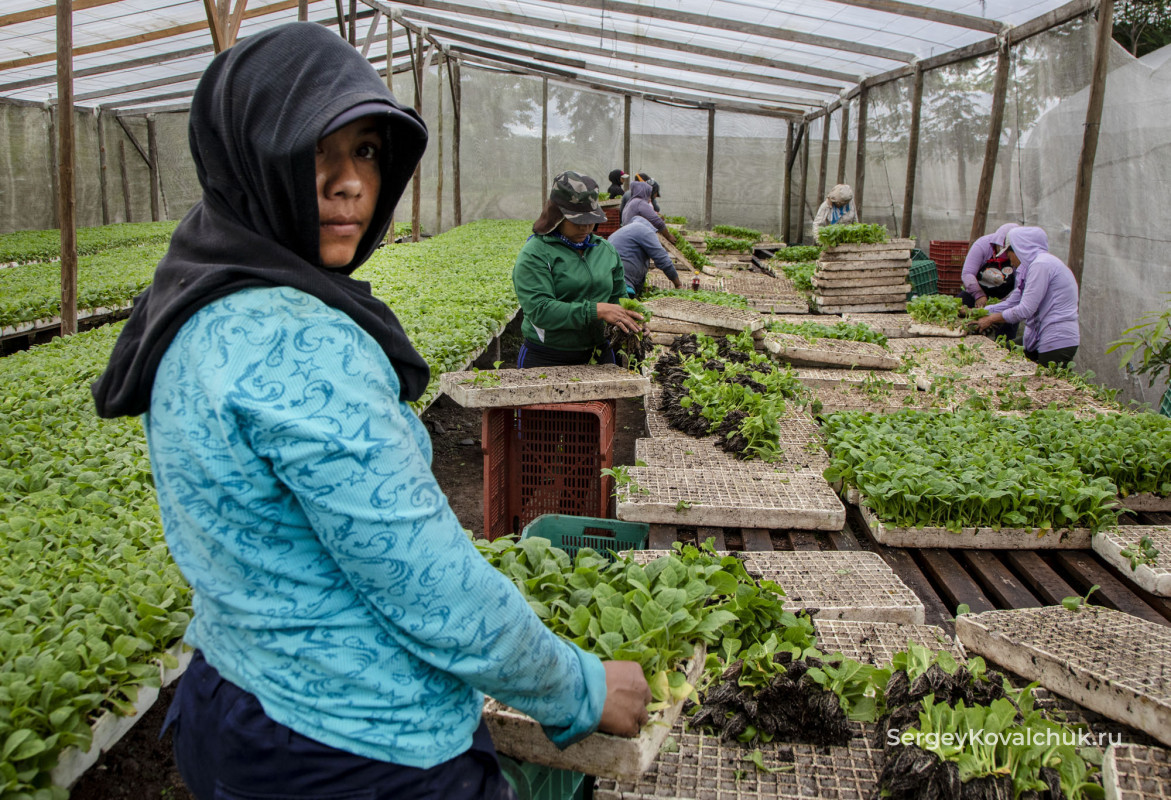
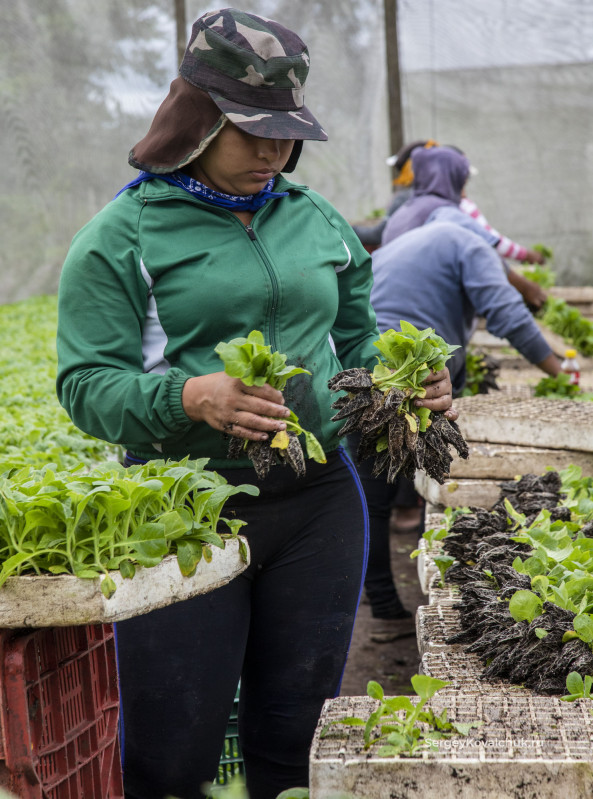
Sprouts gently, with gentle female hands, are planted one at a time in special cellular forms filled with soil. In each cell – one sprout.
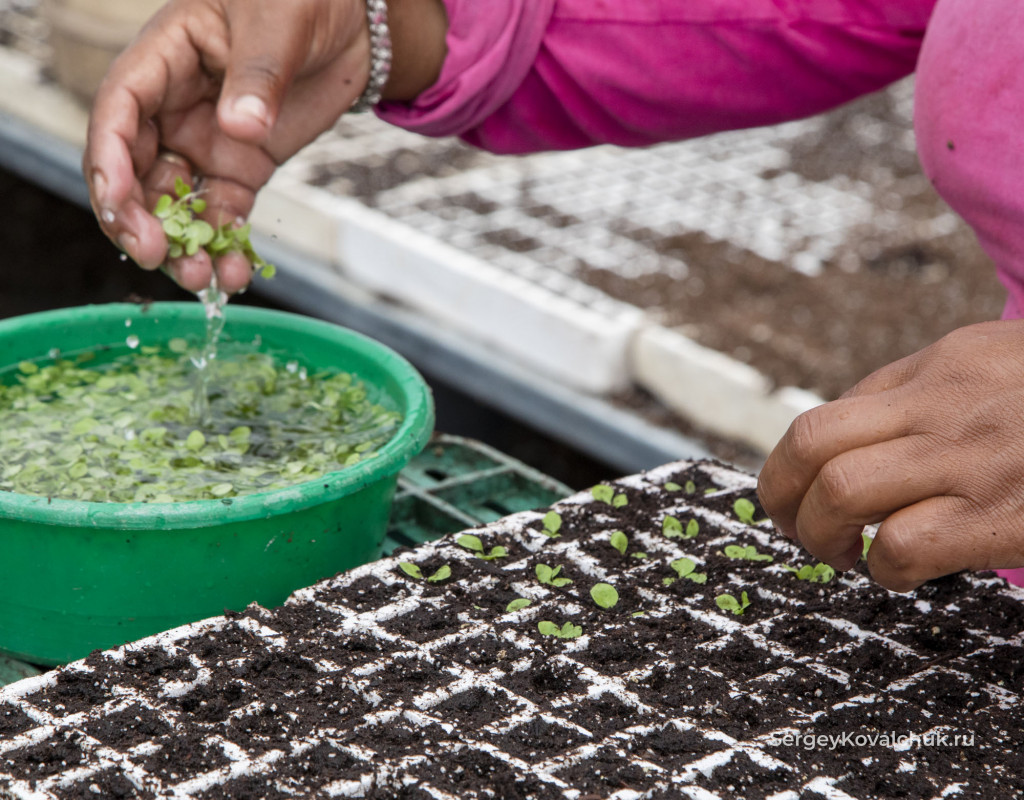
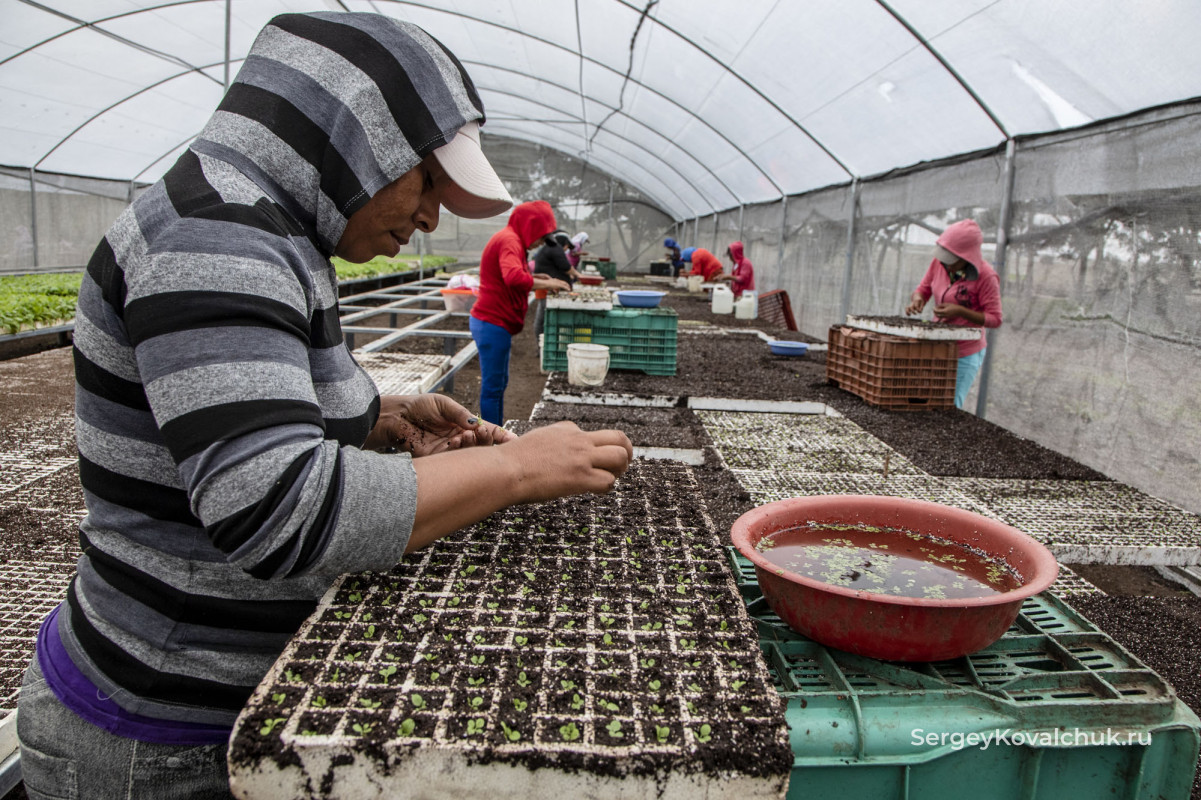
And already there they grow up to the size of planting on the field.
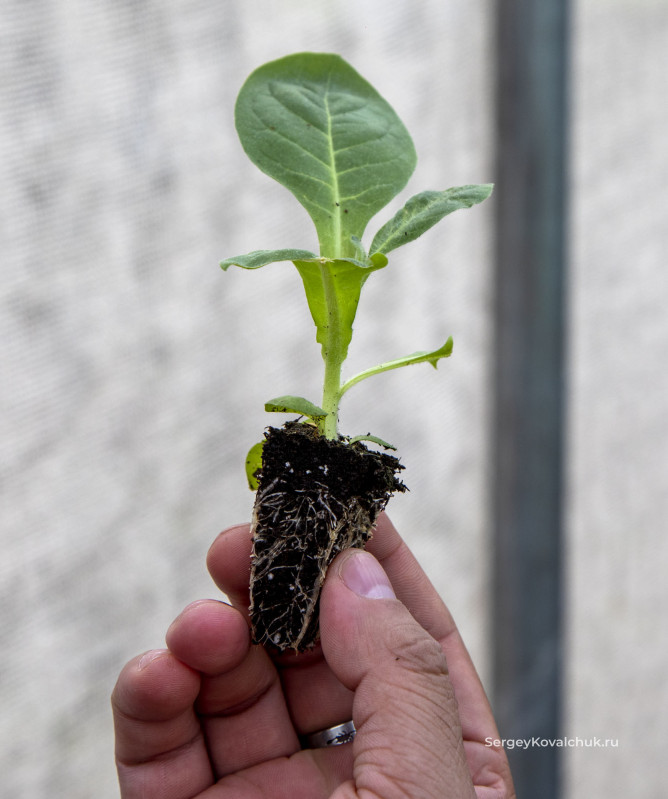
Here is a sprout planted in open ground.
Workers prepare seedlings of tobacco for planting on the field.

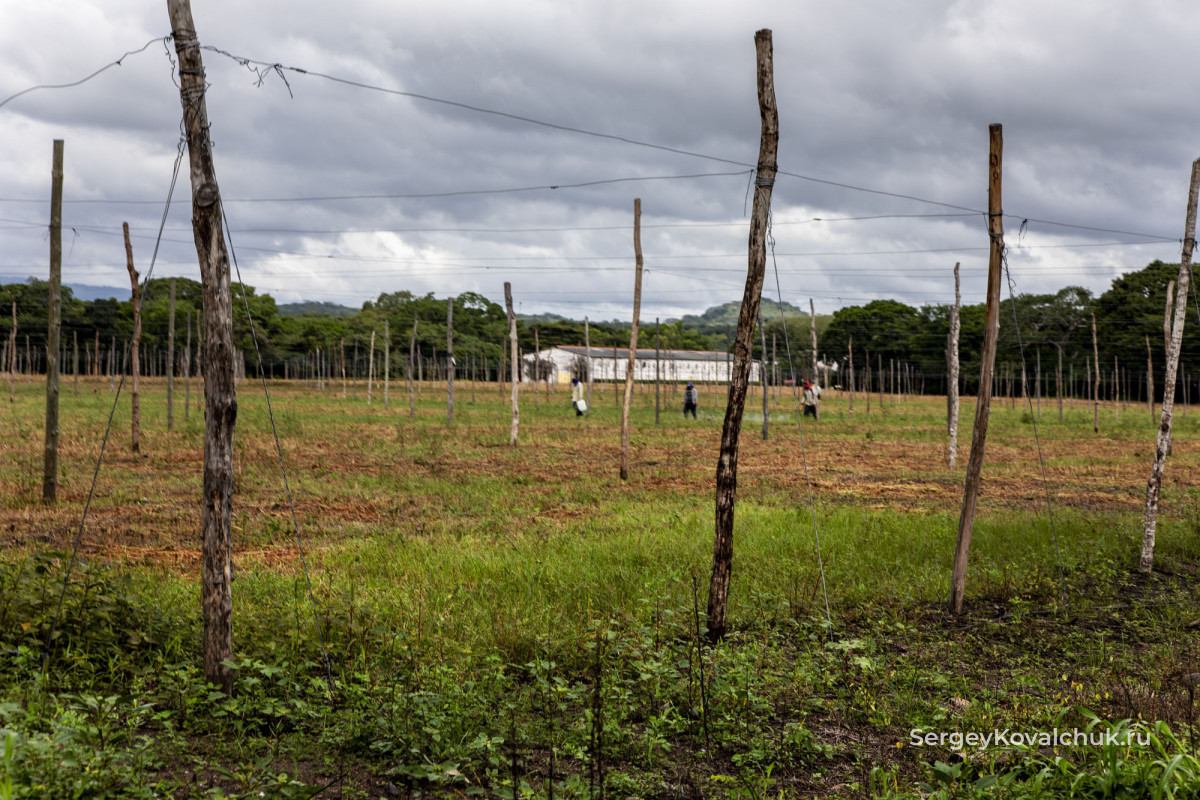
A field is being prepared for planting seedlings. Poles and ropes stretched between them are needed to organize the shelter of young plants.
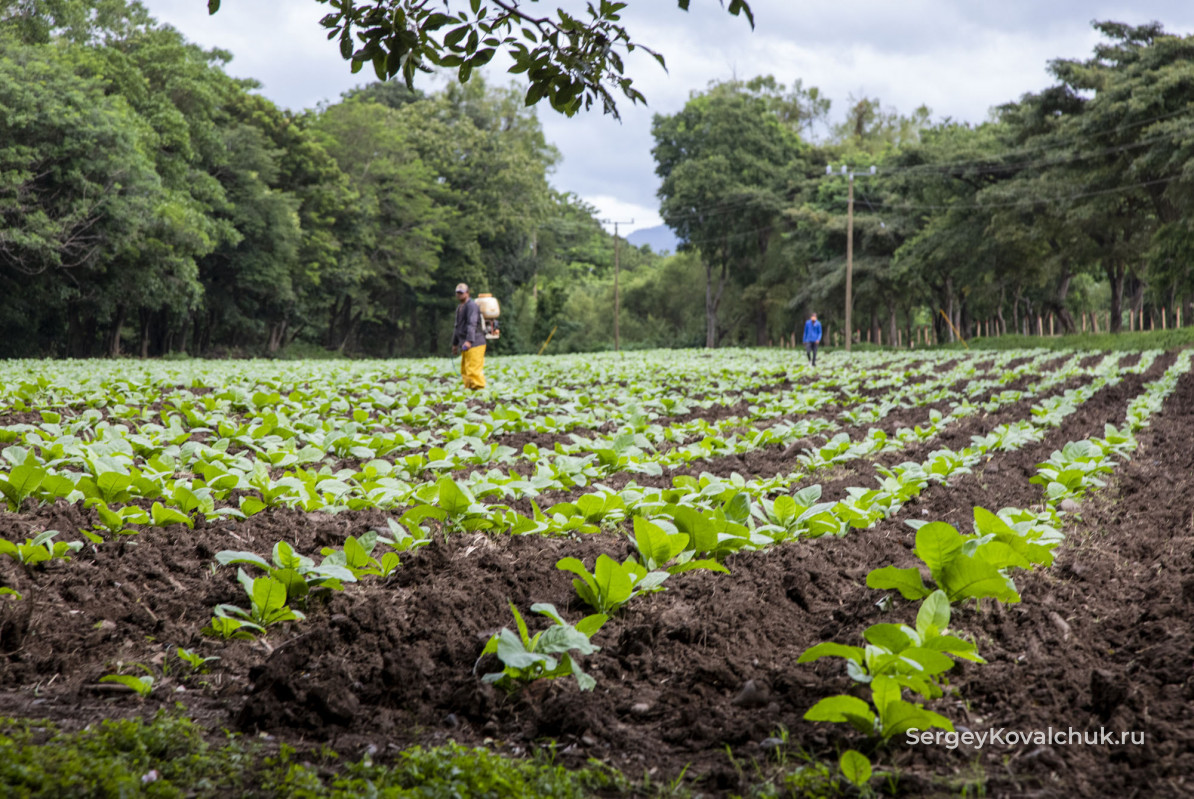
Tobacco seedlings grown on the field.
I was at a cigar factory in Esteli in November. Then the tobacco planting season was just beginning here. After 4 months, in February there is a collection of tobacco leaves. In the photo – tobacco plantations on the island of Ometepe.
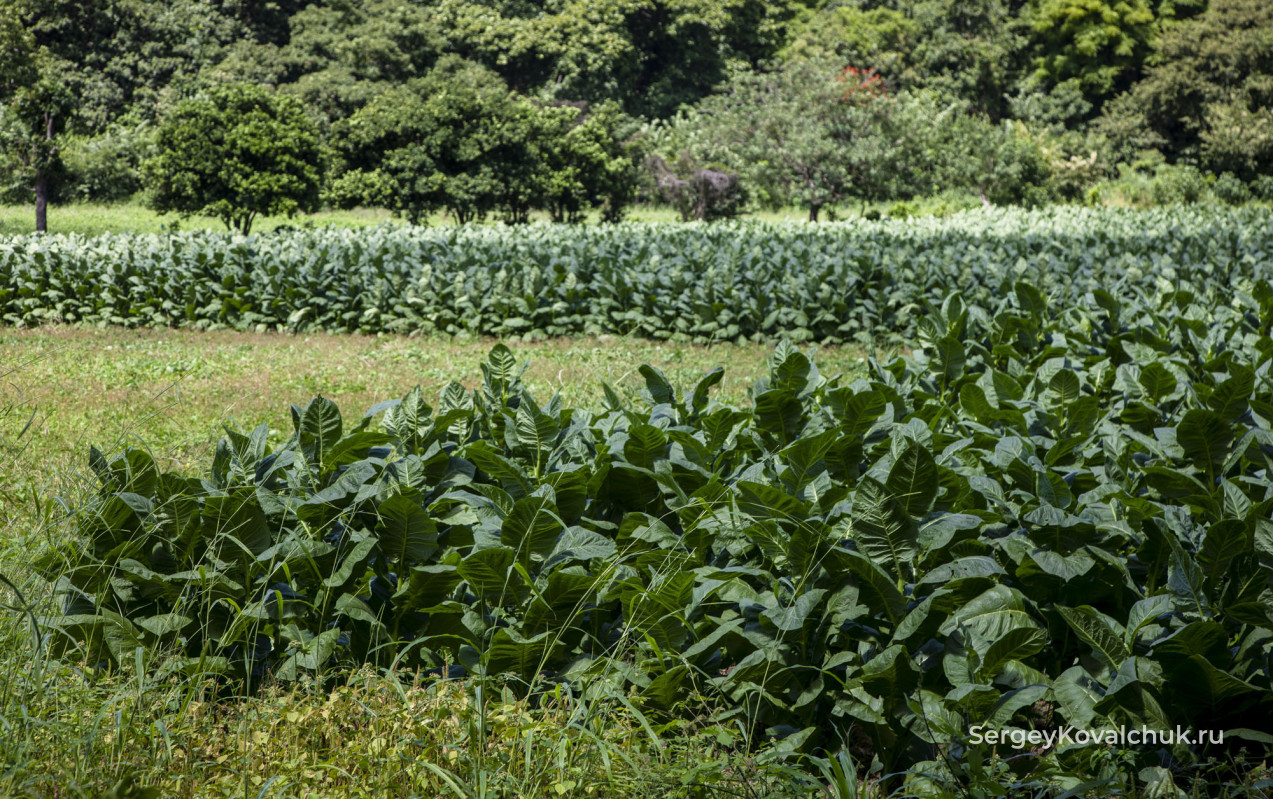
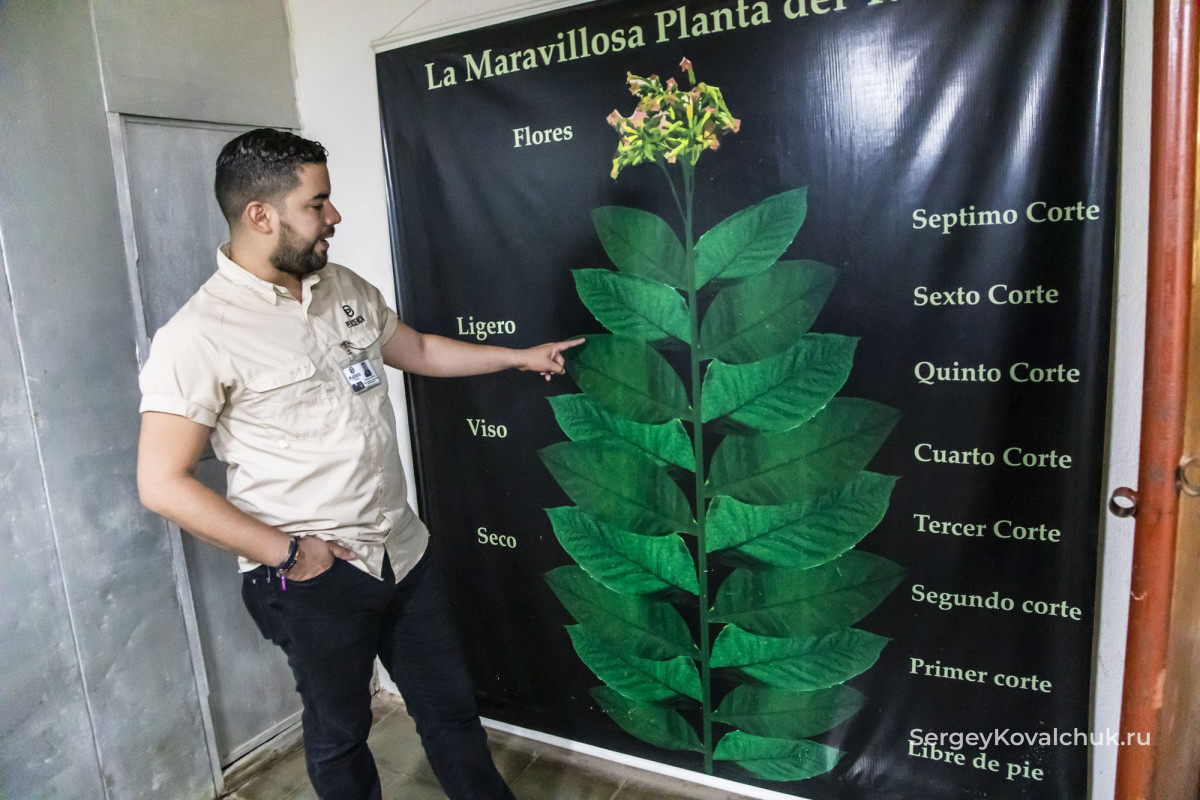
Leaves in a tobacco bush, growing at different levels, have different properties. So, the topmost leaves have a maximum nicotine content.
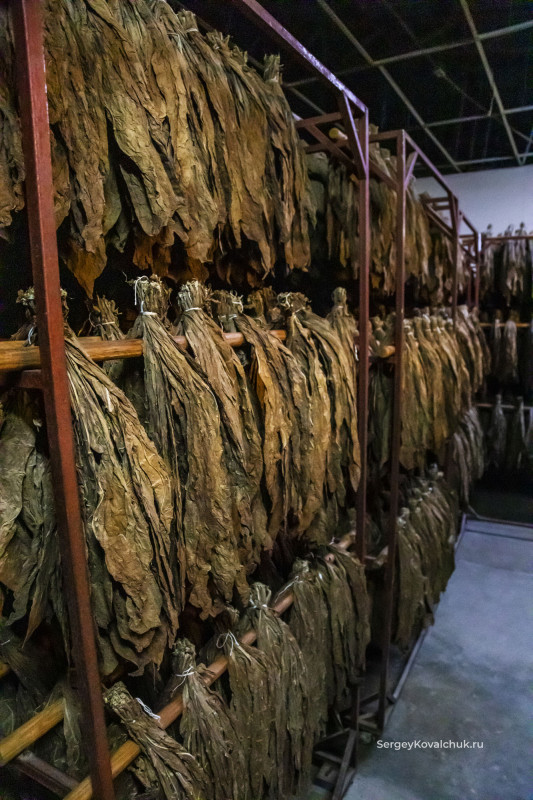
The collected leaves are dried in special chambers.
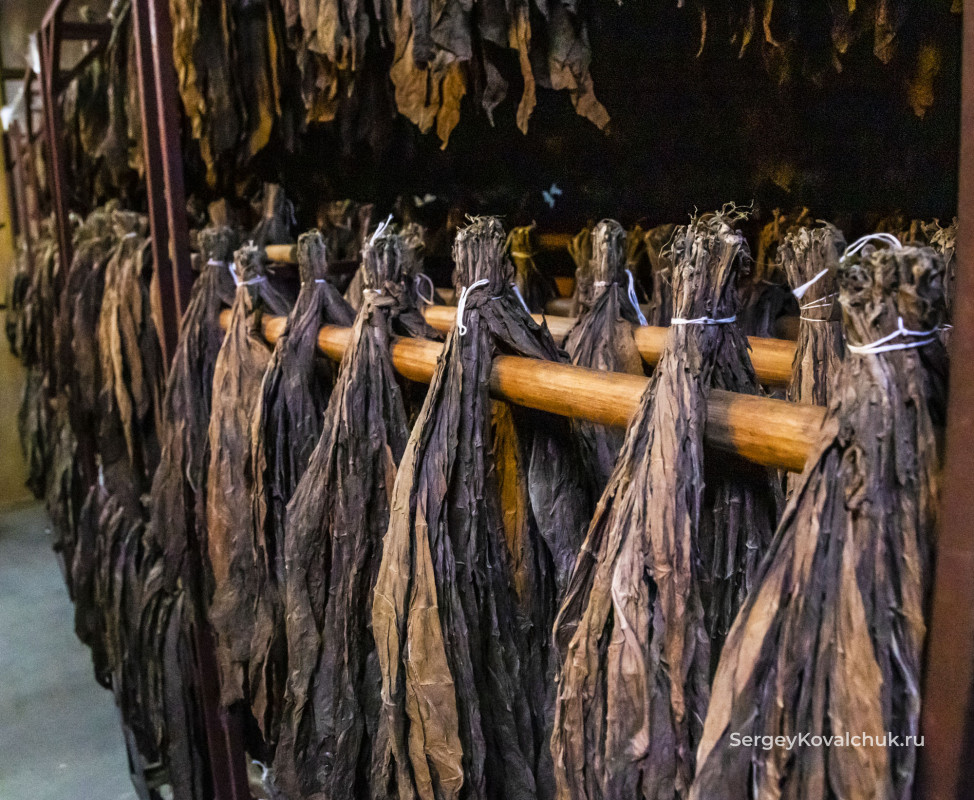
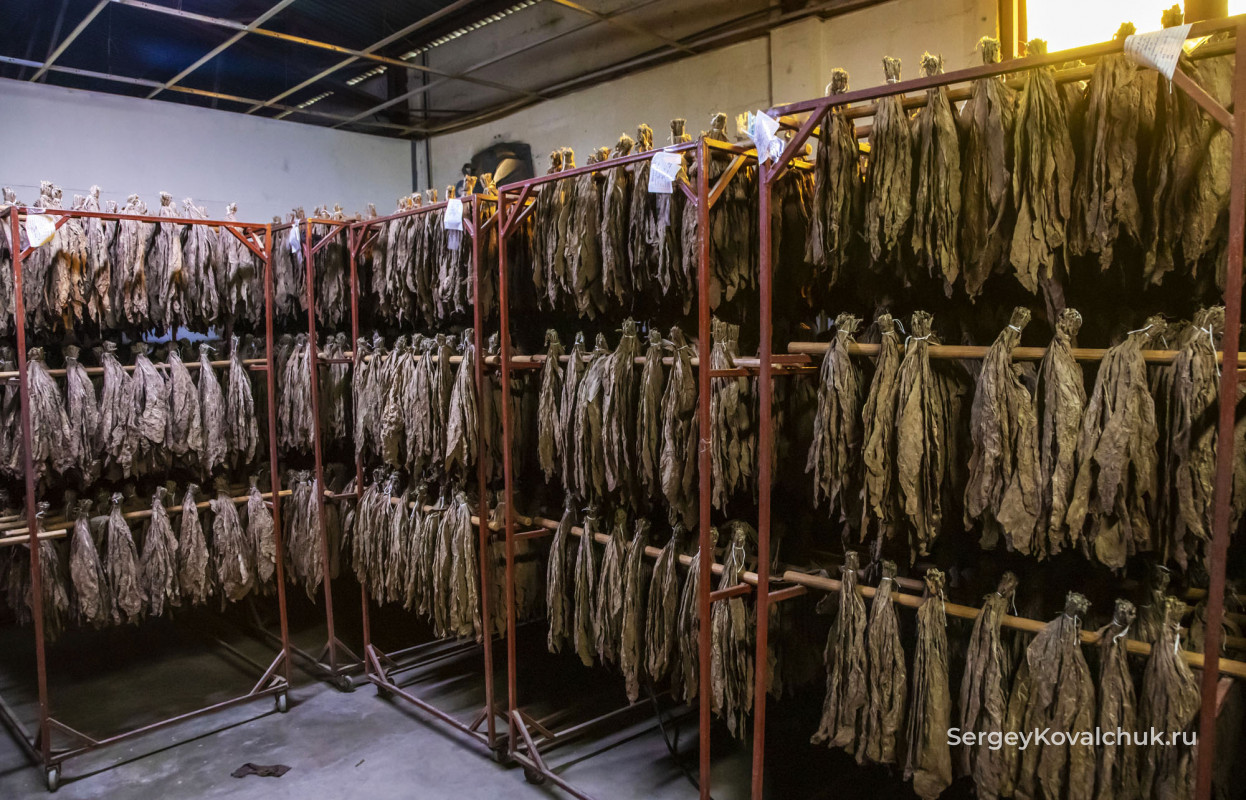
After drying, the leaves are stacked and kept for several weeks. Fermentation occurs.
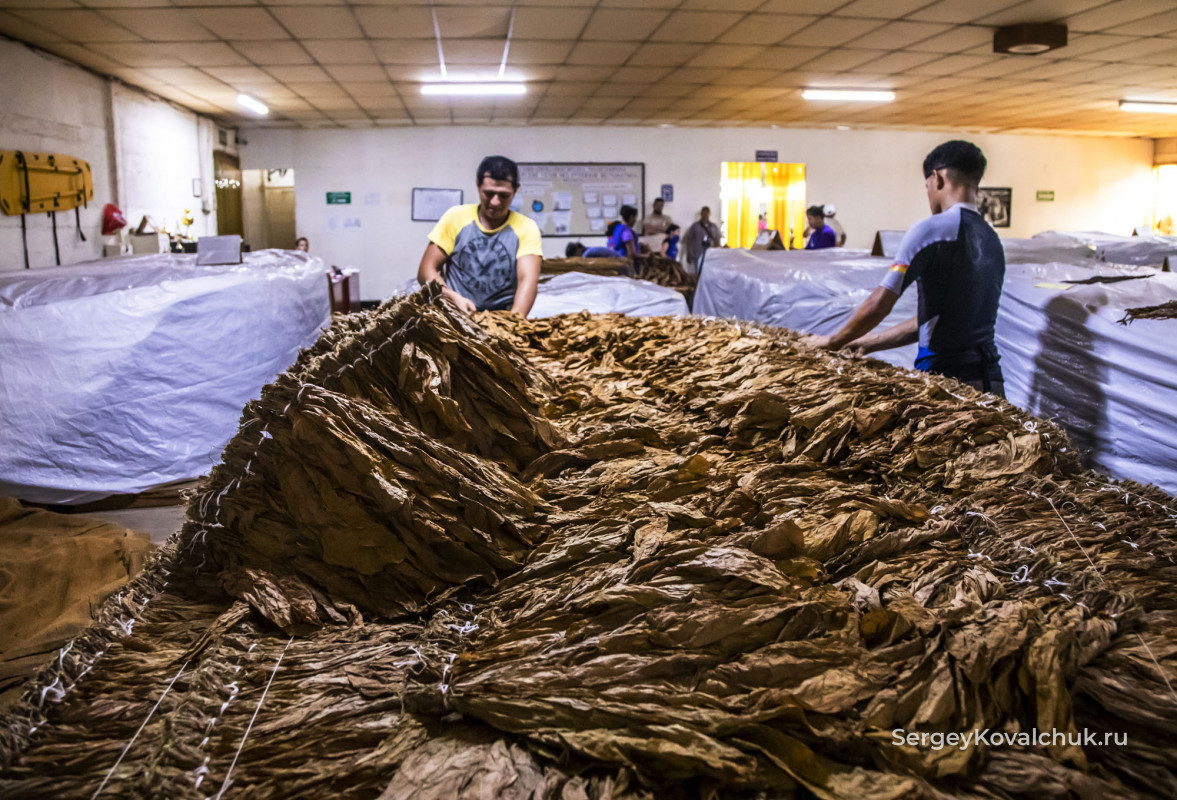
At the end of the fermentation, the stacks are moved, with each branch being removed and shaken. It is absolutely impossible to breathe. This is probably the most harmful operation.
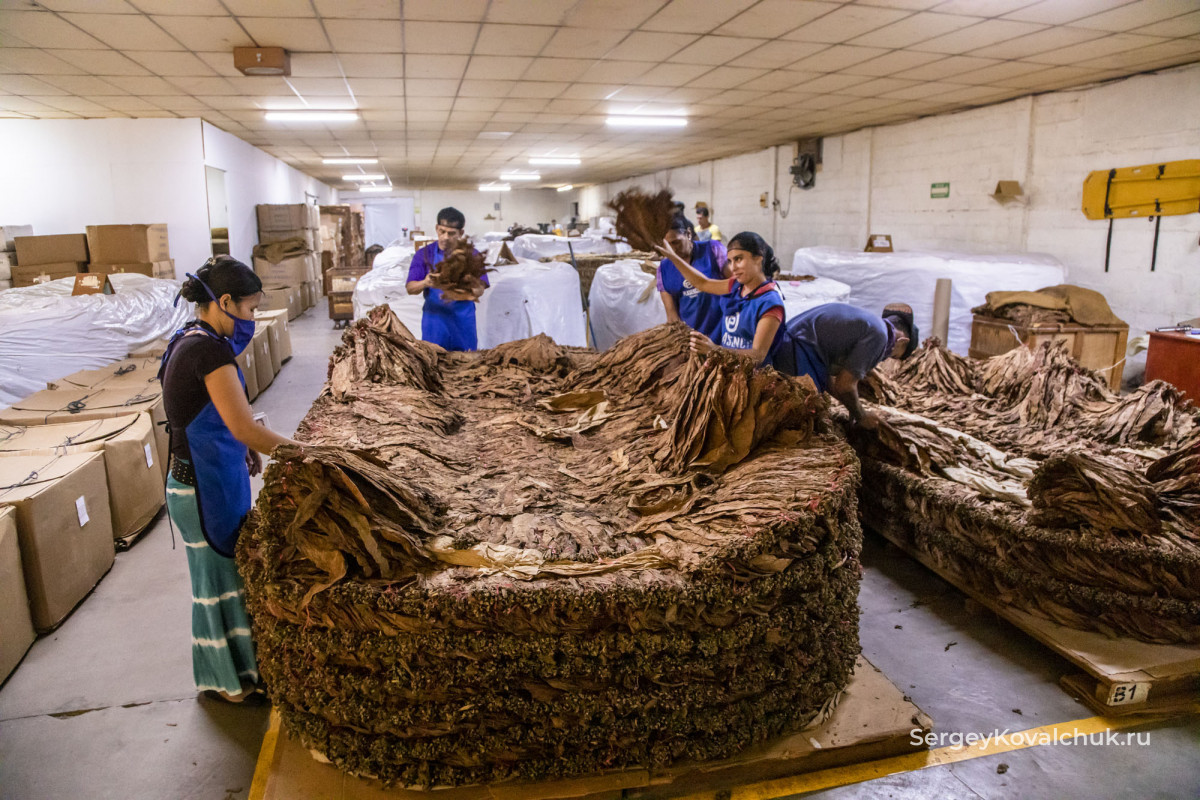
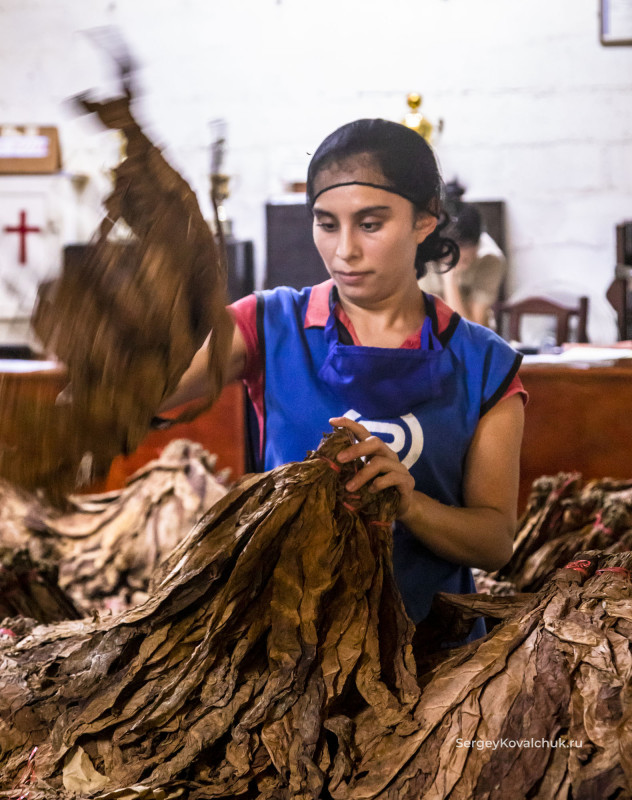
Further tobacco leaves are laid out on smaller briquettes and sent to a warehouse for aging. Usually, for a year or two.
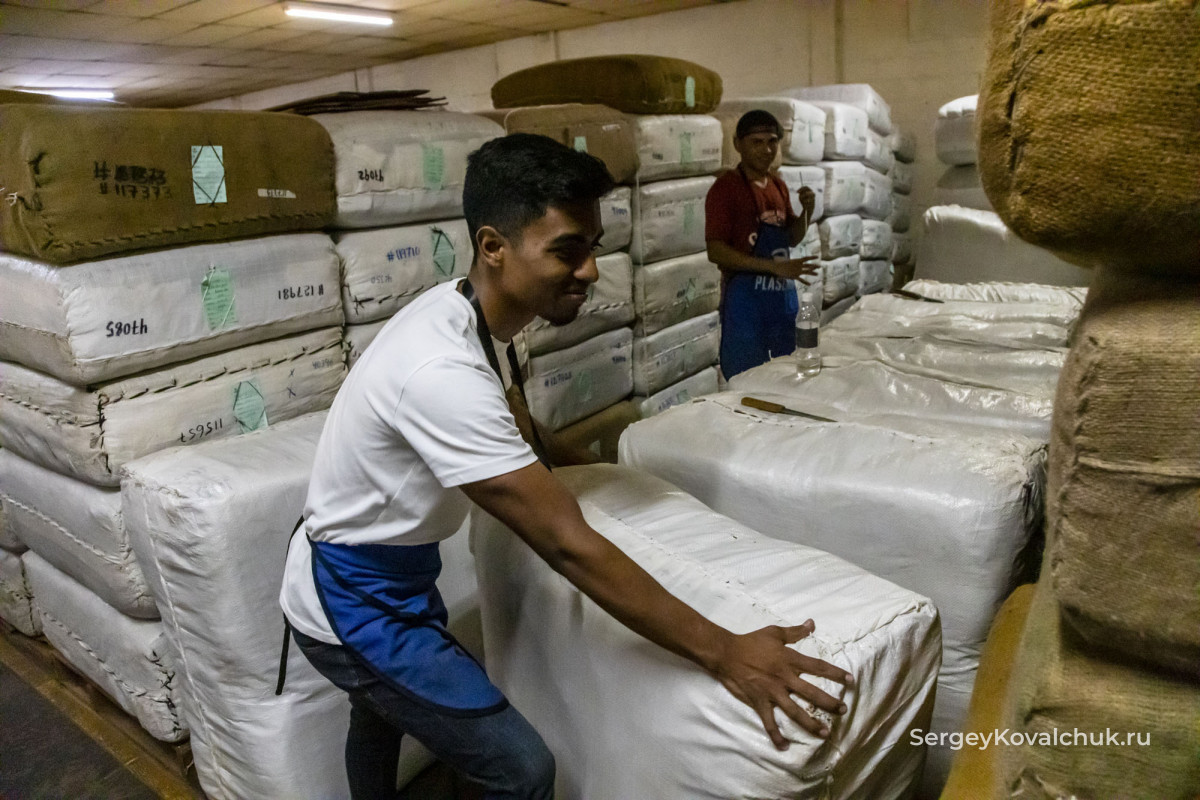
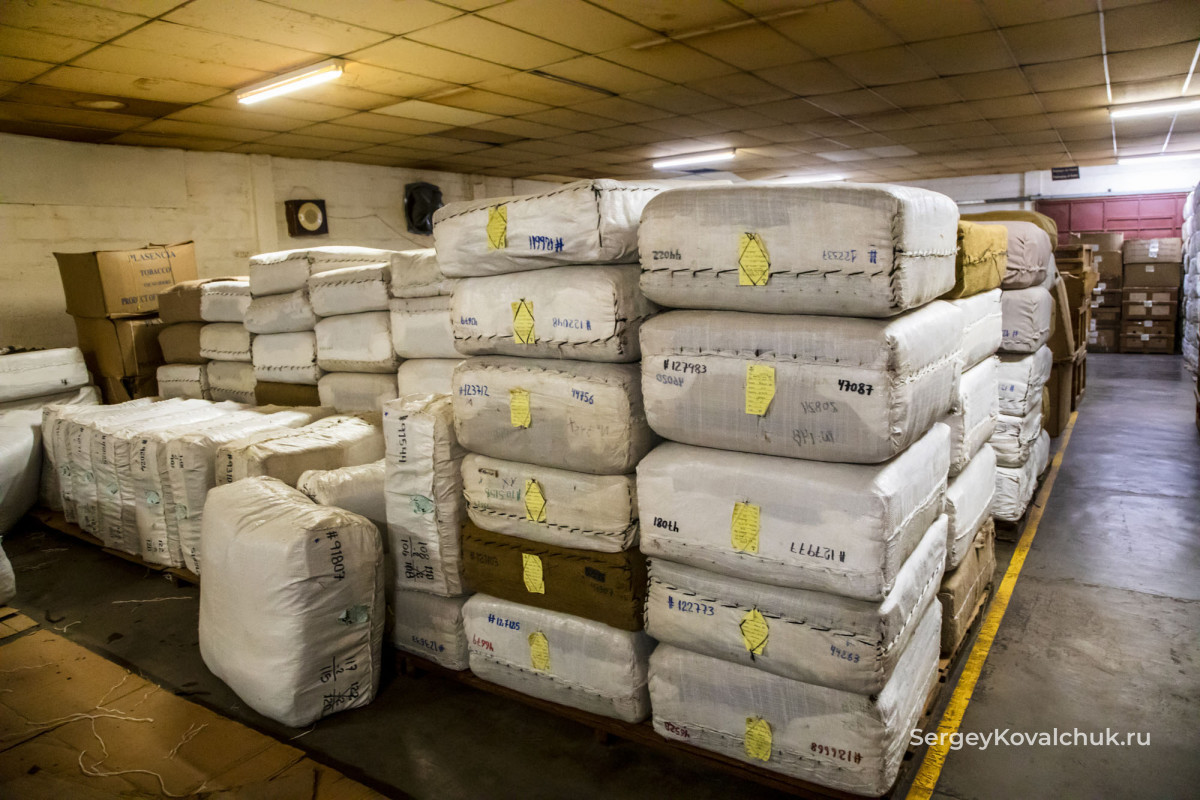
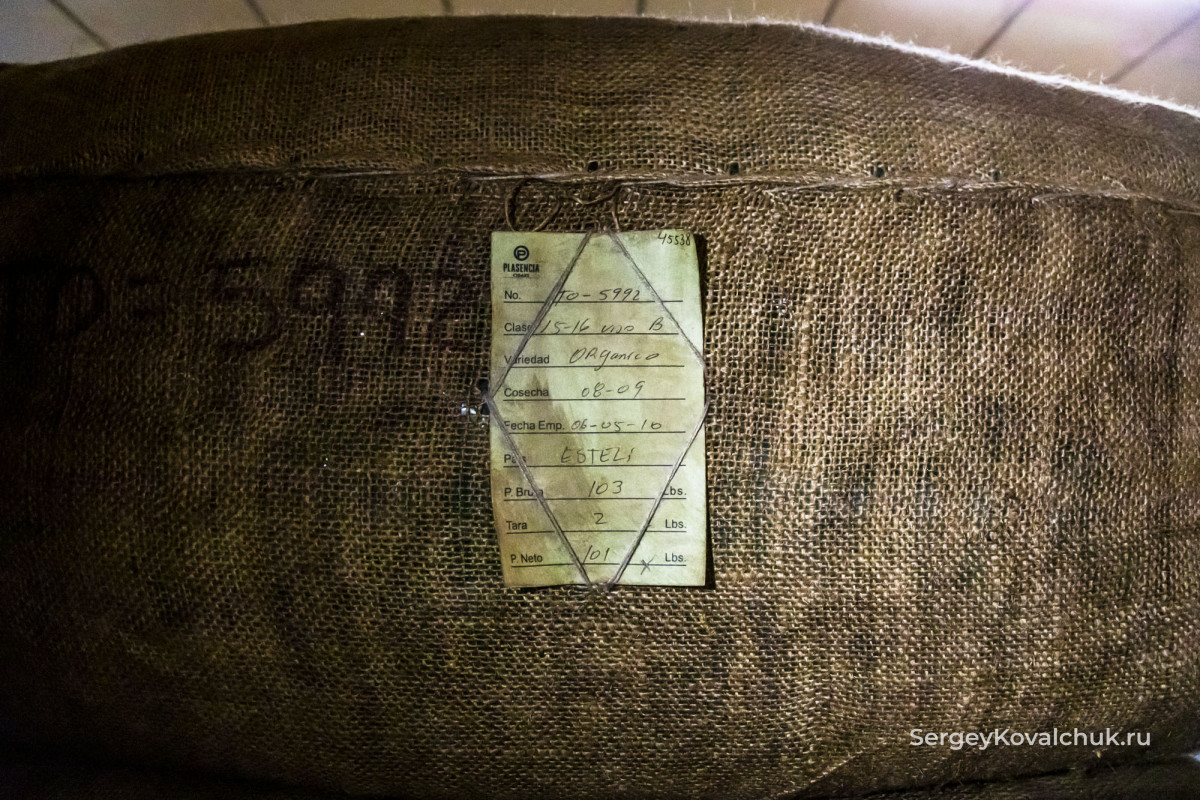
They showed me ten-year-old tobacco. Just like in winemaking!
The next operation is sorting. Leaves are sorted into different categories, including color.
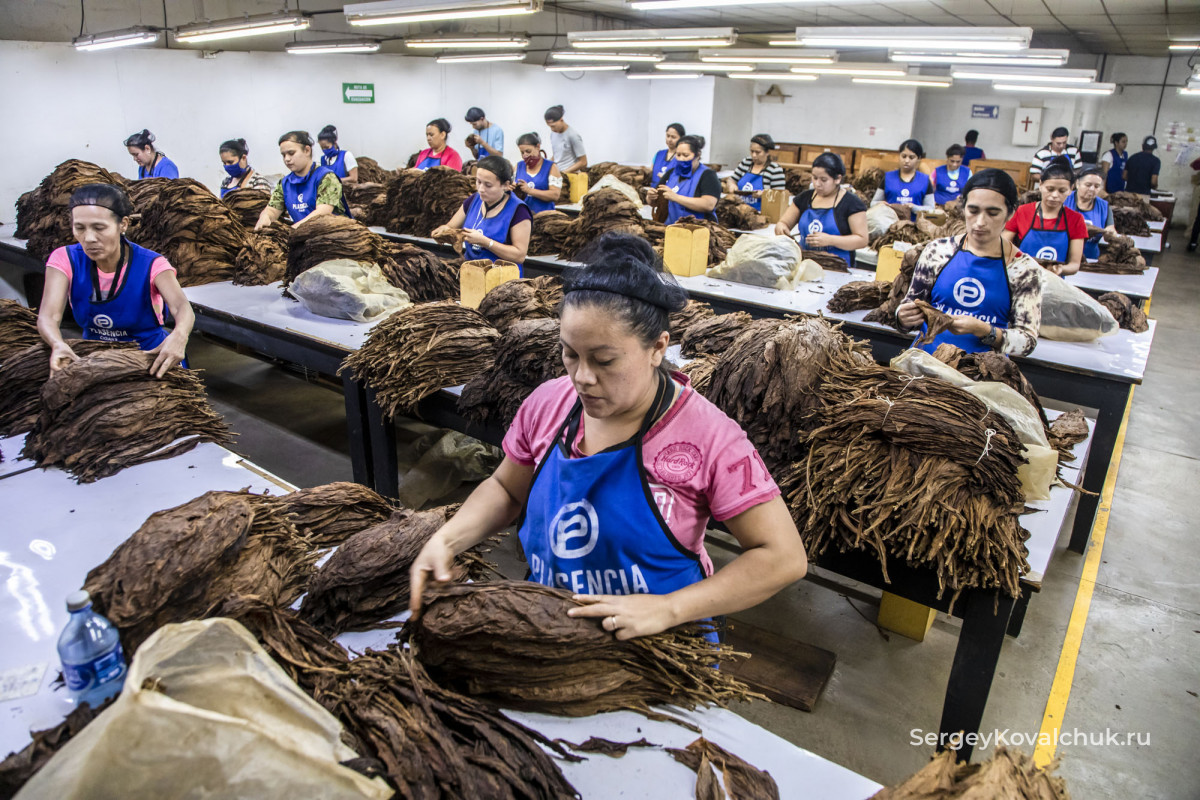
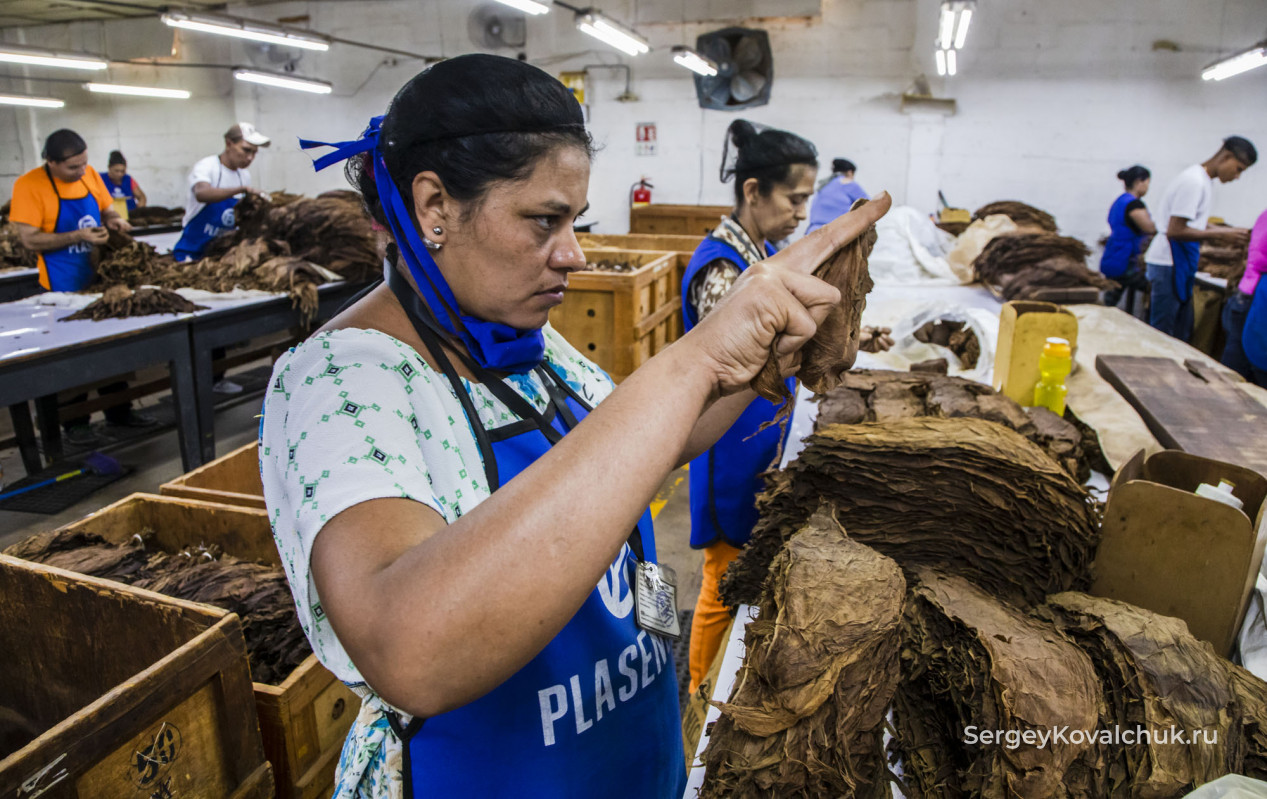
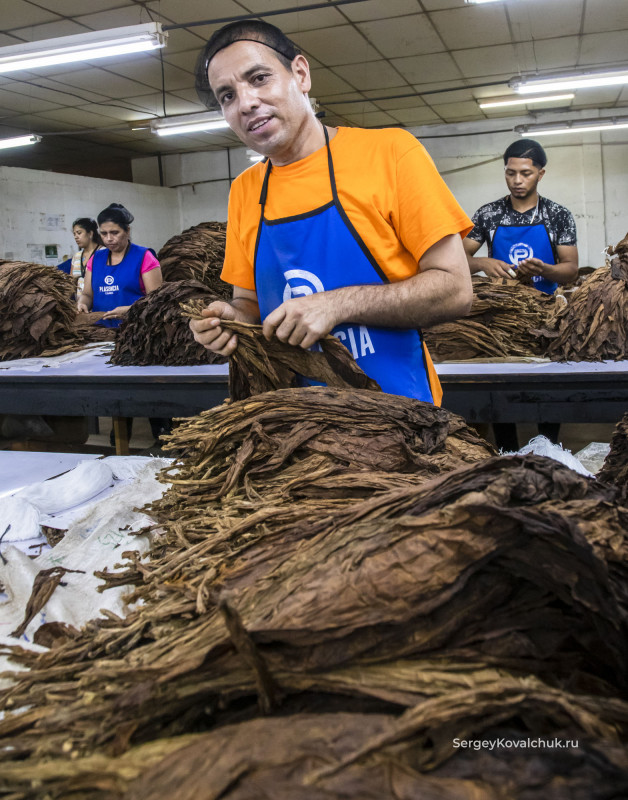
The next workshop is a wet operation. The moistened leaves of tobacco are straightened and from them practically flat leaves are obtained.


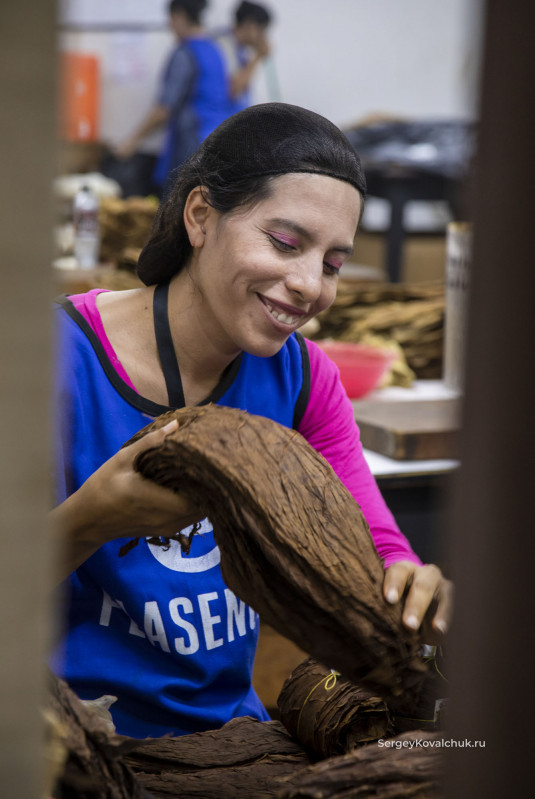
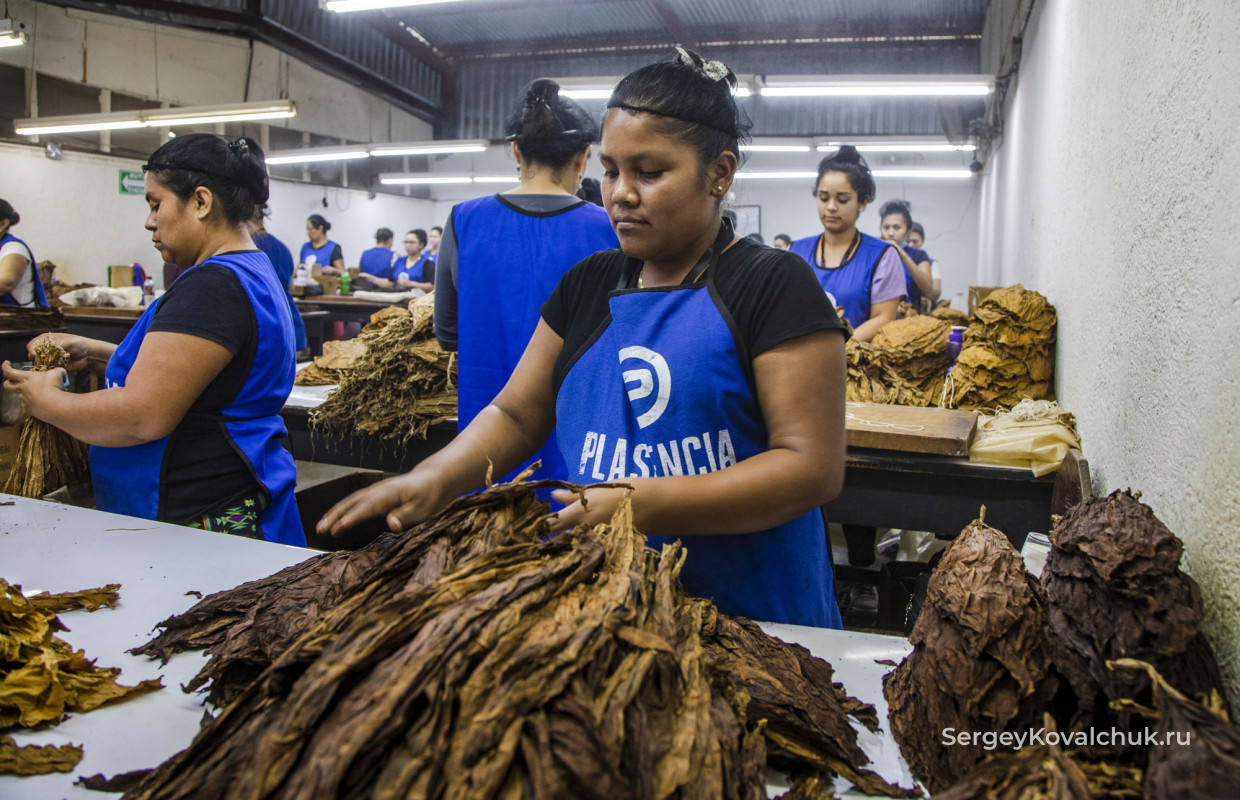
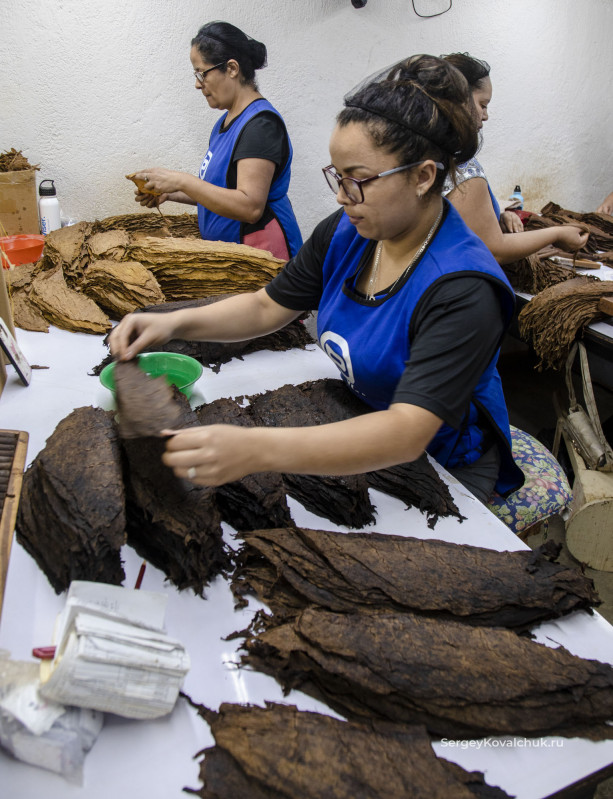
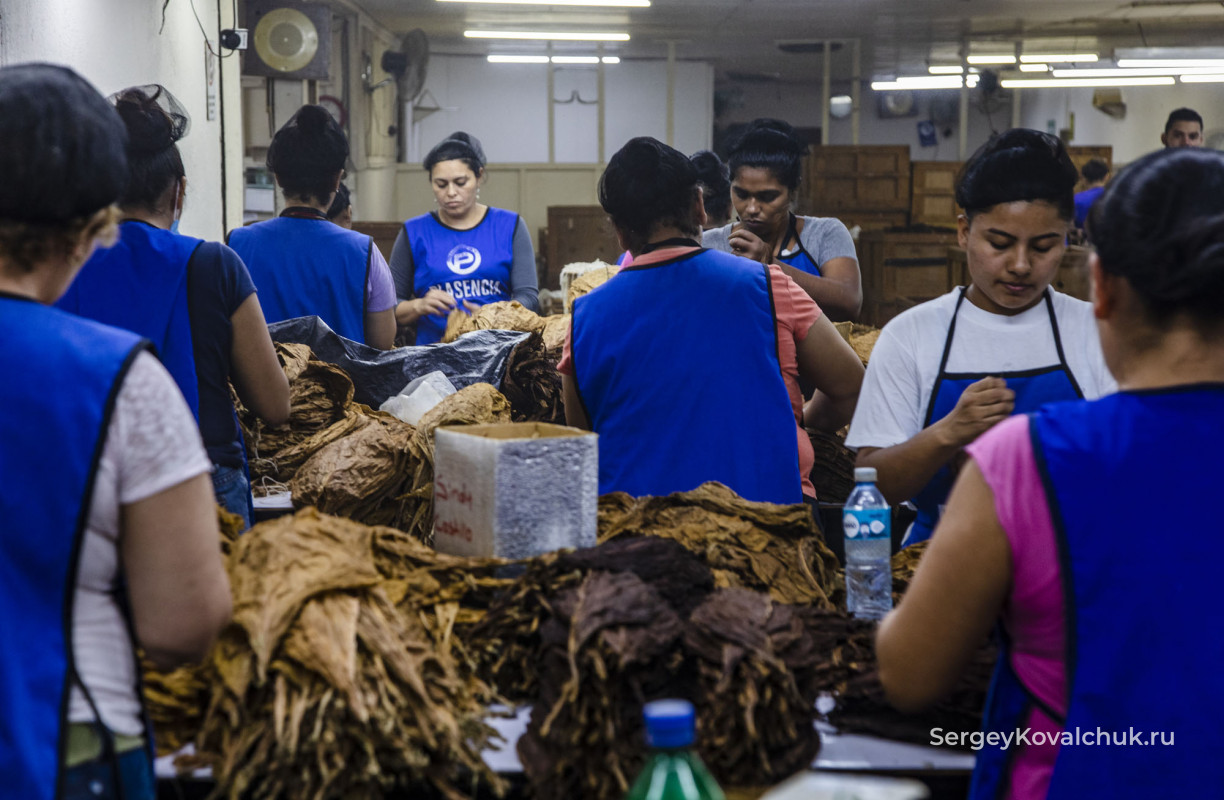
And the most important workshop, in which more than a hundred people work at the same time! Here is the assembly of cigars.
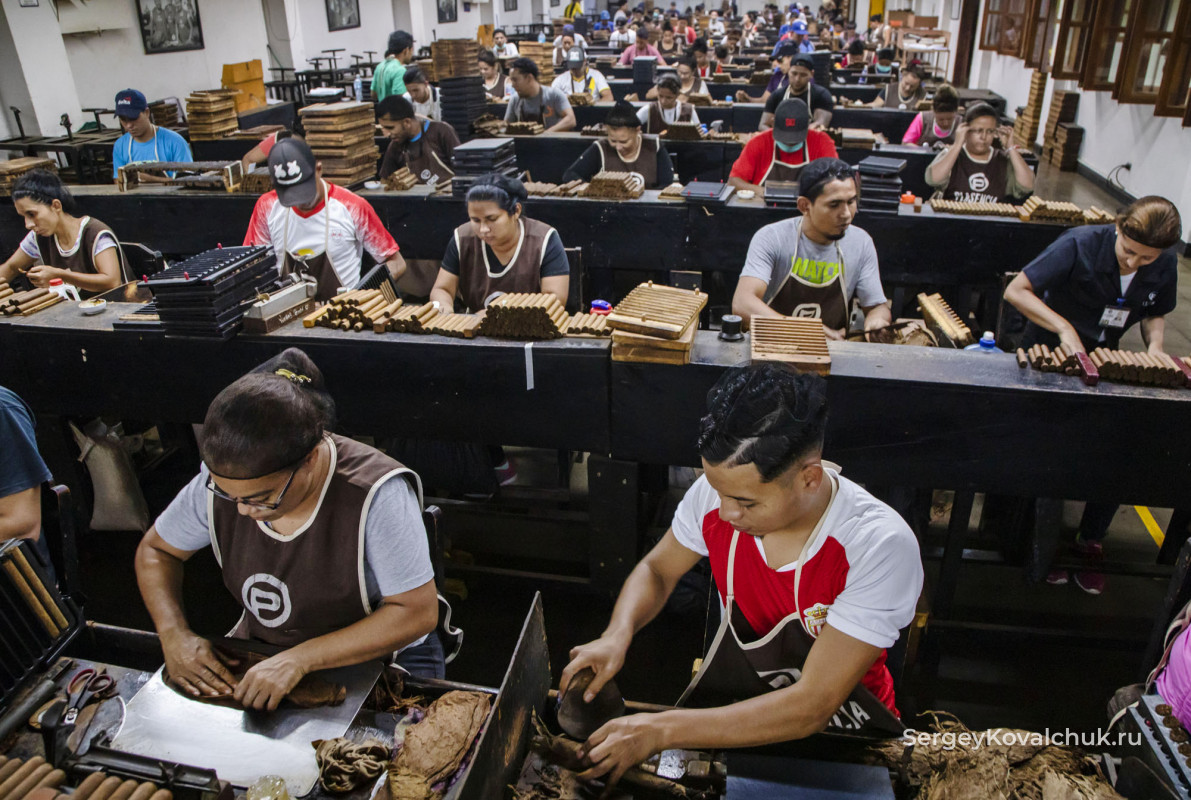
Collectors are divided into several groups. Some, for the most part these are men, dump a cigar. Tobacco is seasoned in a special device. The body of the cigar is created.

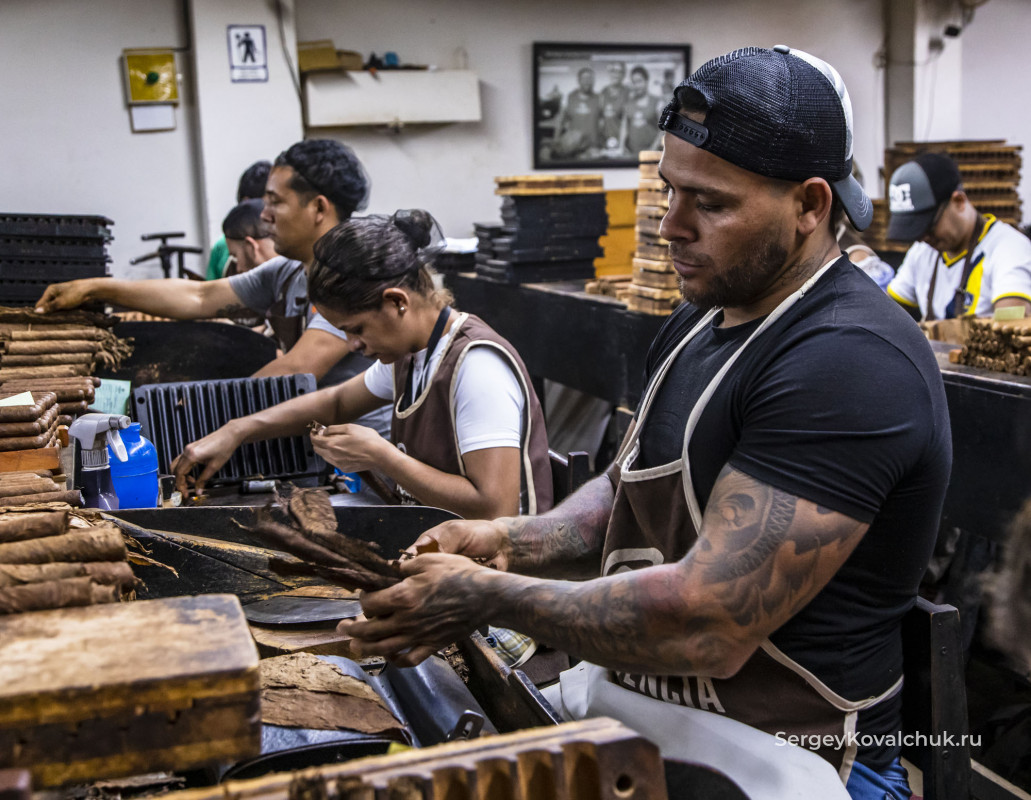
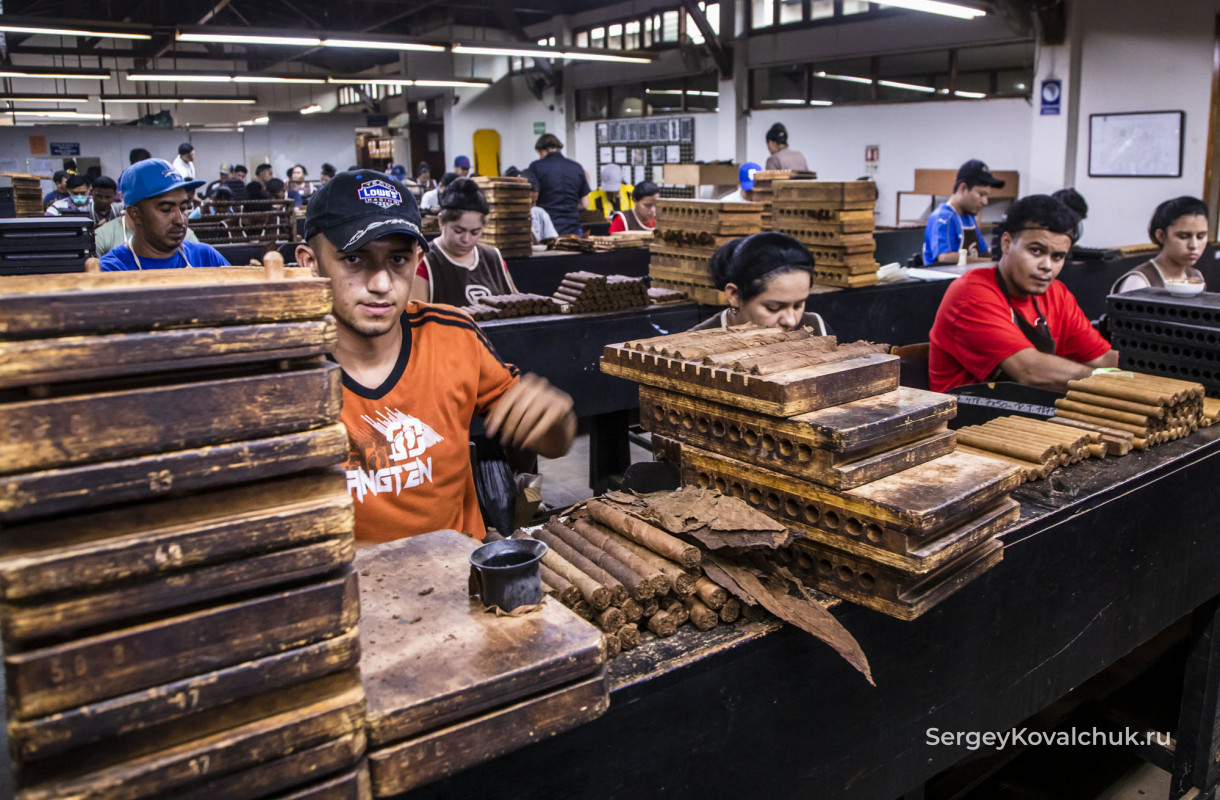
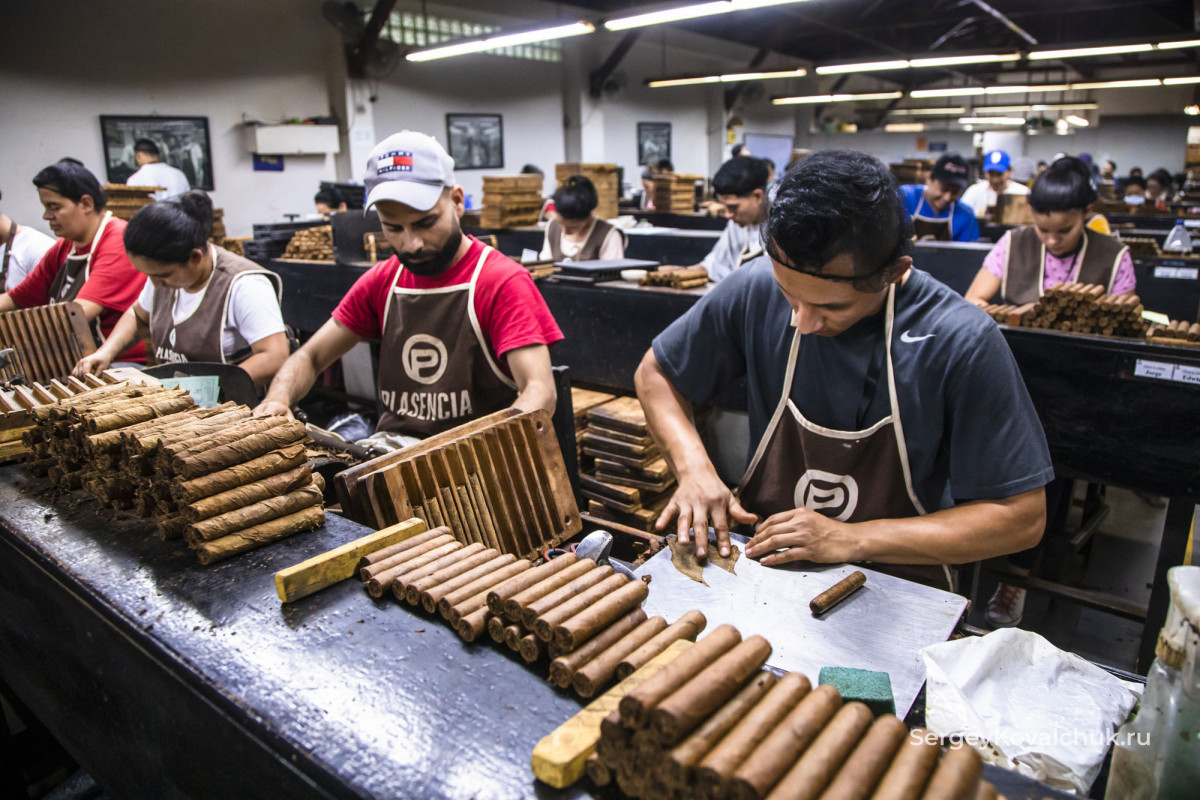
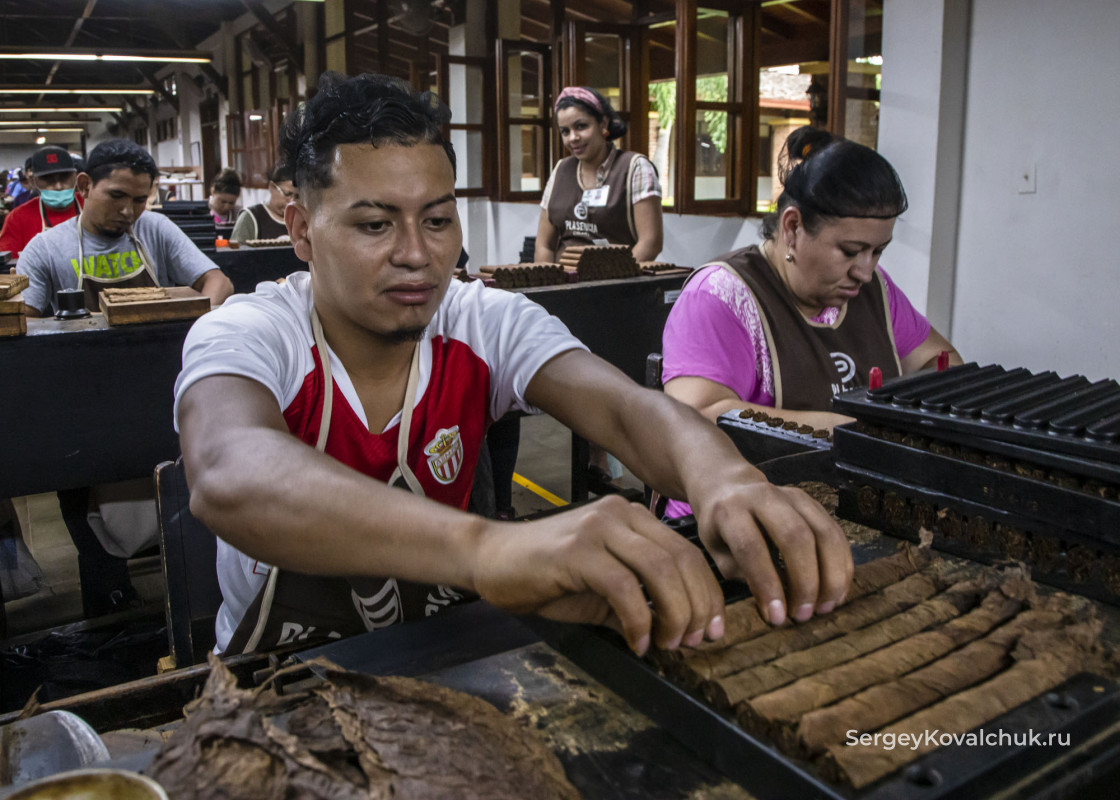
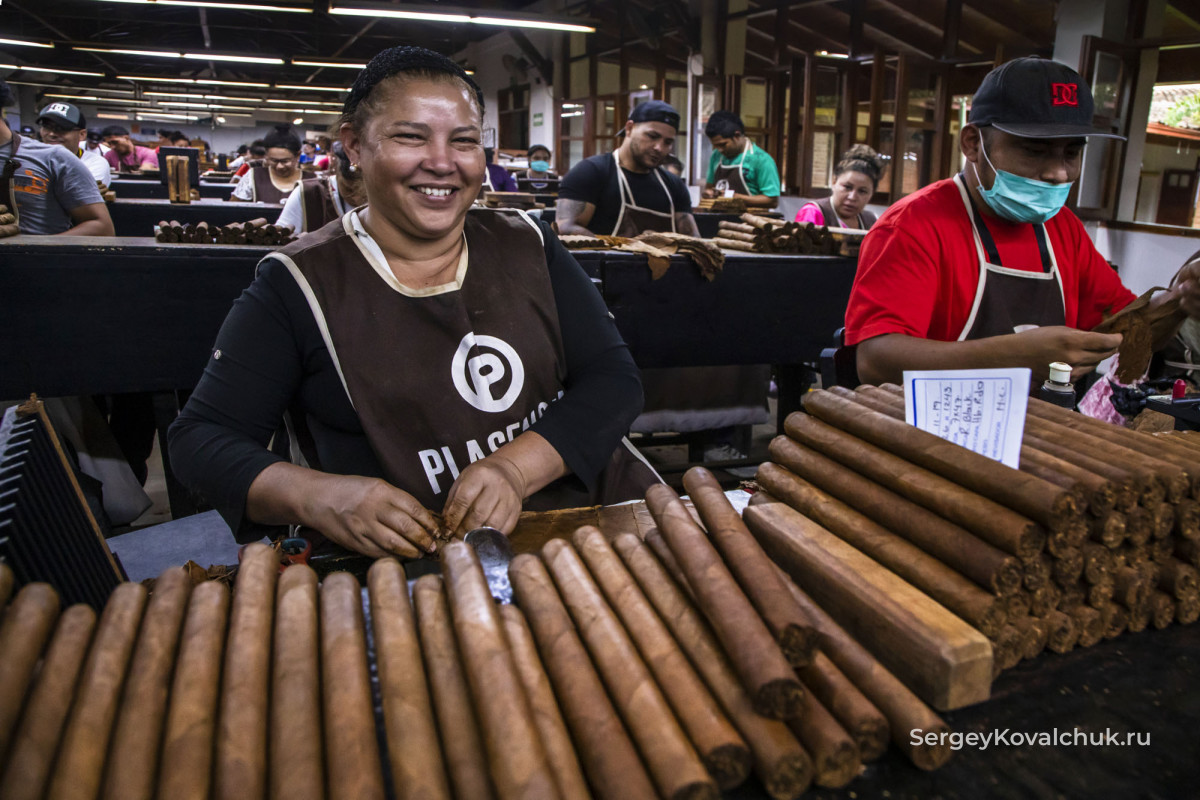
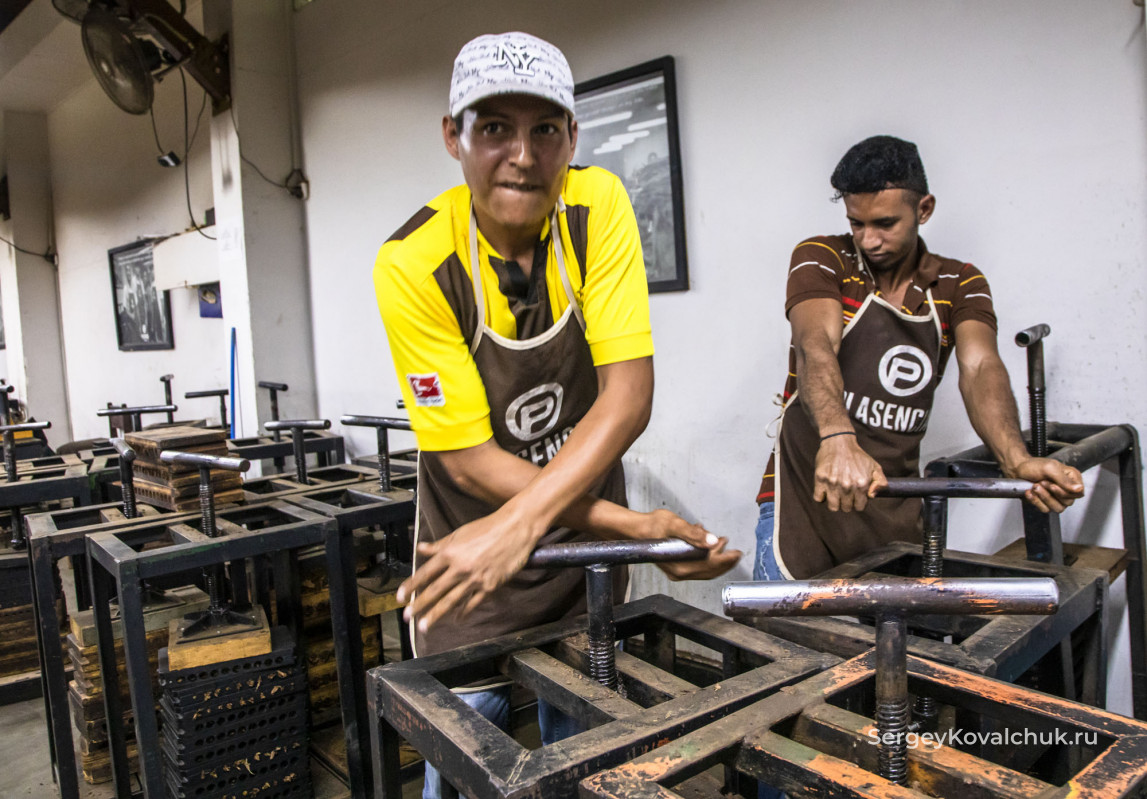
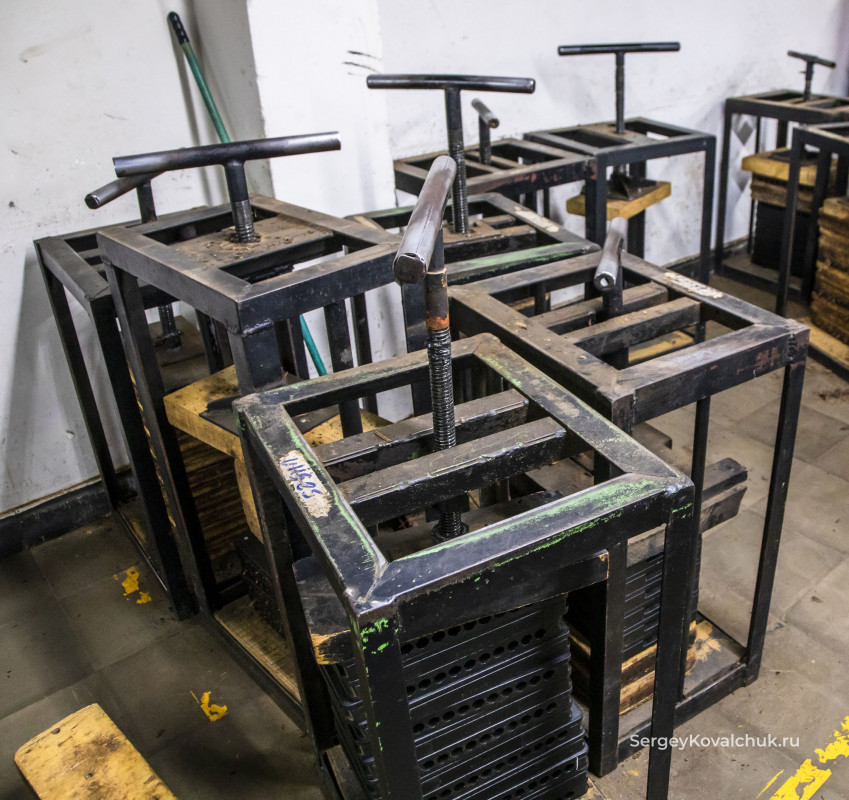
Further, the blanks are embedded in a wooden mold, 10 pieces each. in each, the form is sent to the press for an hour.
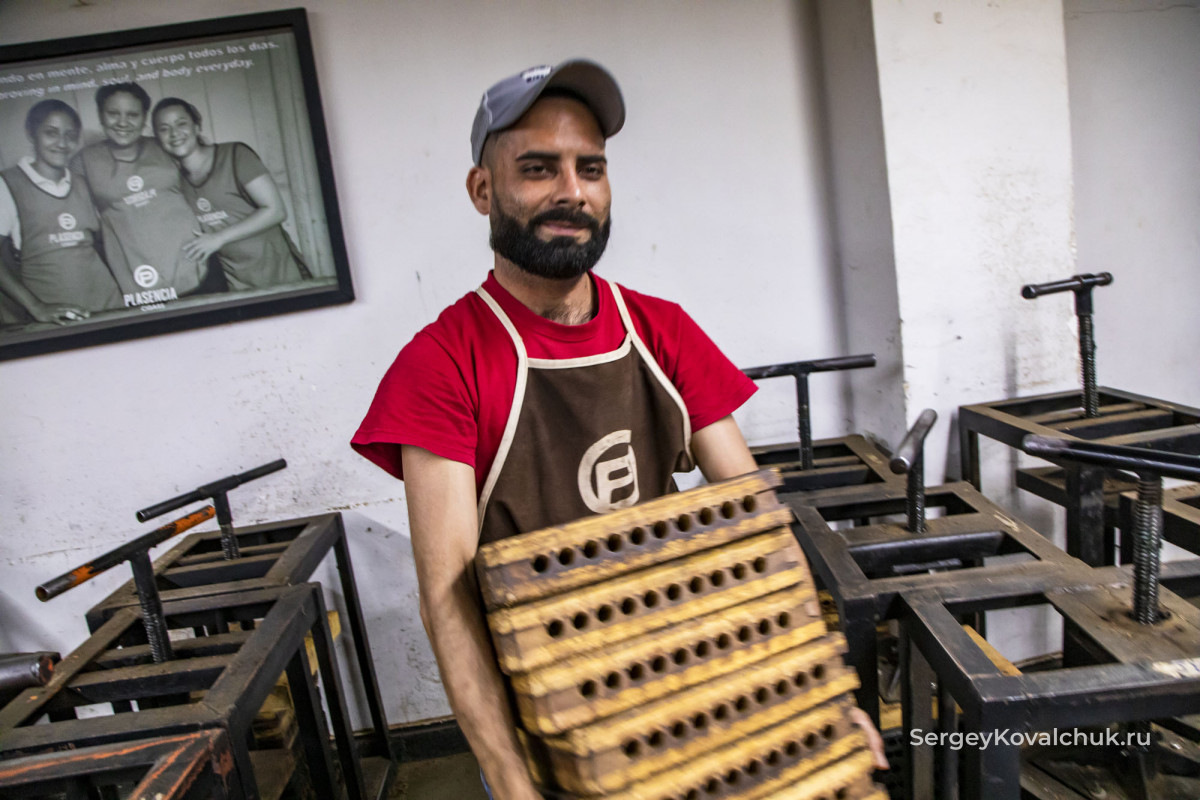
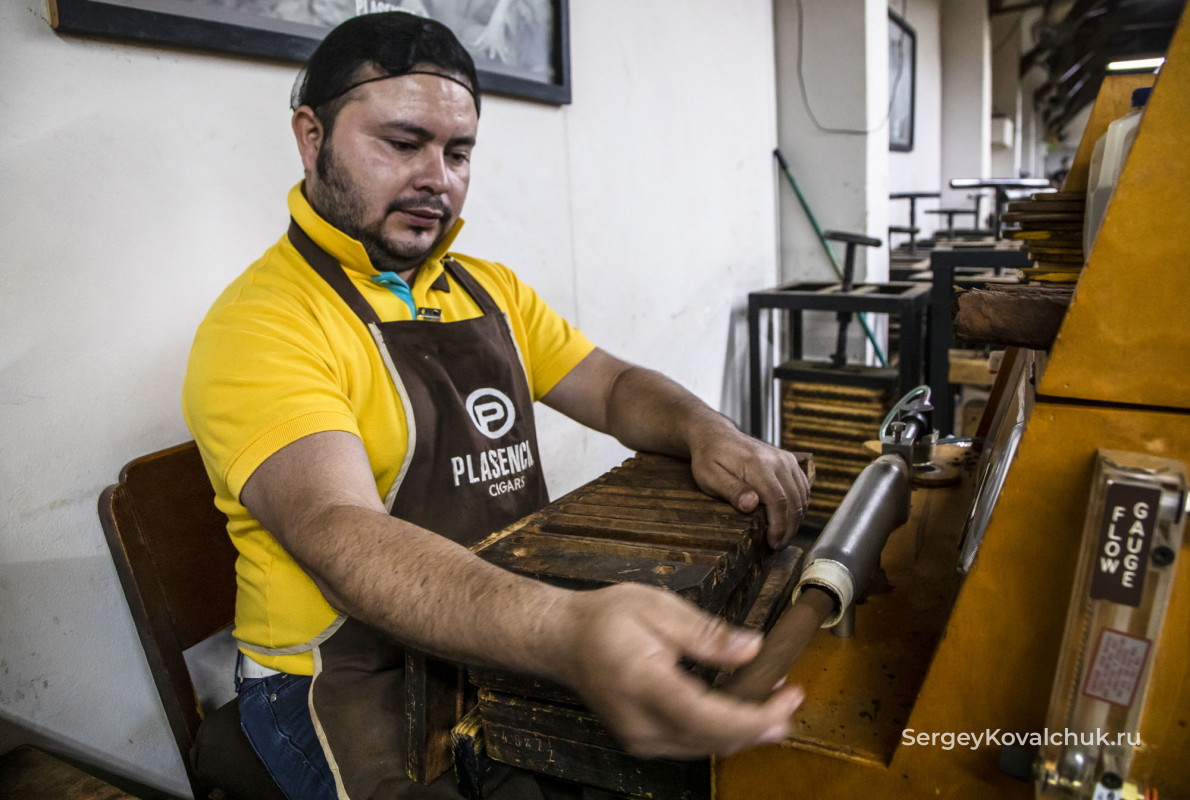
An individual worker on an electronic installation checks the quality of the cigar blank.
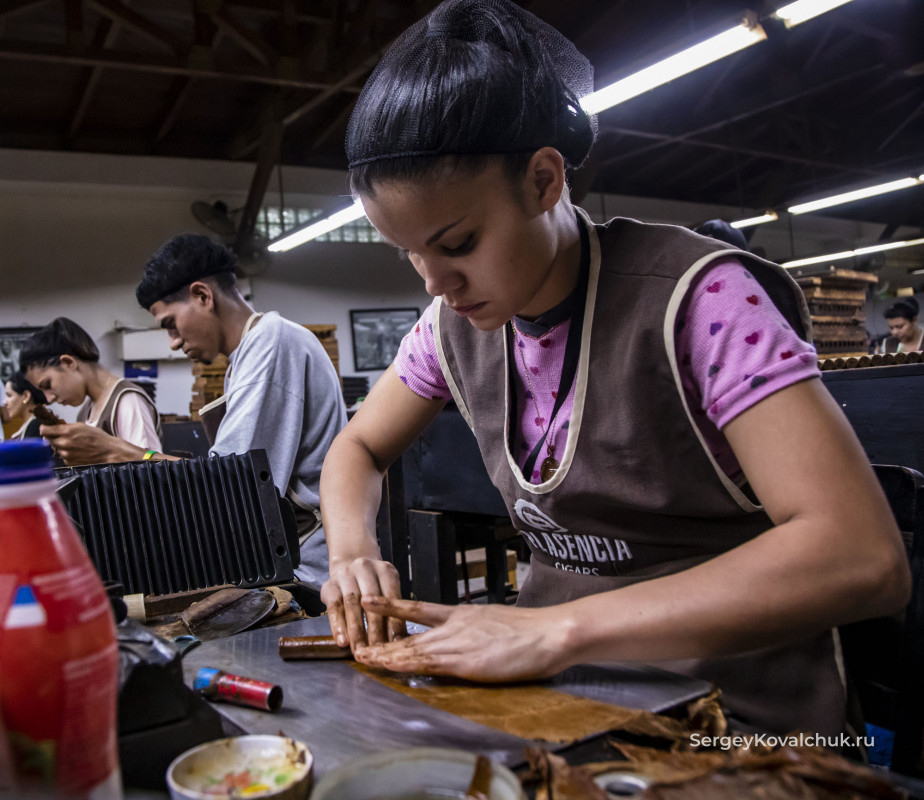
Further, the final stage of cigar assembly is the tobacco molded preform, which is wrapped in a very neatly soaked tobacco sheet. It is cut off from one end. All! The cigar is ready.
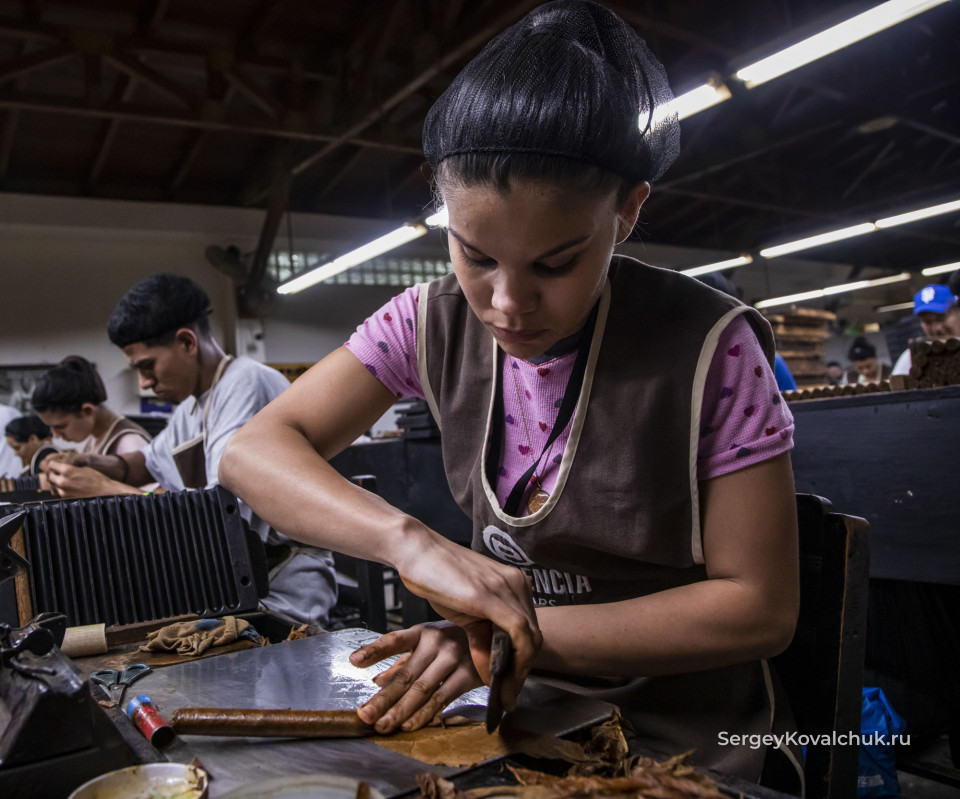
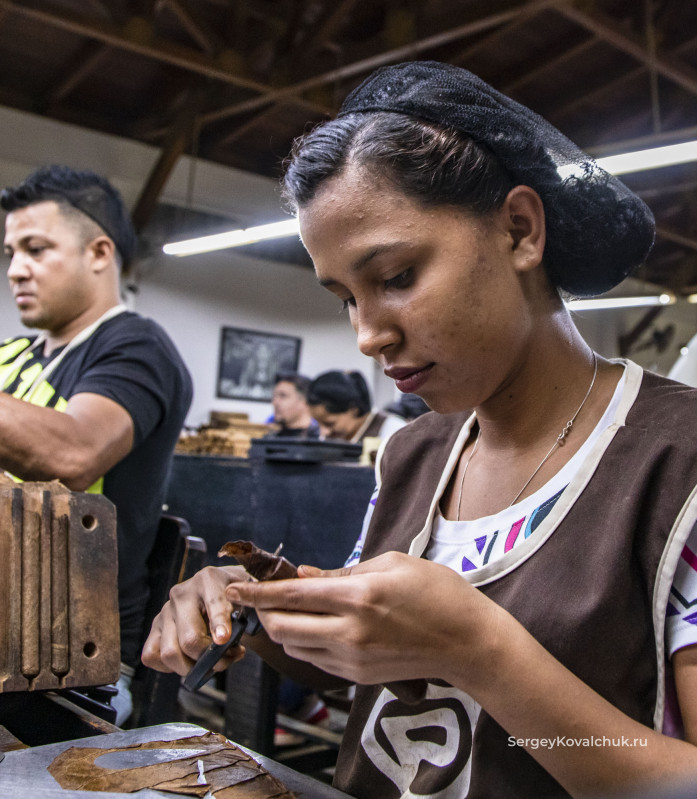
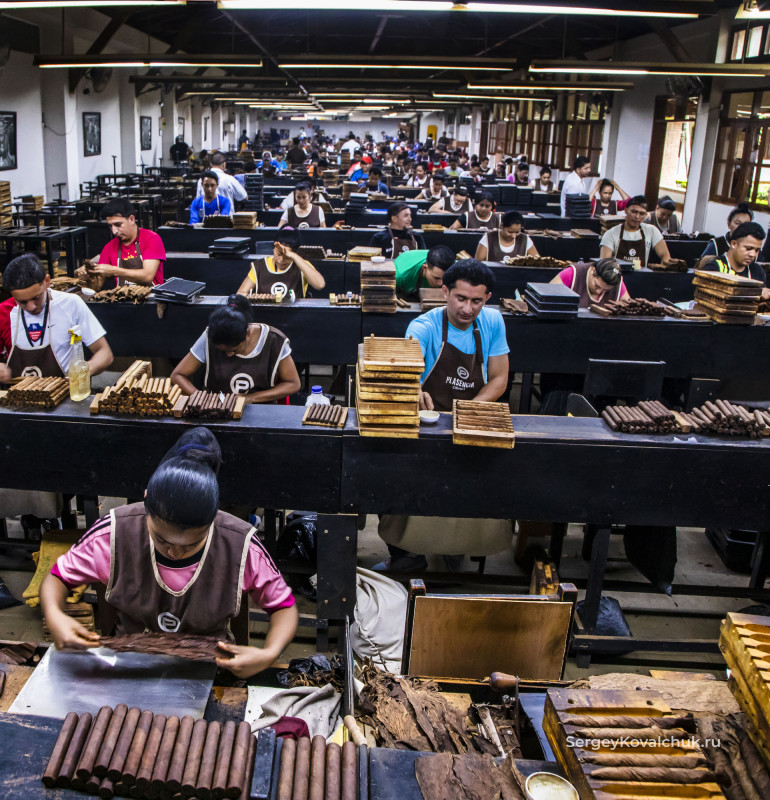
The final part is packaging in boxes. Different types of boxes – ribbons, cellophane, etc.
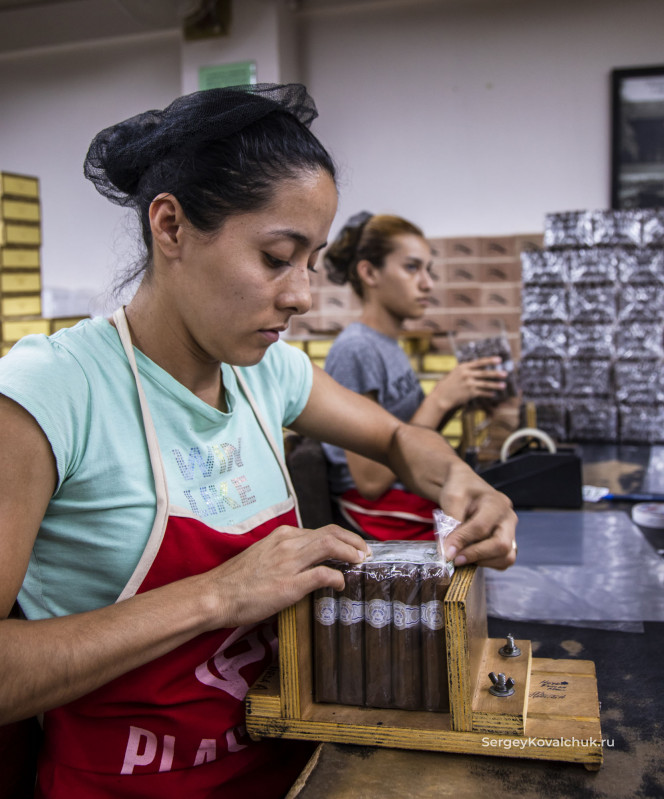
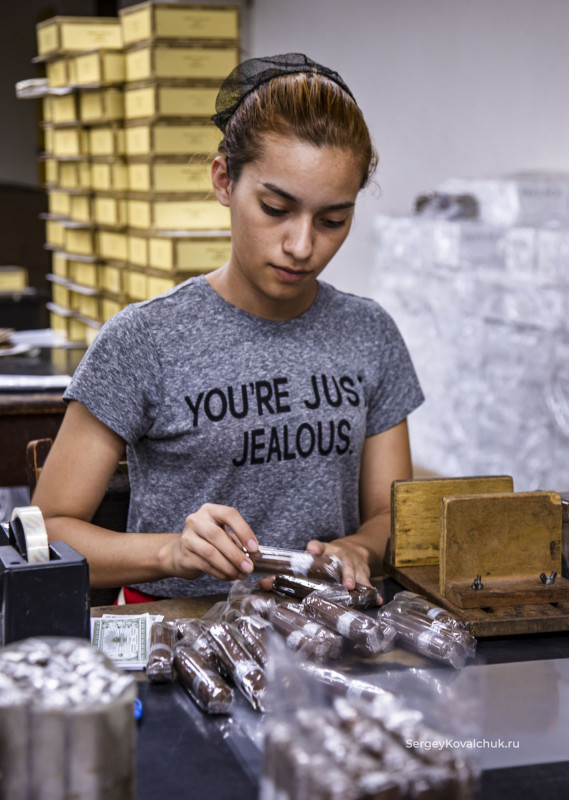
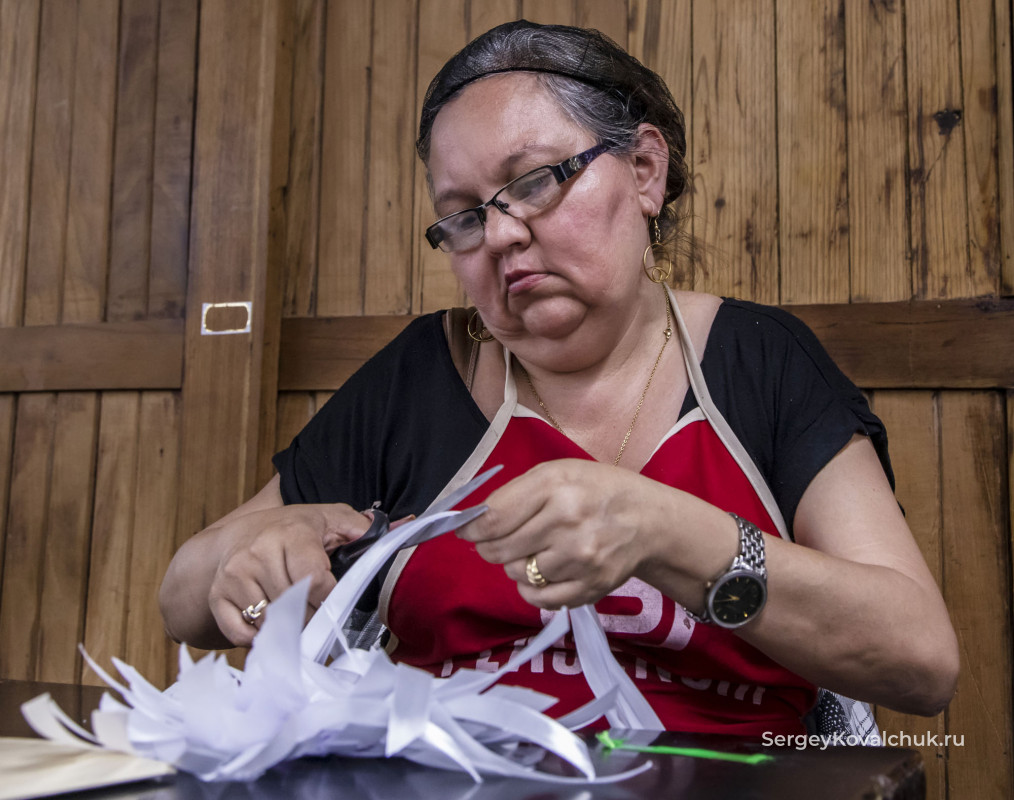
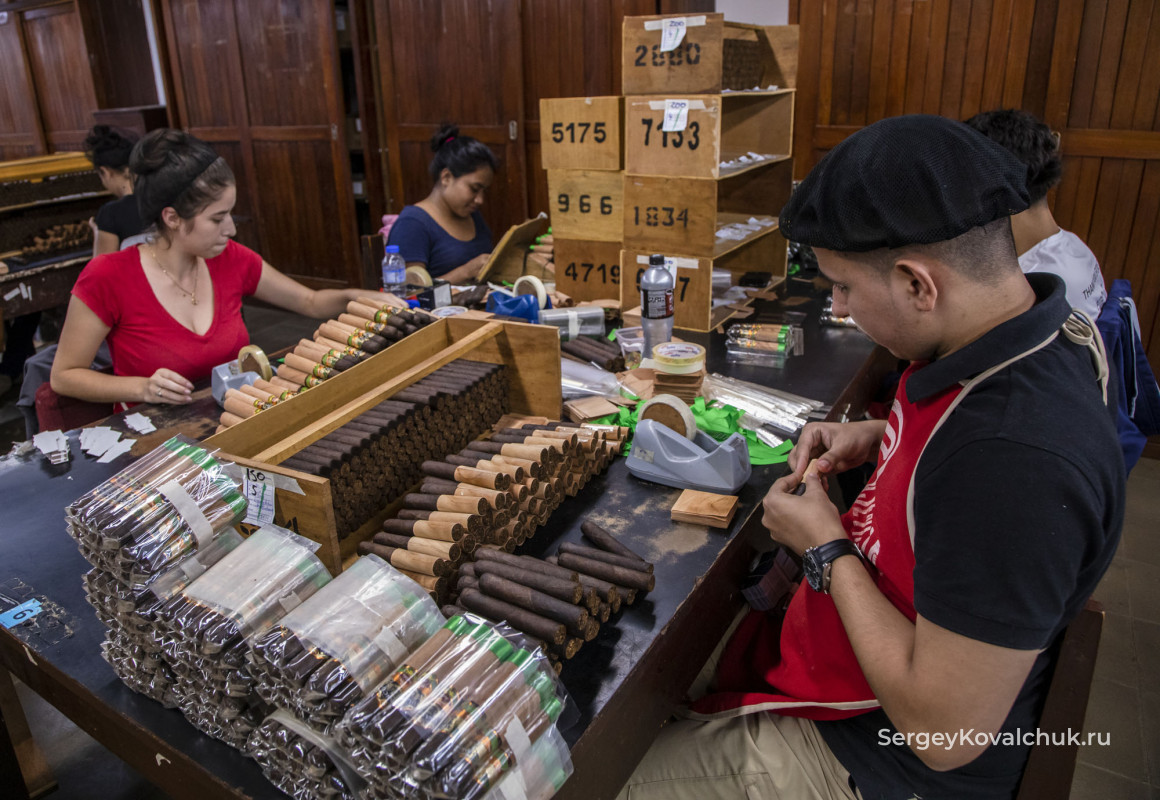
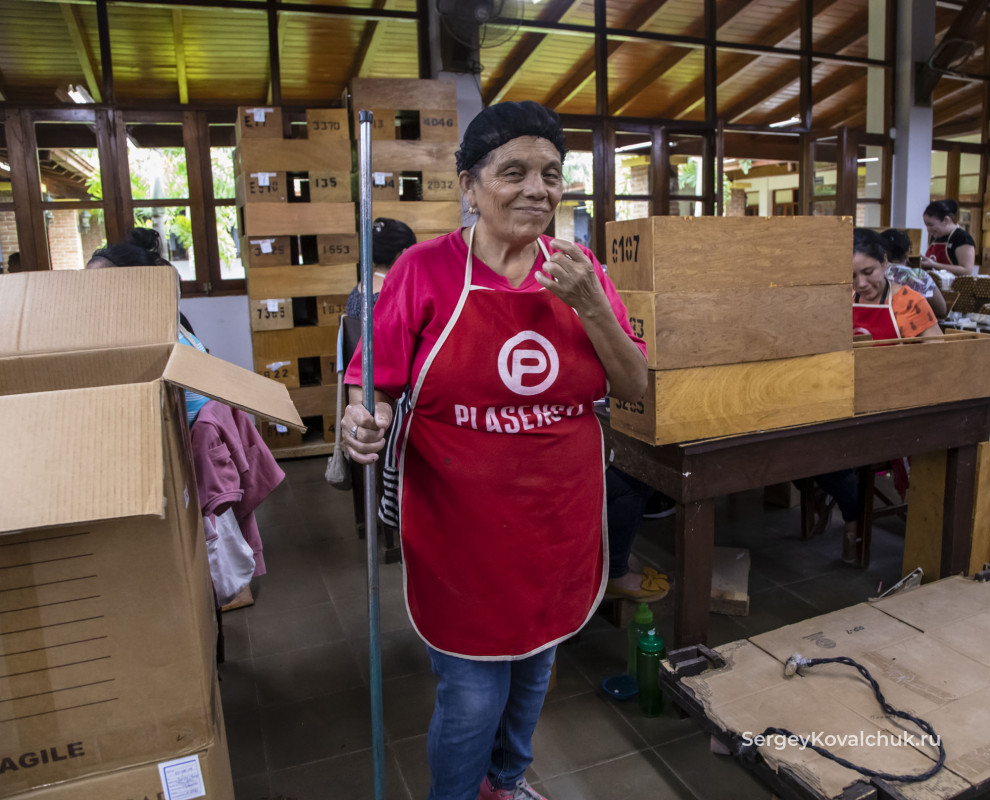
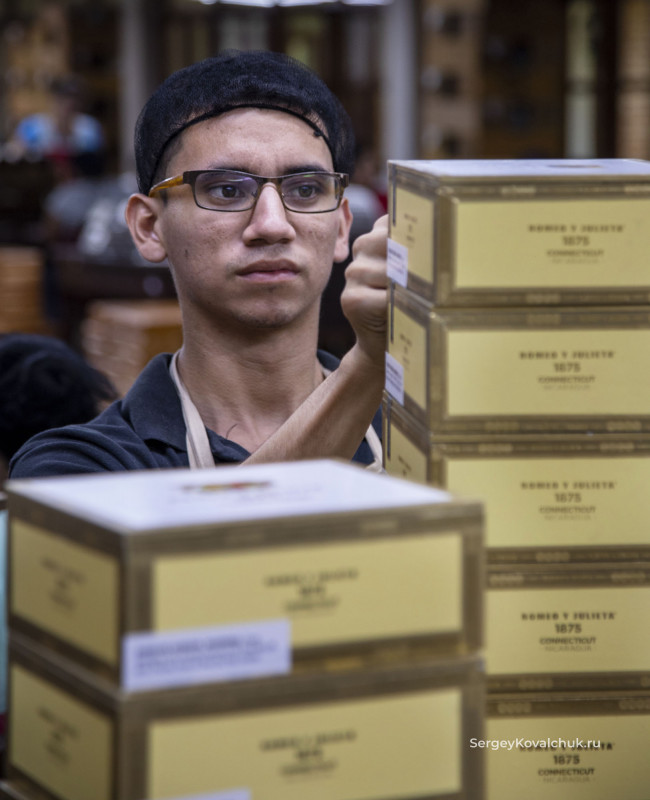
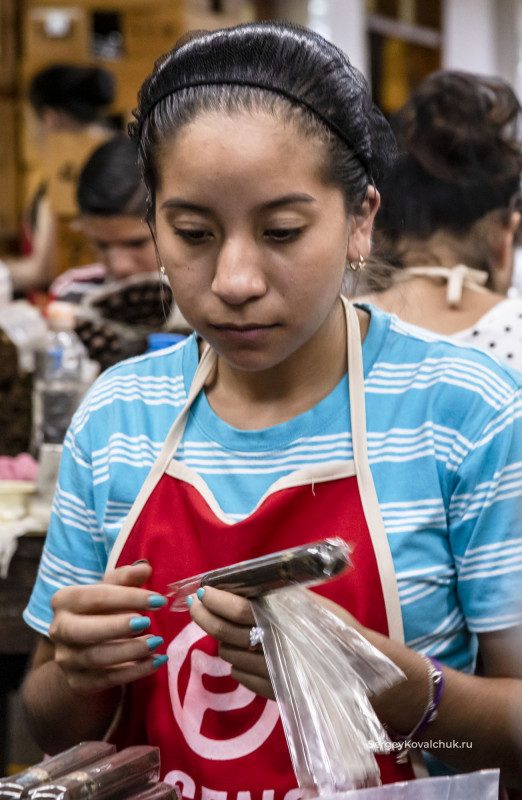
The factory works with different customers and for each customer – its own packaging.
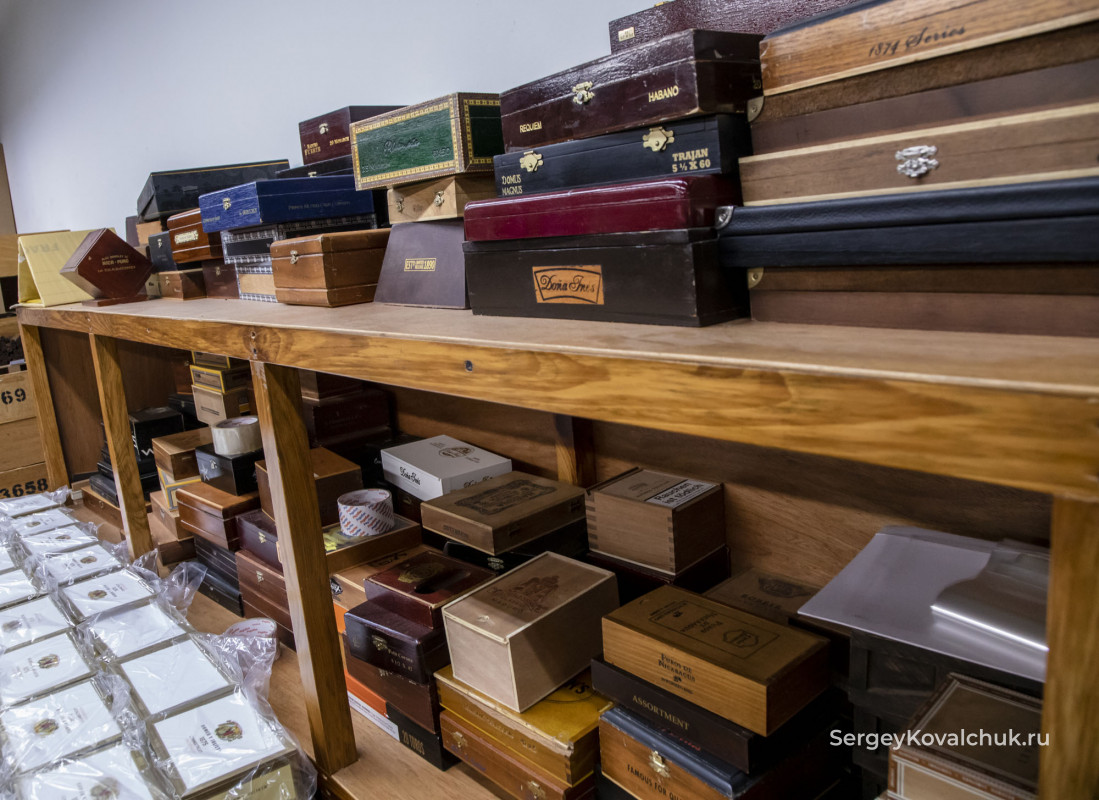
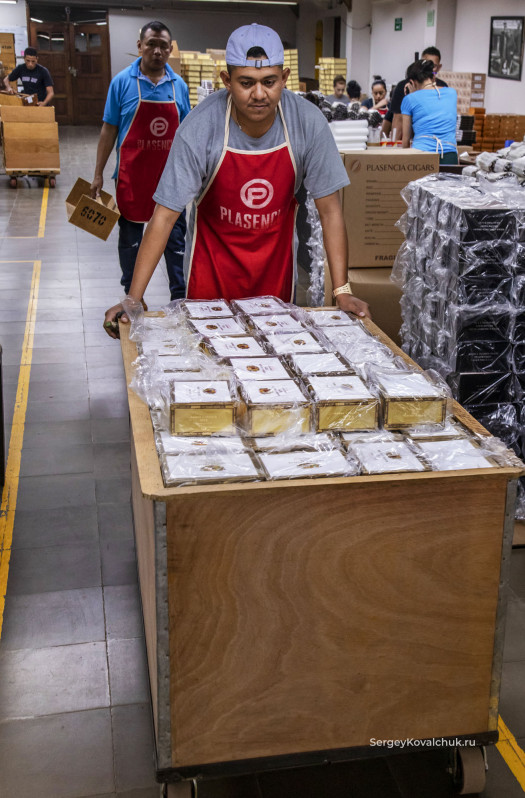
Finished products are sent to the warehouse.
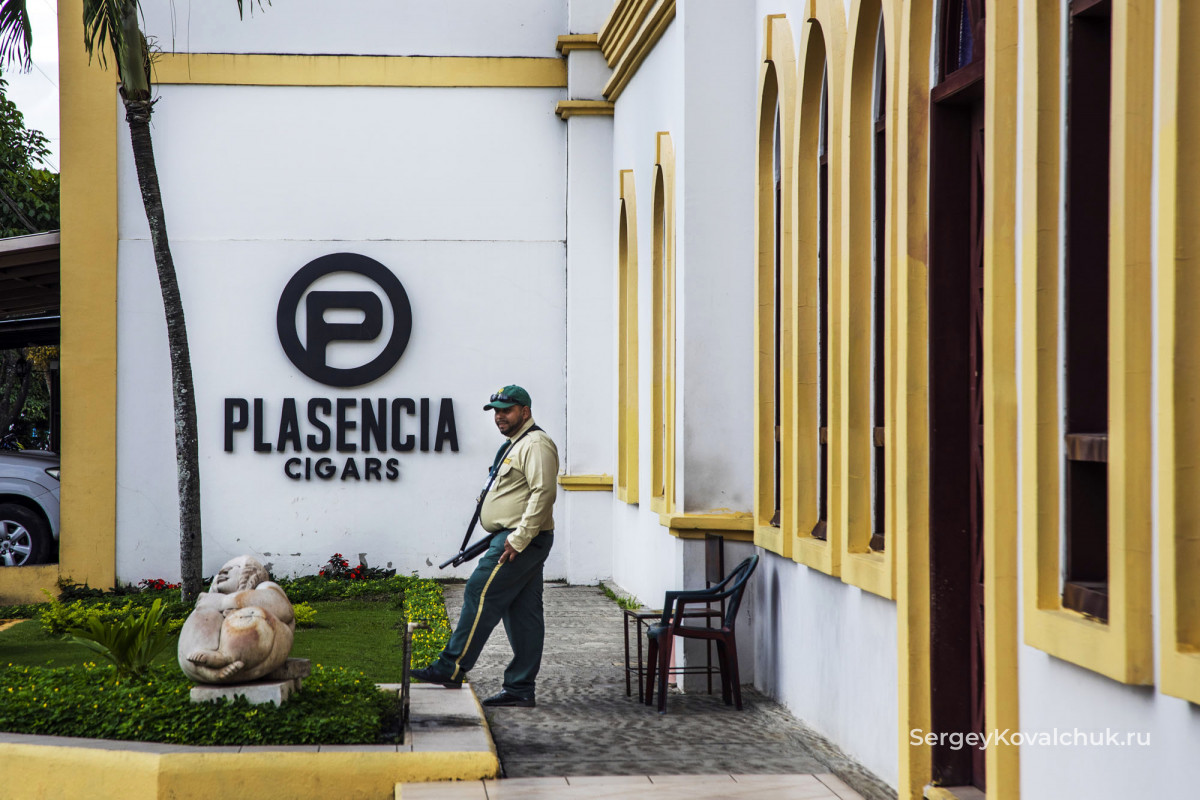
The cigar production was shot at Plascencia, one of the largest cigar factories in Esteli. It employs about 700 people.