Wedding festivities in Gorontalo
North Sulawesi
Gorontalo is a small town on the Minahasa Peninsula of North Sulawesi. I was able to visit two different wedding ceremonies being held there. I was only there for one day – but a wedding ceremony lasts at least two days. I caught the essential moments of the wedding rituals at one ceremony, and other ritual elements at the second wedding. A wedding in Gorontalo – just as in other regions of Indonesia – is a costly affair, even for families who only hire the elaborate ceremonial costumes for the day of their wedding. Usually people will hire a private wedding company to provide all the services and organisation of their wedding.
The first stage of a wedding ceremony in Gorontalo
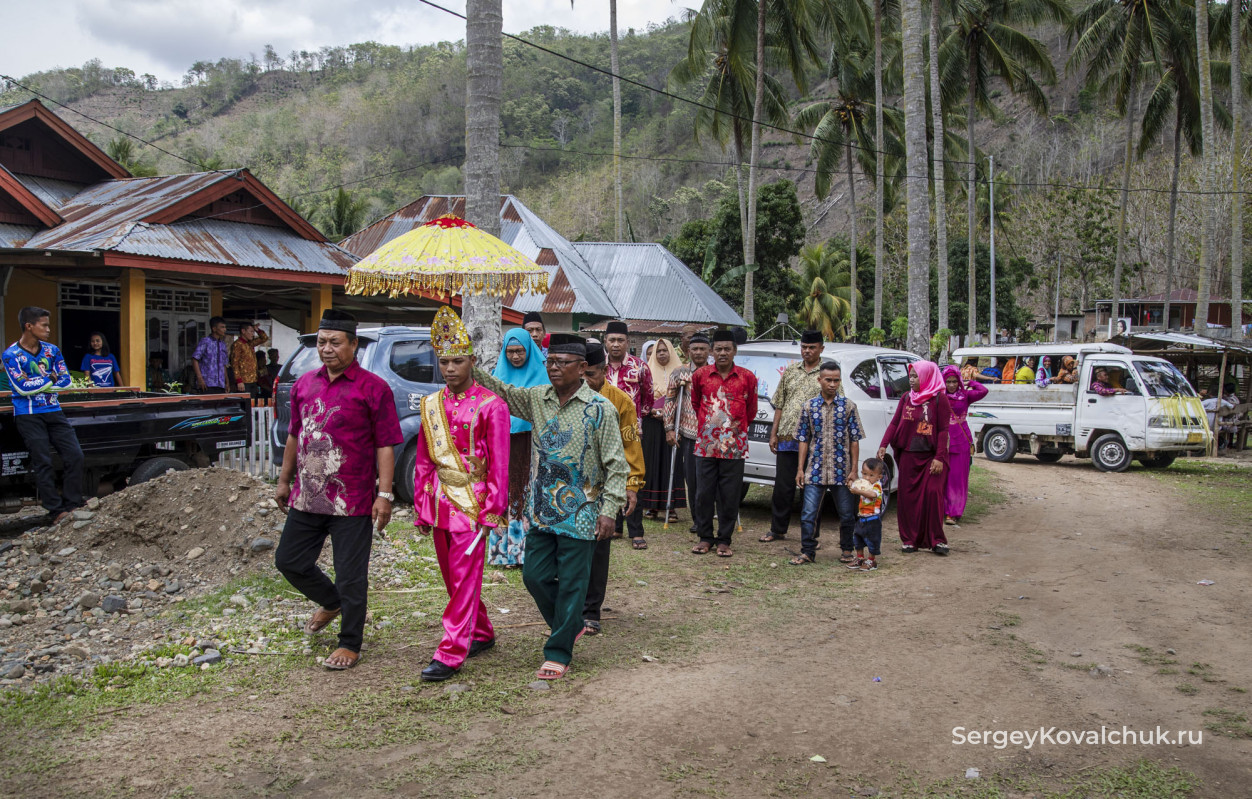
At the bridegroom's home, friends and relatives are preparing gifts for the bride's family – everything exquisitely laid out and wrapped. The gifts are of two kinds – ritual items, and presents. The ritual items include fruit, vegetables, and other produce arranged in a symbolic order. Each item has its own meaning that characterises the bride – her lovely skin, her hair, her intelligence. Other items remind us of important events in their lives – when they first met, for example. The presents are all items for the bride herself, along with a separate gift of cash. The wedding rings, too, are here – charmingly wrapped. Once everything has been checked by a specially-chosen person, the gifts are loaded into cars, and the procession to the bride's house sets off. Traditionally, however, the groom doesn't visit the bride's house, before he sees here in person at their wedding.
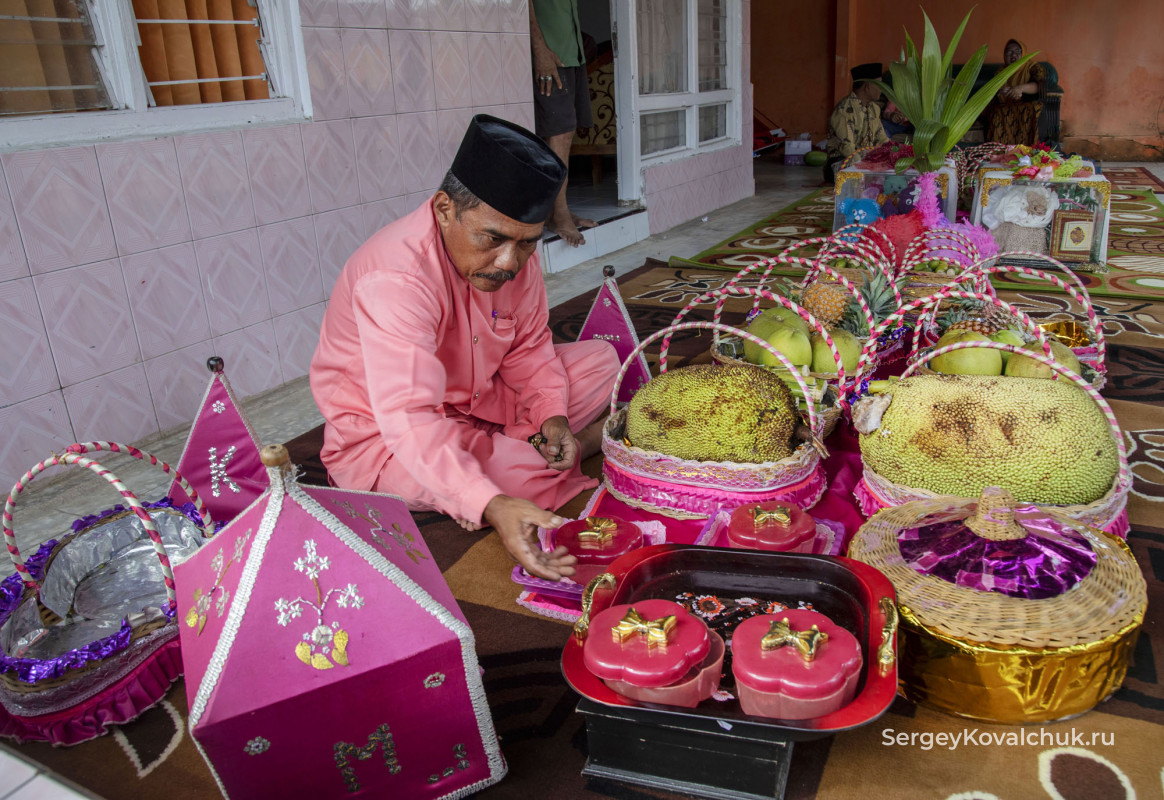

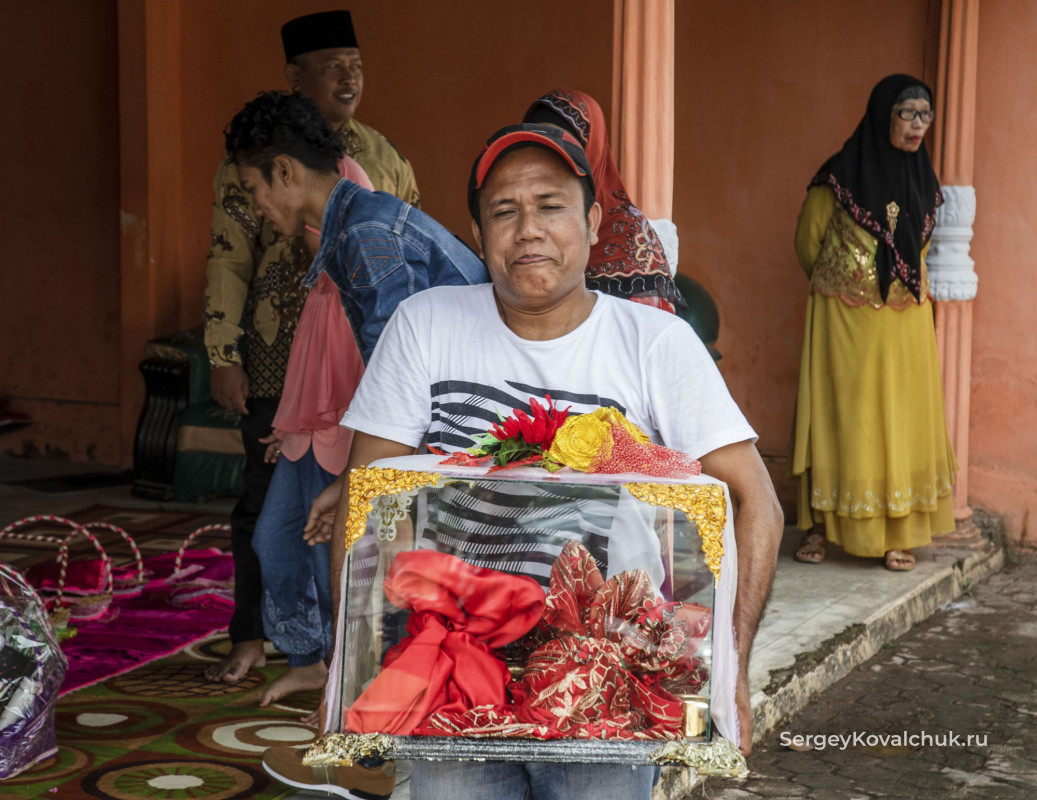


The gifts are of two kinds – ritual items, and presents
The second stage of the wedding ceremonies in Gorontalo
The second stage of the wedding ceremonies in Gorontalo - members of the groom's family arrive at the bride's house. The bride's family are waiting, sitting on the floor in a special large room, to one side. The first thing is the greeting, and exchange of the ritual gifts – after which the presents are elaborately laid-out for all the guests to see. The order of presenting the items is the same as for the preparation. The groom's family members take their places on the opposite side of the room to the hosts, and a long dialogue begins between the heads of each group. The speakers use microphones, and their speeches are relayed to the street outside, where other well-wishers are already gathered. The family heads go through a negotiation process about the conditions for the wedding. The bride, who is elaborately dressed, will be sitting in the next room – listening to what is said, but not yet coming out. Once all the formal speeches are concluded, the gifts brought by the groom's family are ceremonially accepted. Some of the ritual gifts – such as breadfruit – are taken to the bride's room, along with the presents which are intended for her personally. The rest of the ritual offerings will be divided among the bride's relatives. This concludes the official part of the ceremony.
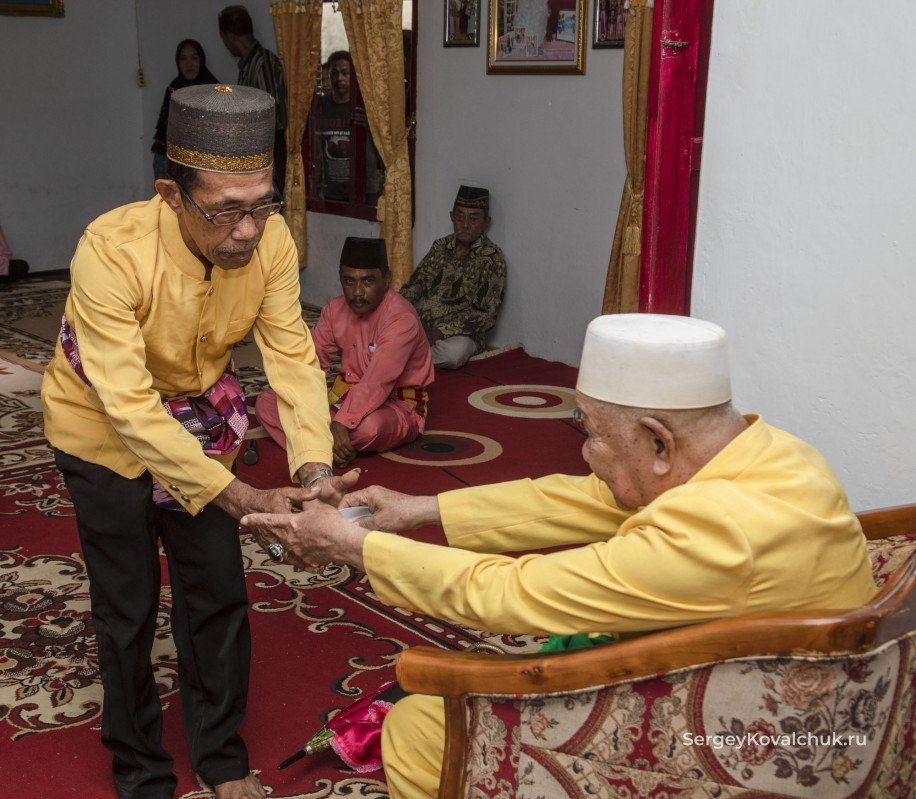

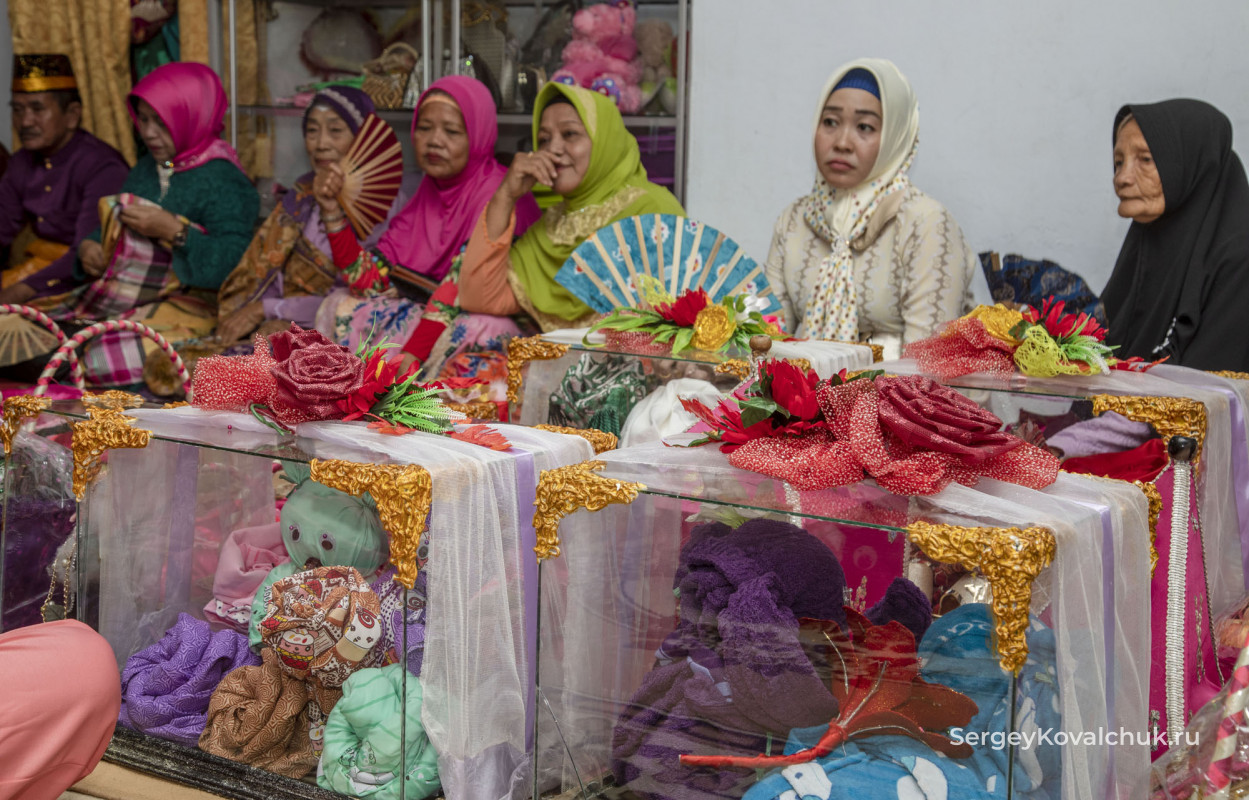
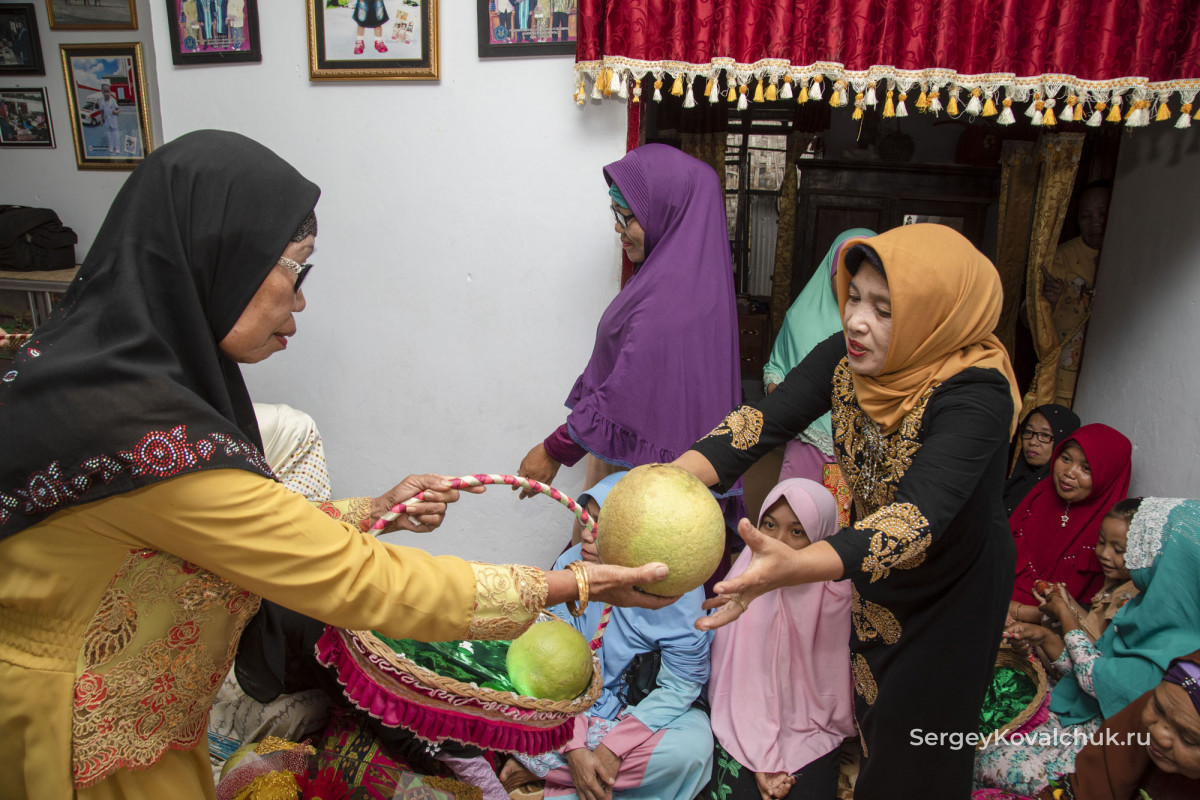
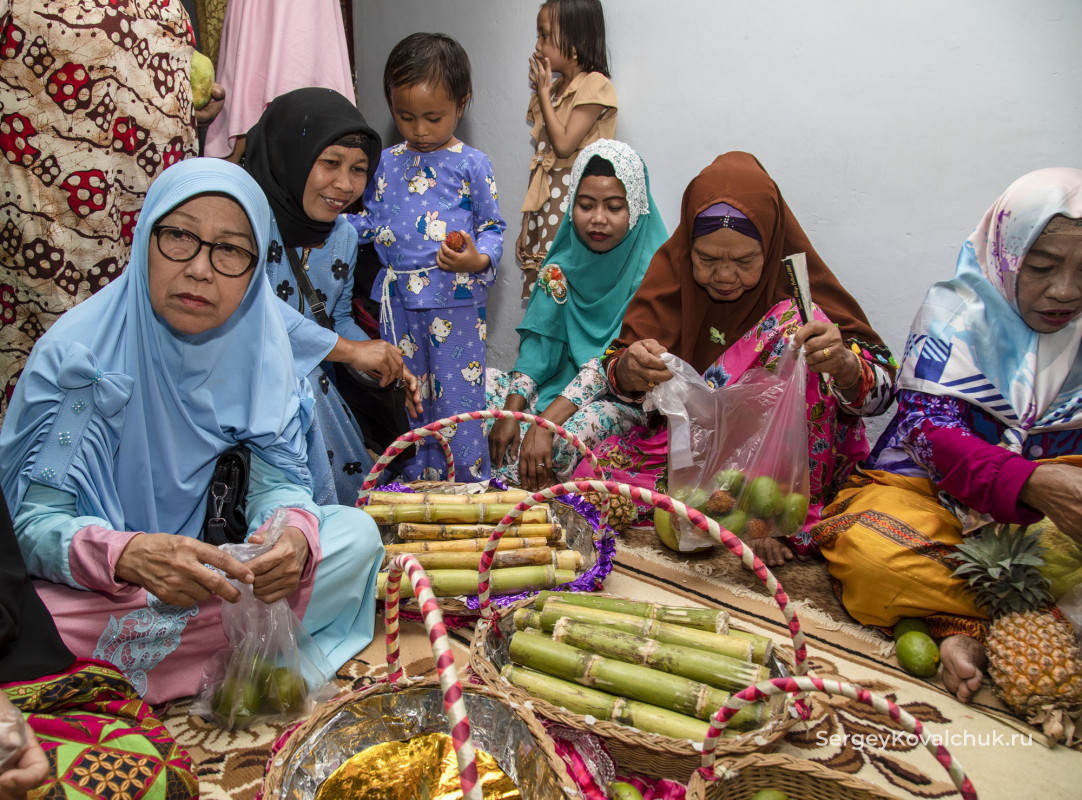
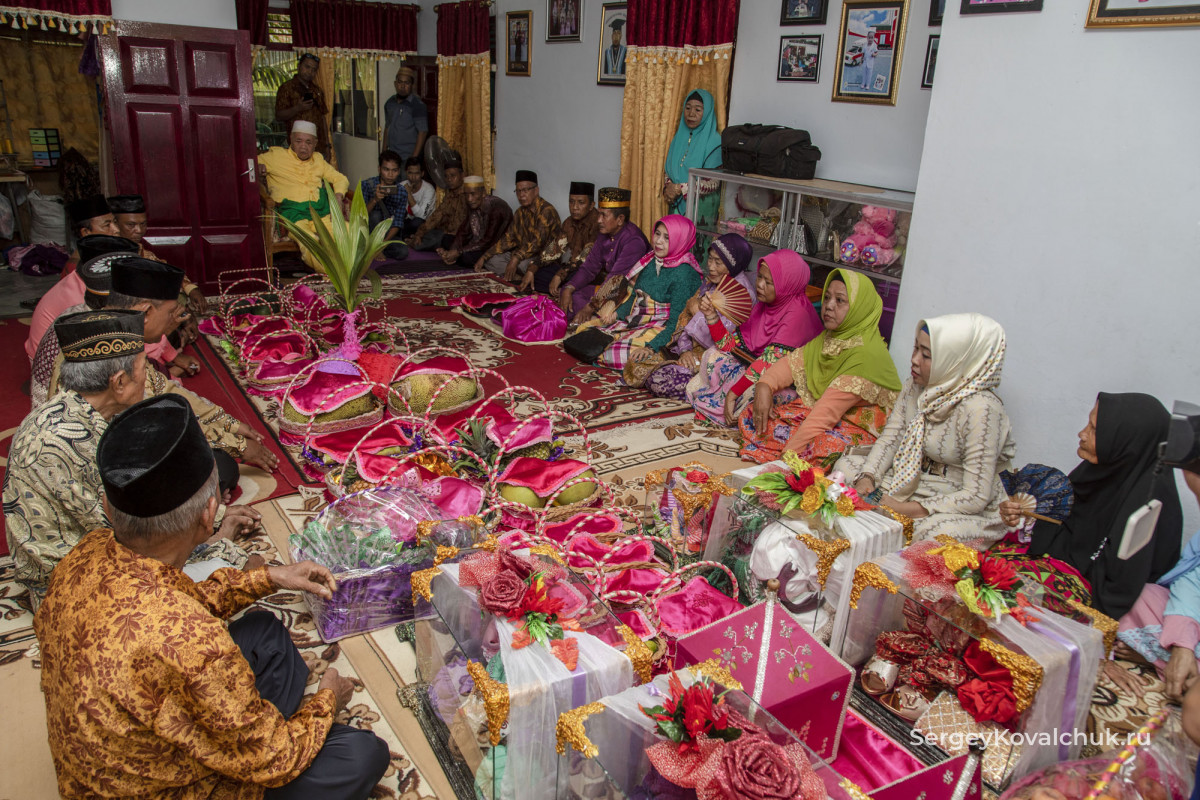
The presents are elaborately laid-out for all the guests to see
The third stage of the wedding ceremony in Gorontalo
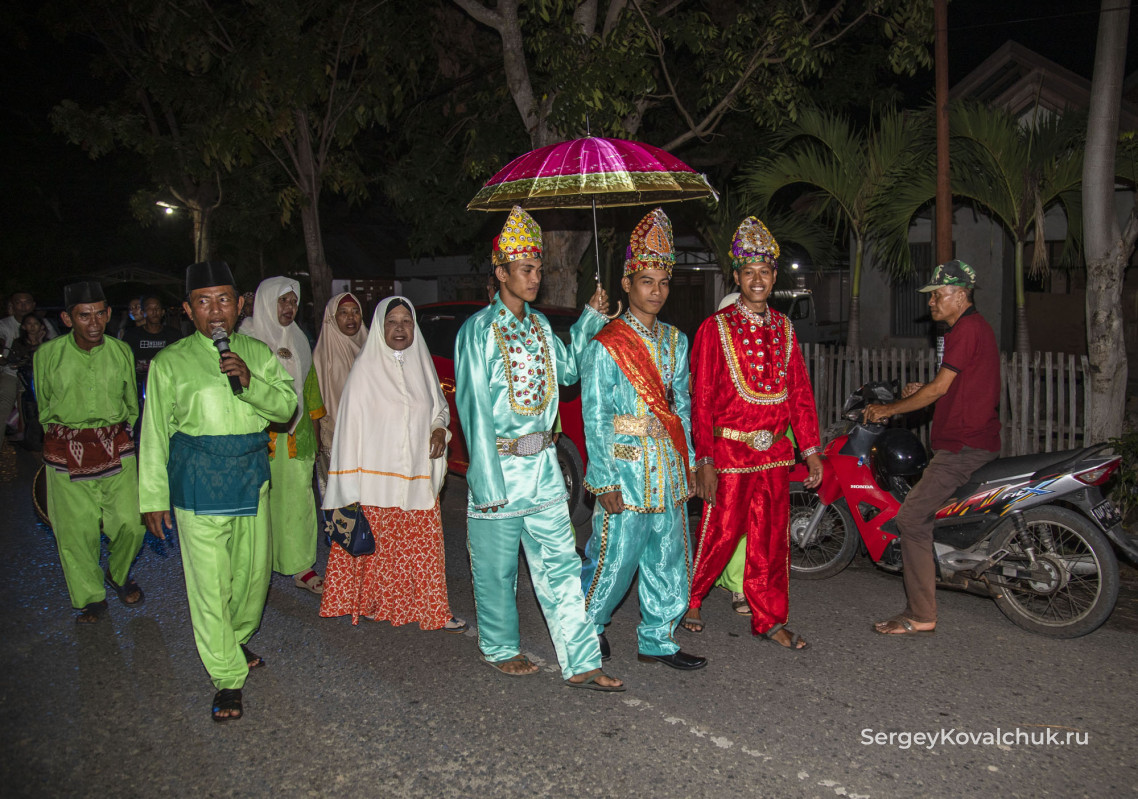
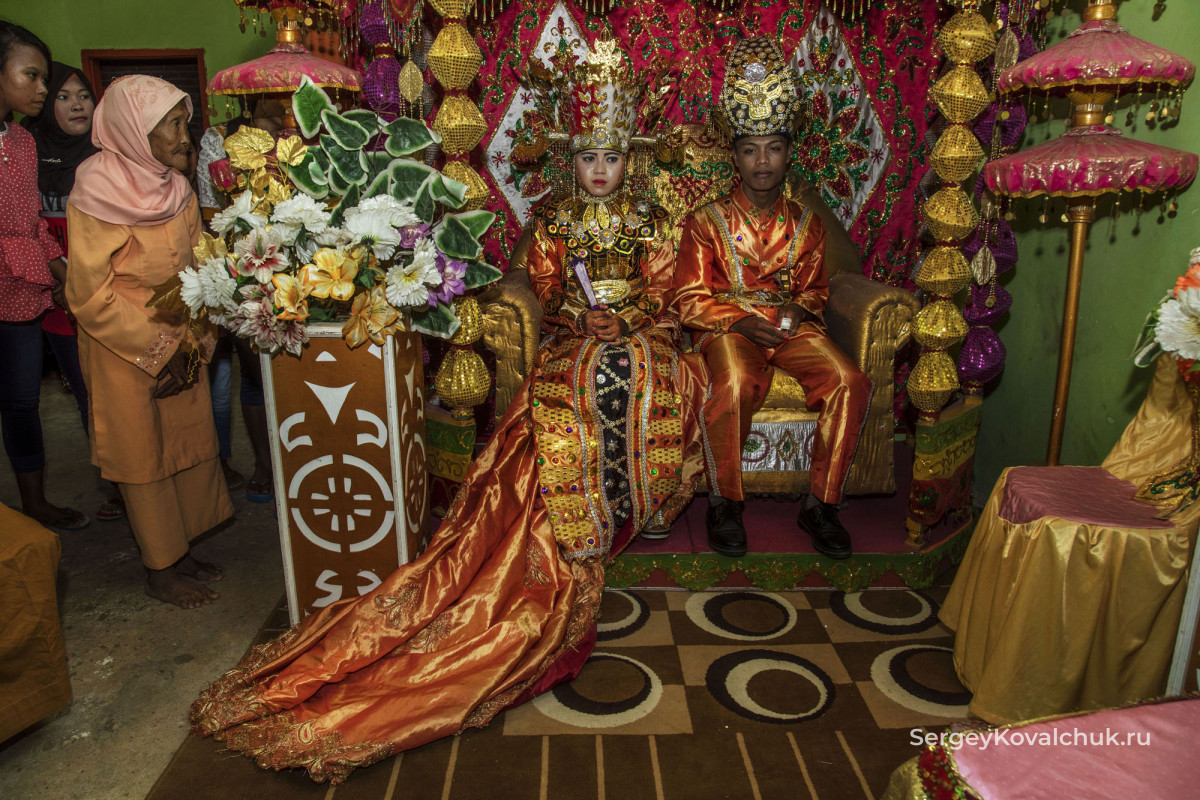
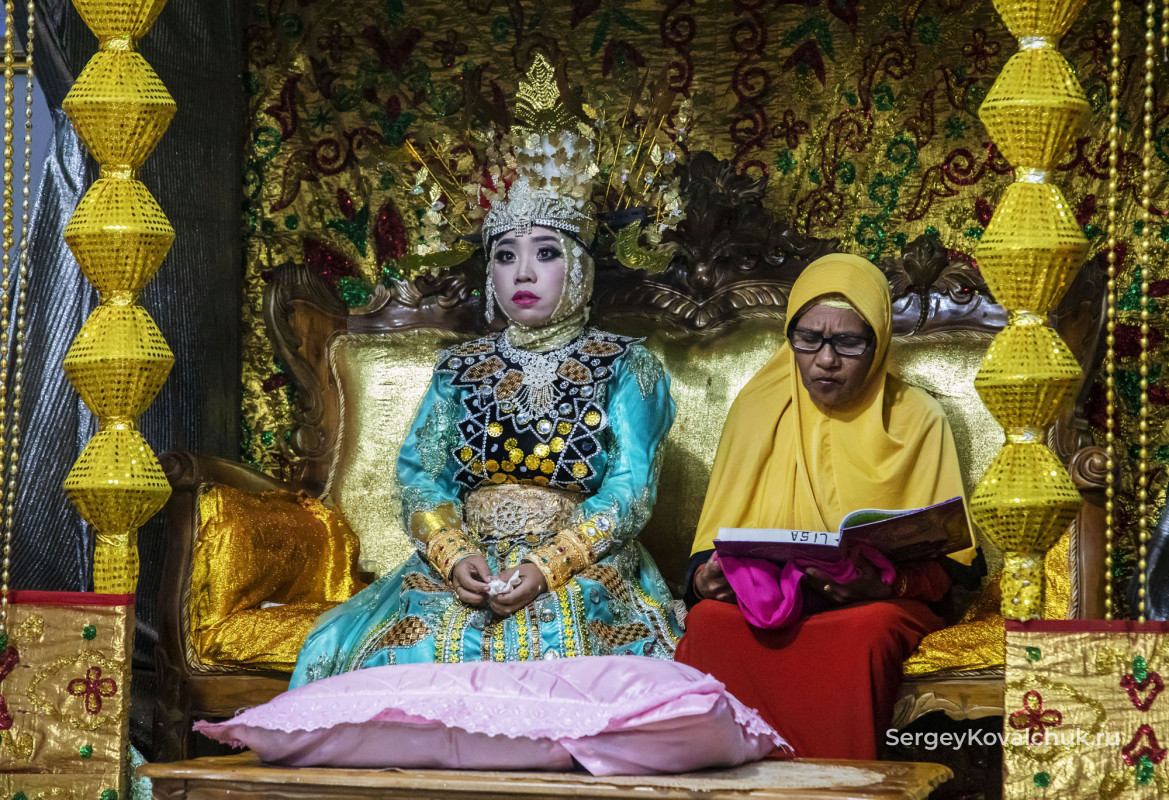
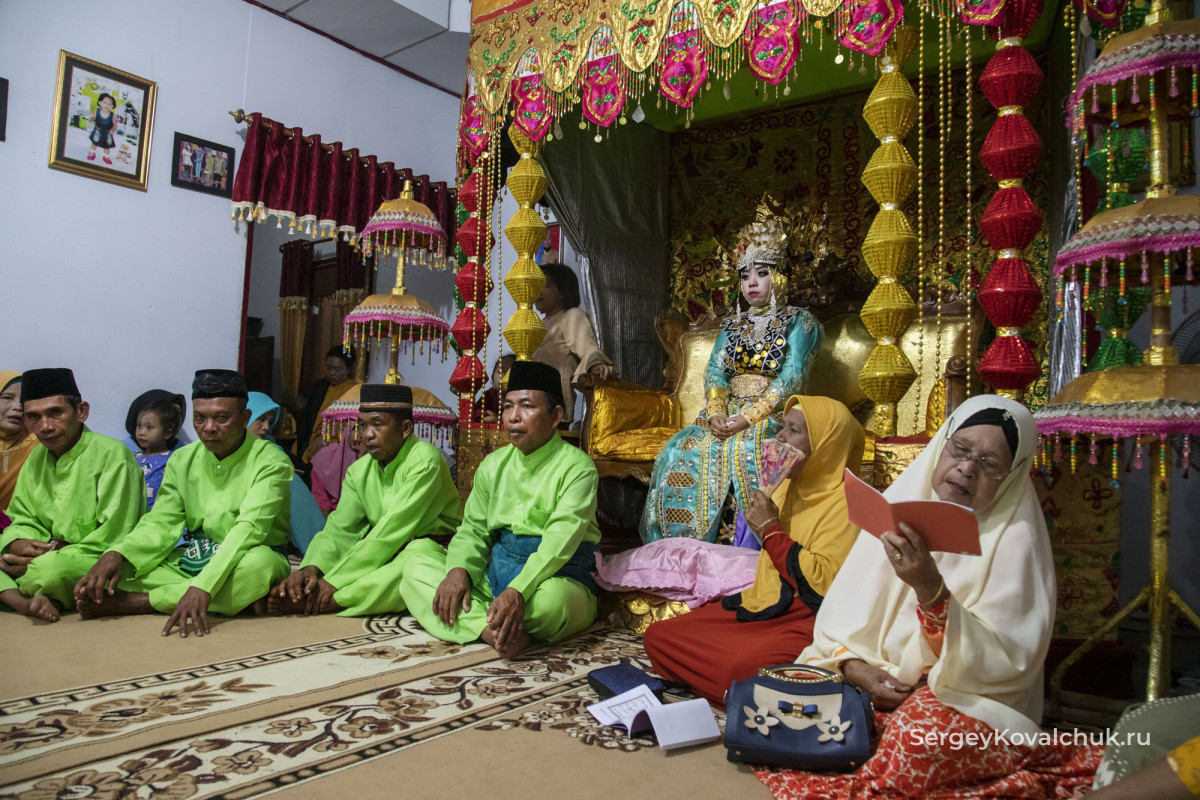
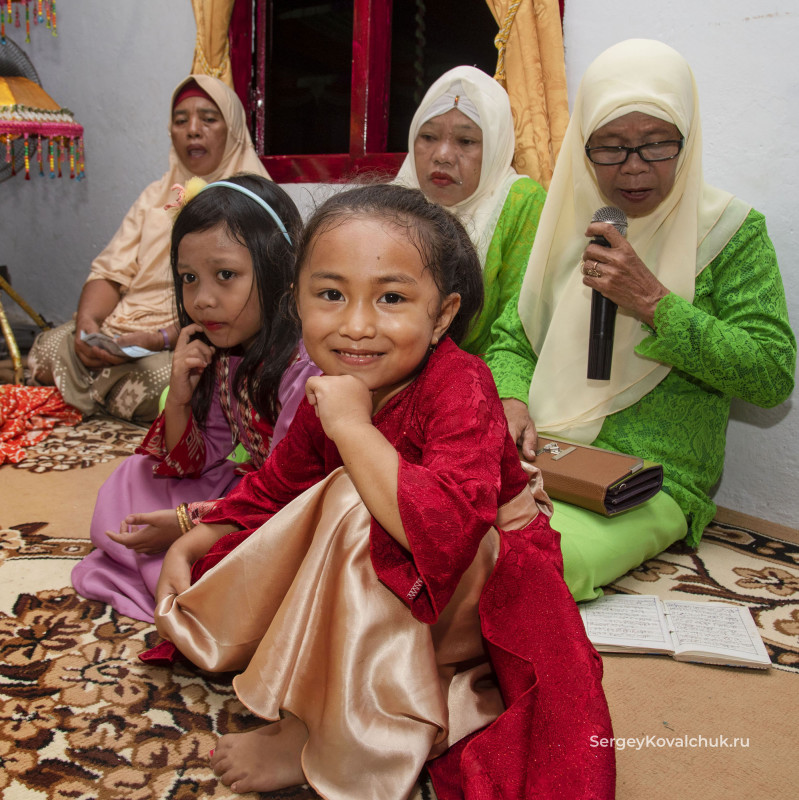
By evening of the first day, all the guests have gathered at the bride's house. She is sitting in a glorious position, in a festive dress, and crowned with a huge headdress. The intense heat causes her a lot of discomfort in her bulky costume – her mascara is melting into her eyes! One of the women sits down next to her, and begins reading to her from a book – with the girl sometimes repeating what's been read. These are religious homilies in Islam – the majority of the population in Gorontalo are Muslims. After this, an elaborately long prayer begins. Finally the religious part of the ceremony has concluded, and at this point the groom may traditionally arrive at his bride's house, in the company of two friends – all dressed in colourful costumes.
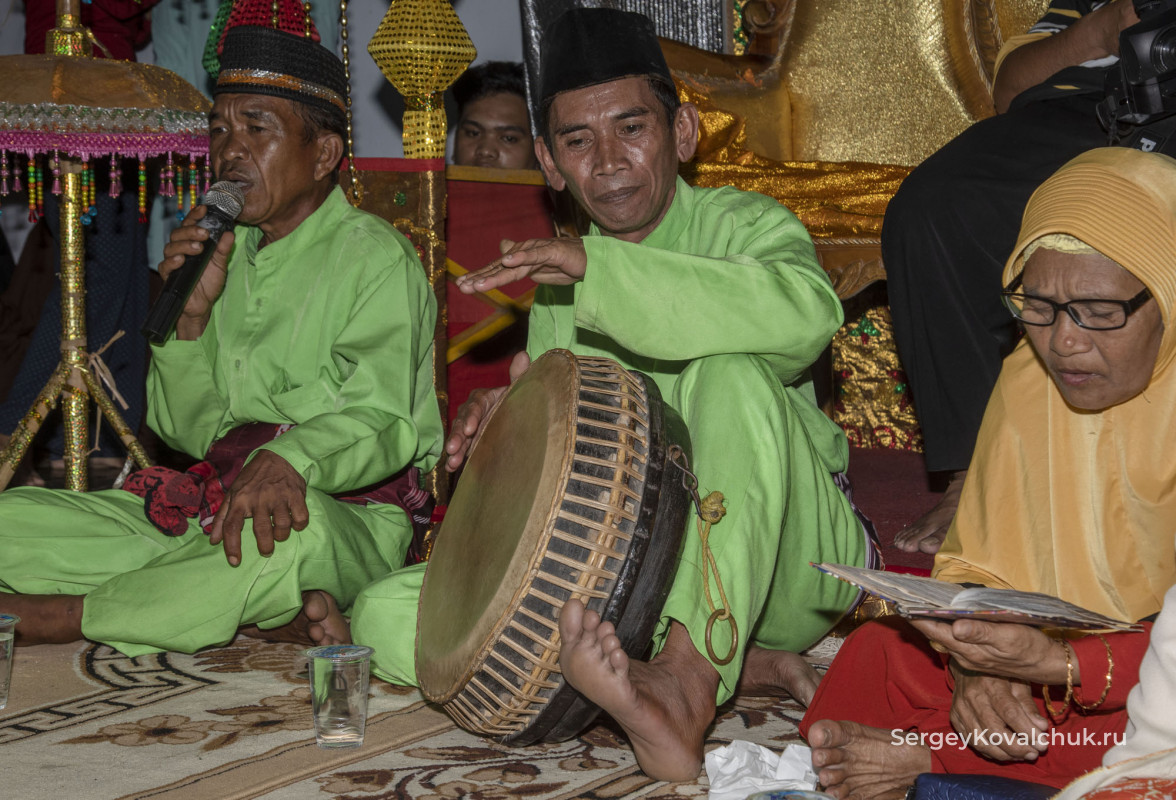
The groom and his friends sit down opposite the bride – and the cultural program of the evening begins.
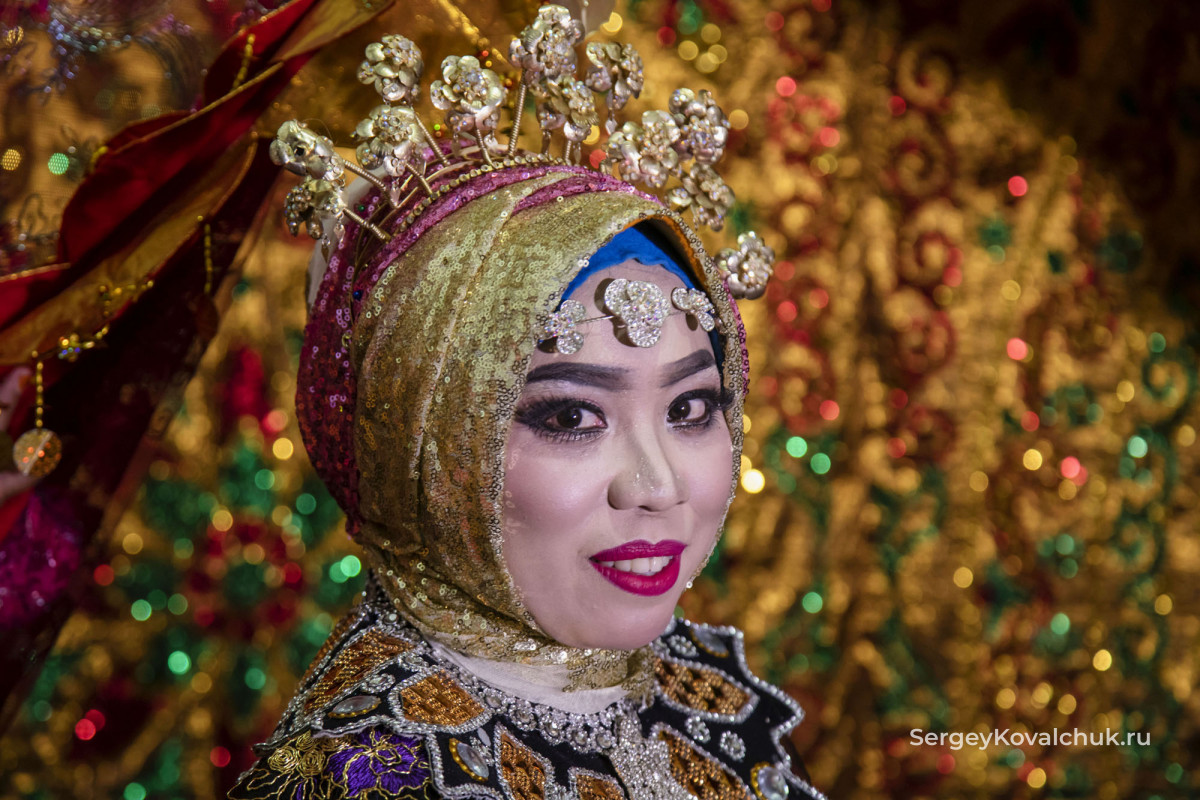
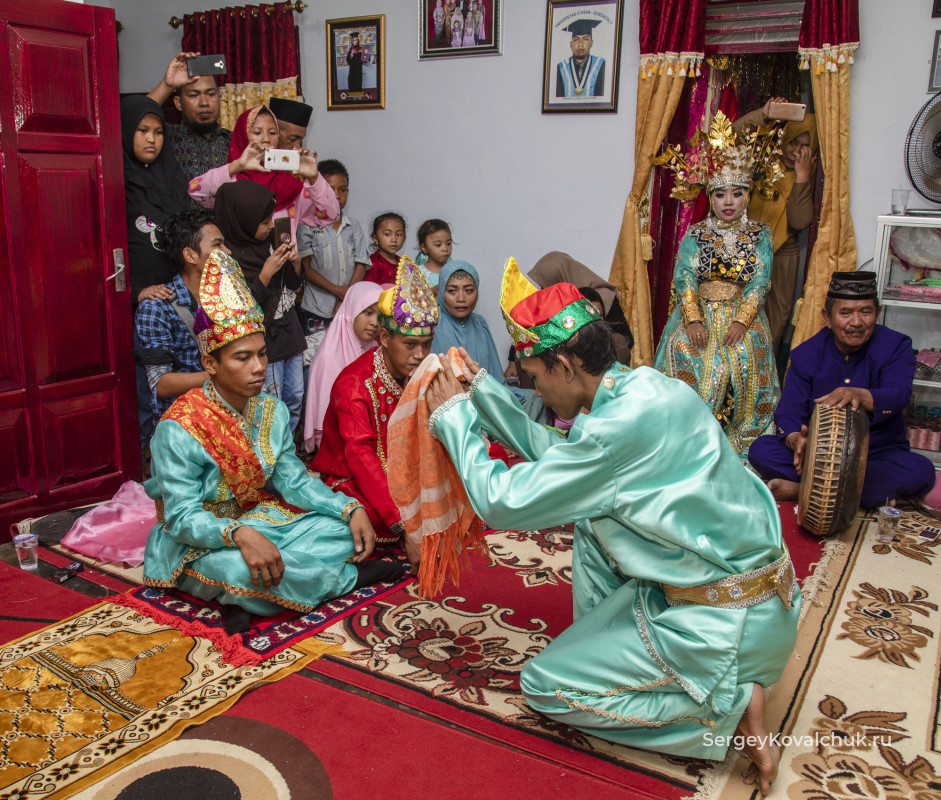
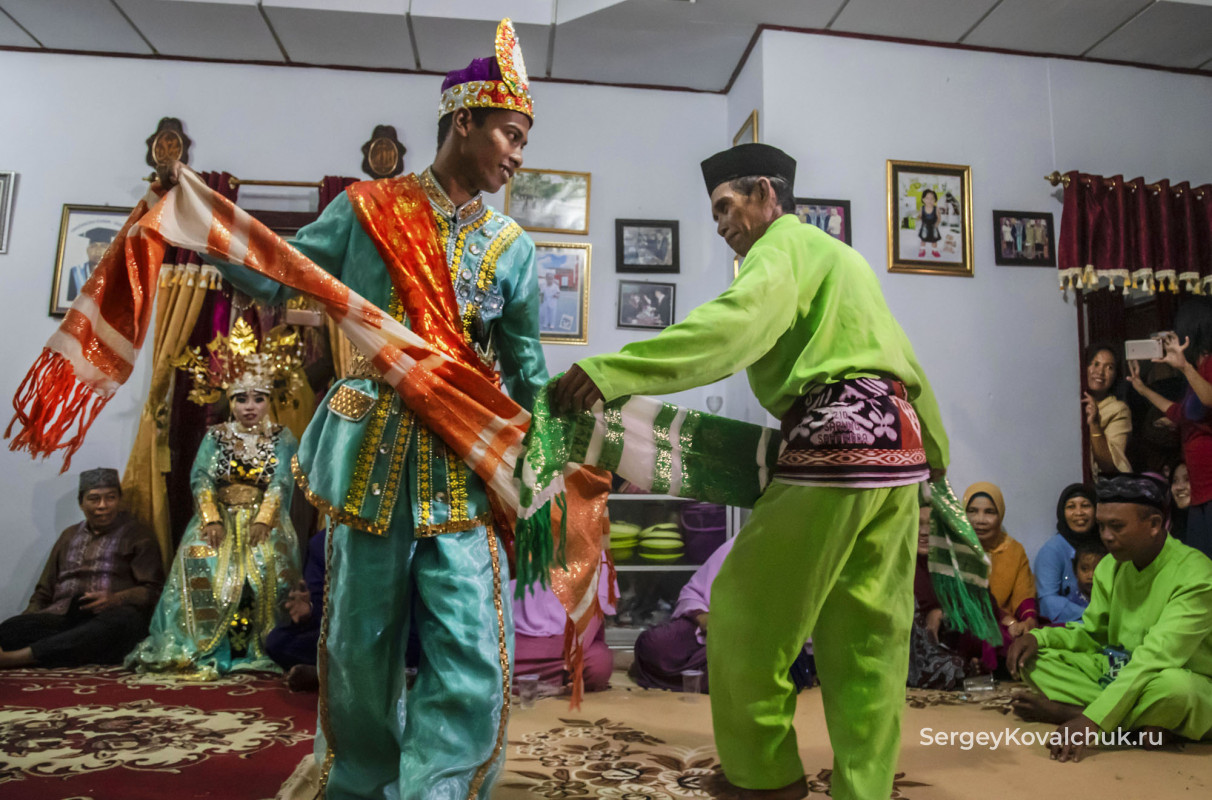
The Saronde is the traditional dance performed at weddings in Gorontalo. People believe this dance appeared as part of the courtship rituals – back in the times when the heads of families would decide who would make the most ideal match in marriage for their son or daughter.
It was a dance performed by the groom, along with a male friend, in front of the bride – and gave the young man a perfect chance to weigh up the merits of a potential wife. The bride, too, followed the performance closely, and evaluated her potential future partner. Nowadays, the dance is performed even after the couple have been married, but it can also be found amid other rites and performances. This kind of Saronde is now danced by both men and women, with shawls in their hands.At the wedding which I visited, it was danced only by two men. Once the dance was over the dancers would pass the shawl to further dancers, inviting them to come and take their turn dancing. I was lucky enough to be invited – and to dance with groom himself! He was from another region of Indonesia, so his knowledge of the dance wasn't greatly better than mine. The bride watched on in delight at our dance.

The fourth stage of the Gorontalo wedding ceremony
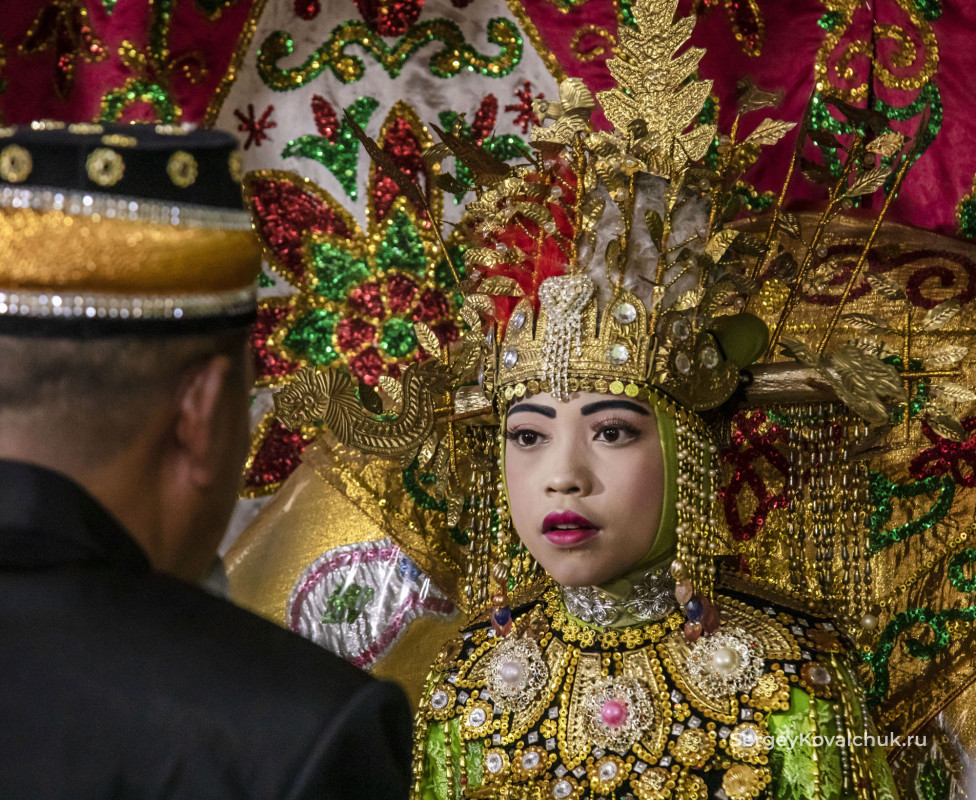
The afternoon of the following day is considered to be the actual wedding. Once again, a huge throng of guests gathers at the bride's house – relatives, friends, and neighbours. At the opening of this part of the ceremony, the bride is in her room – and sitting in her place is a different girl, also in a festive costume. It was explained to me that this was probably a younger sister of the bride, now of marriageable age – and thus she would inherit the right to marry, from her elder sister, as it were. There comes a moment when aman sits down in front of her – an official who is the Marriage Registrar. He takes a microphone, and gives a speech about the merits and meaning of family life. The girl listens carefully, and sometimes repeats parts of what he has said, when he prompts her to do so. This entire conversation is relayed to the guests outside in the street.
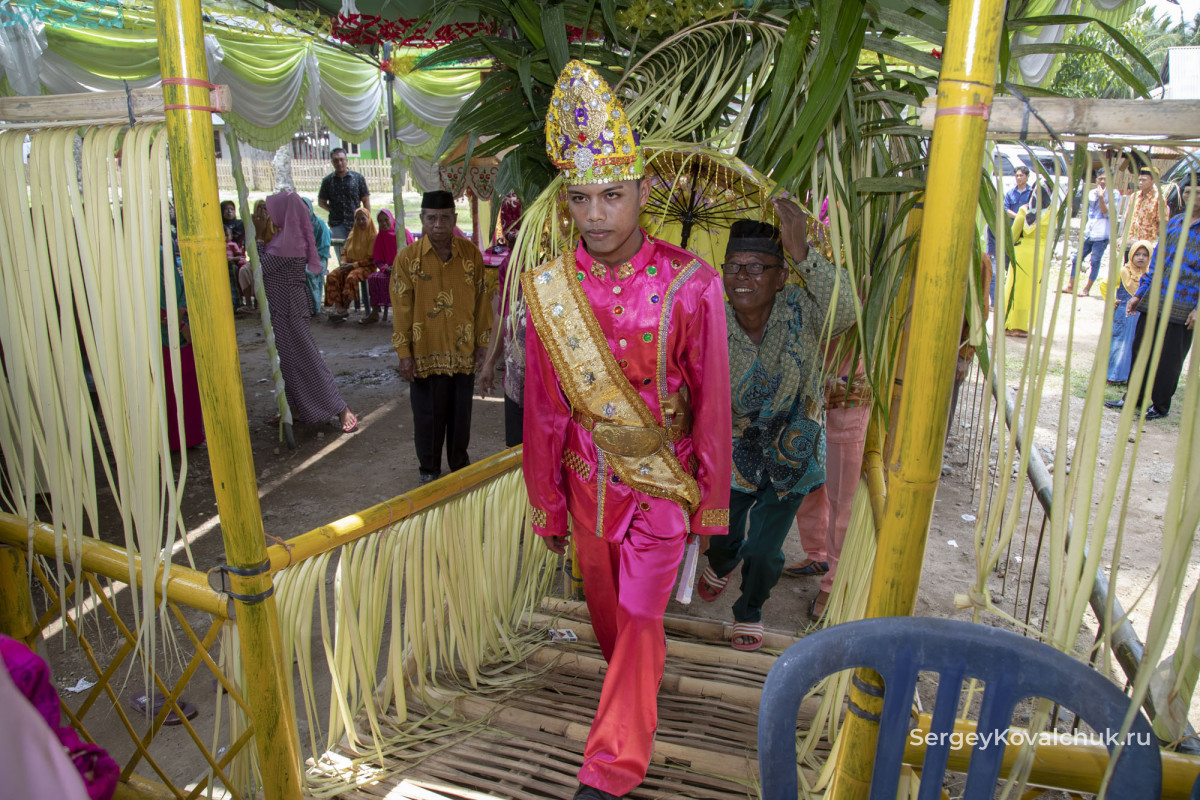
Very soon, the bridegroom and his entourage arrive by car. He goes ceremonially into the large wedding room, and sits there on a special chair arranged for him. The official marriage ceremony has begun. The elders of the two families arrive, along with the heads and elders of the village where the wedding is taking place. The Registrar has a solemn discussion with the groom, explaining his responsibilities, and the behaviour expected of him during the ceremony. Finally, everyone goes through to the room where the bride has been waiting. The groom takes his thumb, and places it on the bride's forehead, in token of love and faithfulness. They are wed! Now the couple sign the official Registers, and they receive Marriage Certificates. The cereomony is complete, they are now a family! Wedding photographs, feasting, and festivities follow until late into the evening.
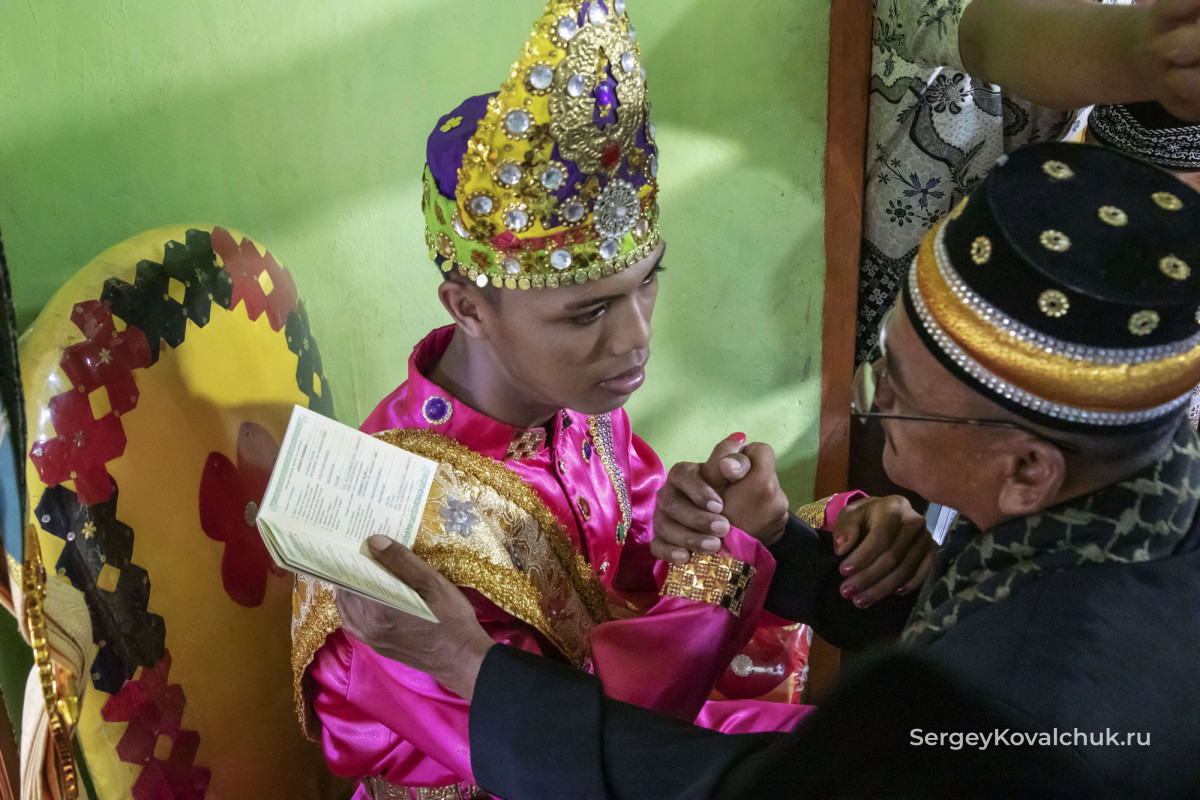
The Registrar has a solemn discussion with the groom