Cliff burials among the Toraja people
Tana Toraja Regency, South Sulawesi
Different locations of the world attract the attention of tourists for their various sights. The southern parts of the island of Sulawesi attract visitors primarily due to the funeral rites of the Toraja people, the farewell ceremony and burial. The ceremonies take place in accordance with time-honoured traditions of ancestor worship and animism which are native to this region – and which continue to be practiced today, despite most of the Toraja having long since converted to Christianity.
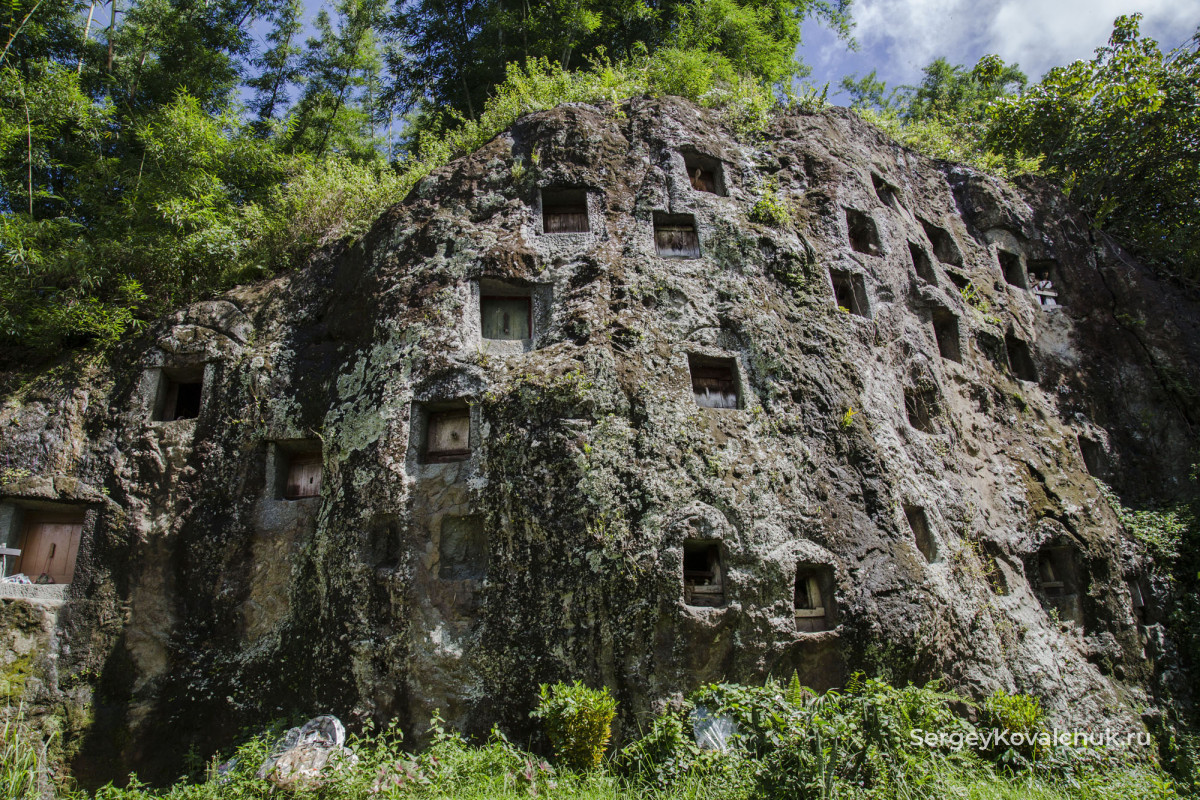
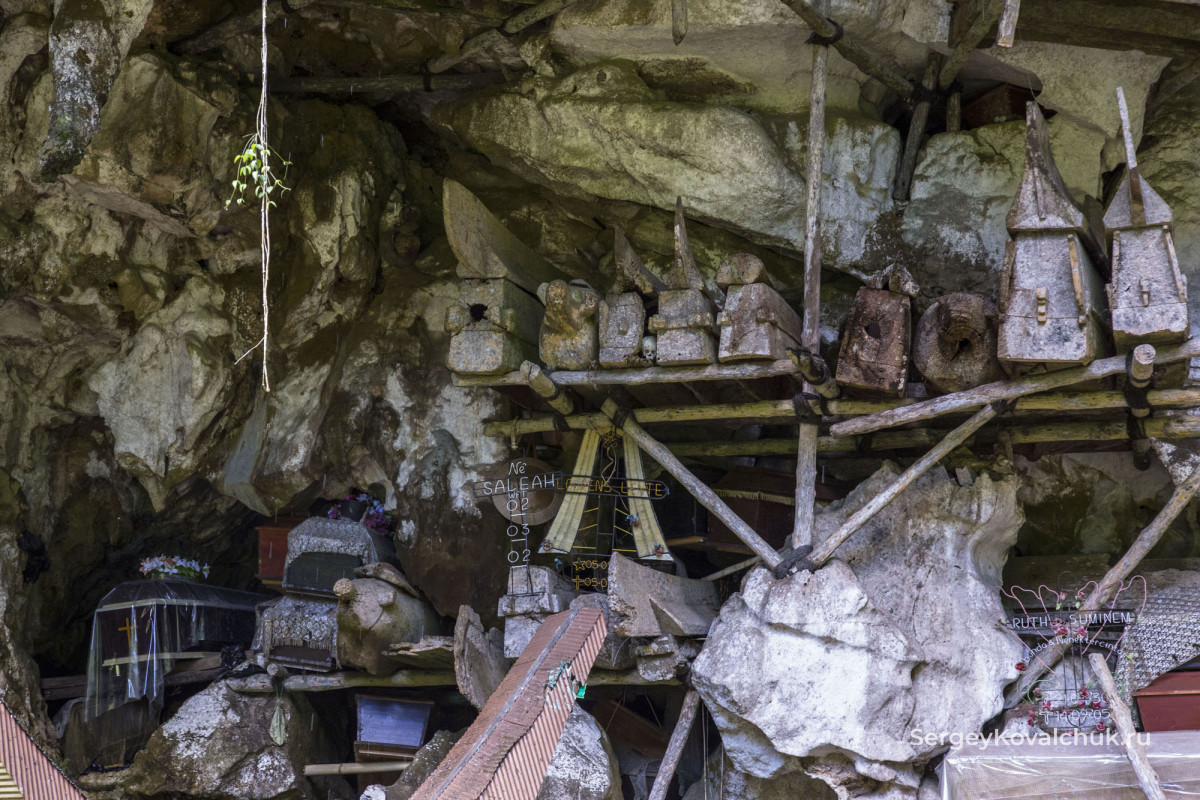
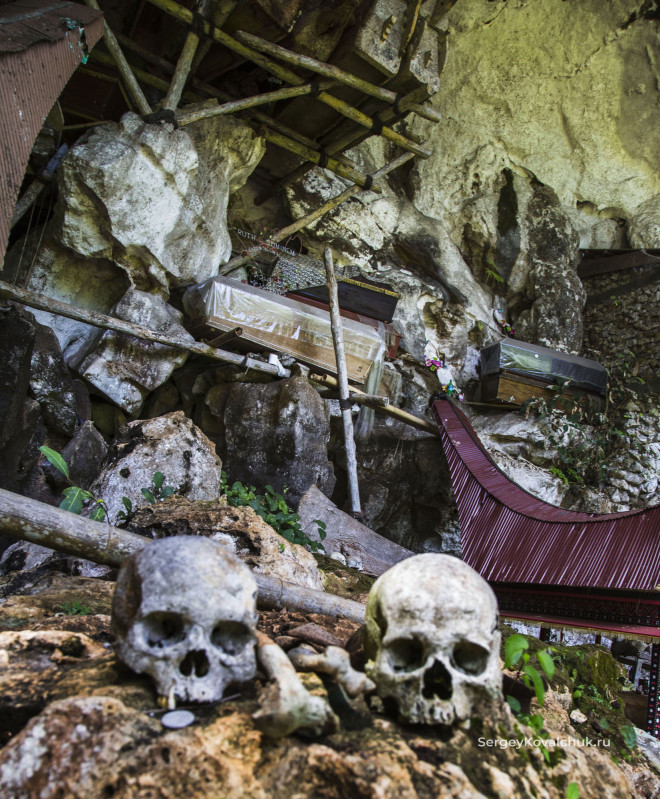
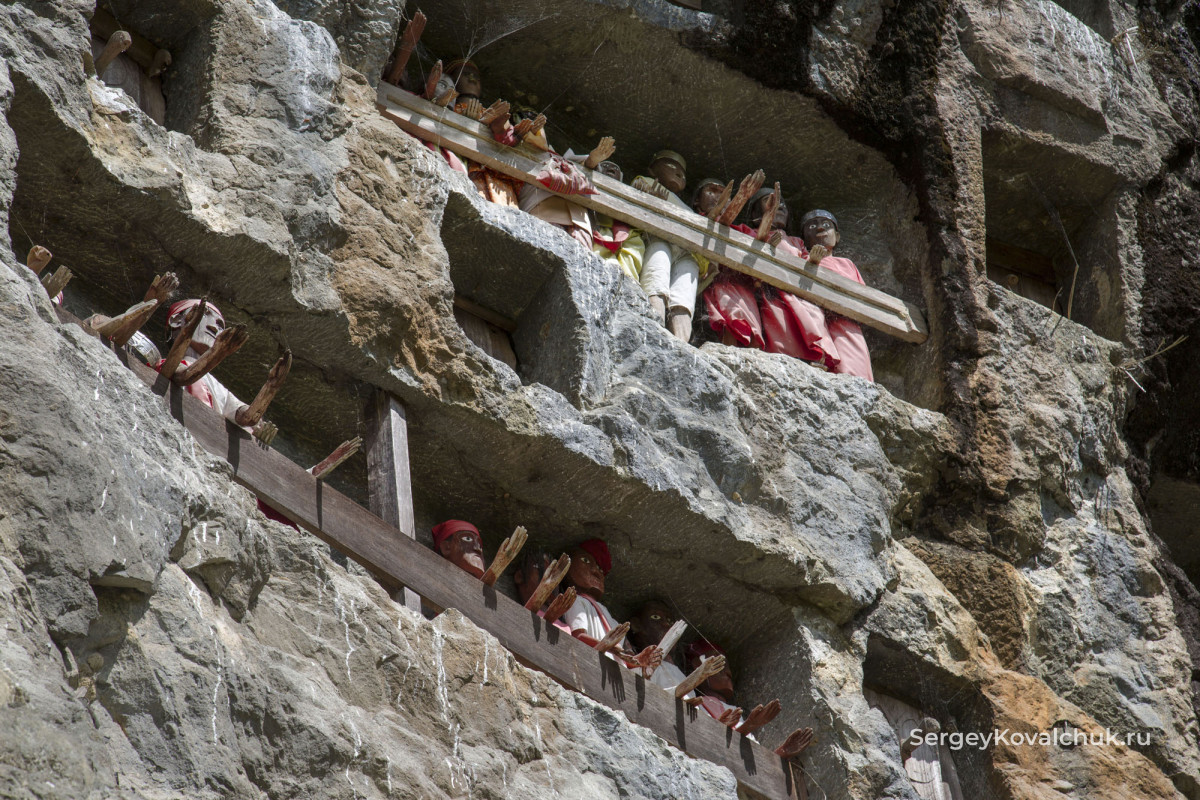
The dead are buried in caves – either natural, or hollowed out of the rock-face. At the entrances to these caves are special wooden verandas, on which wooden sculptures of the dead are placed. Families may have a special place, where the bodies of several relatives are located.
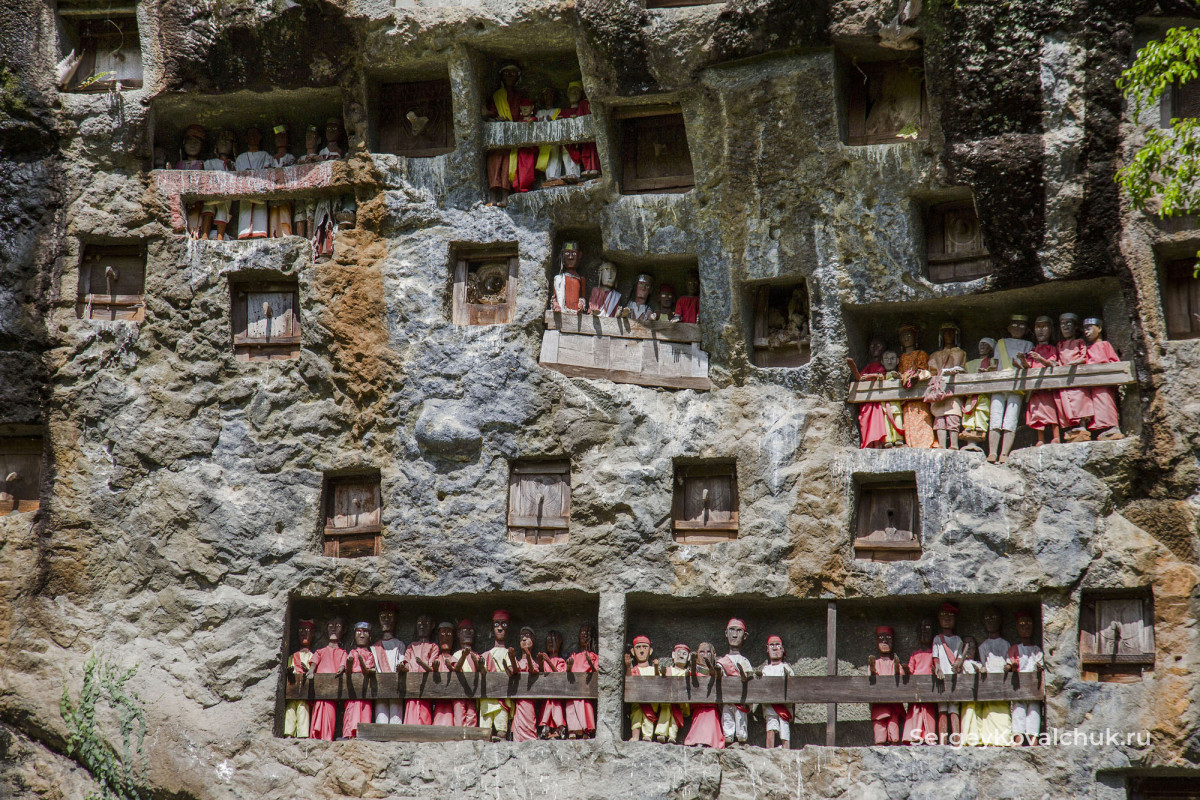
Sculptures of the dead are placed
After someone's death, their relatives will gather for a commemoration service. Guests will bringgifts to the host's house – which might be pigs, grocery items, cigarettes, or other things needed for the farewell ceremony. This ritual can go on for several days, and can be very costly. Part of the funeralritesinvolves ritual sacrifice of pigs and buffaloes – as the more animals areslaughtered, the easier it will be for the soul of the deceased to make their way to the blessed paradise of the ancestors. The body of the deceased is embalmed using special technology – usually at their house. People believe that the soul of the deceased will not leave the house until enough money has been collected for the burial ceremonies. This might take several months – or in some cases, even years.
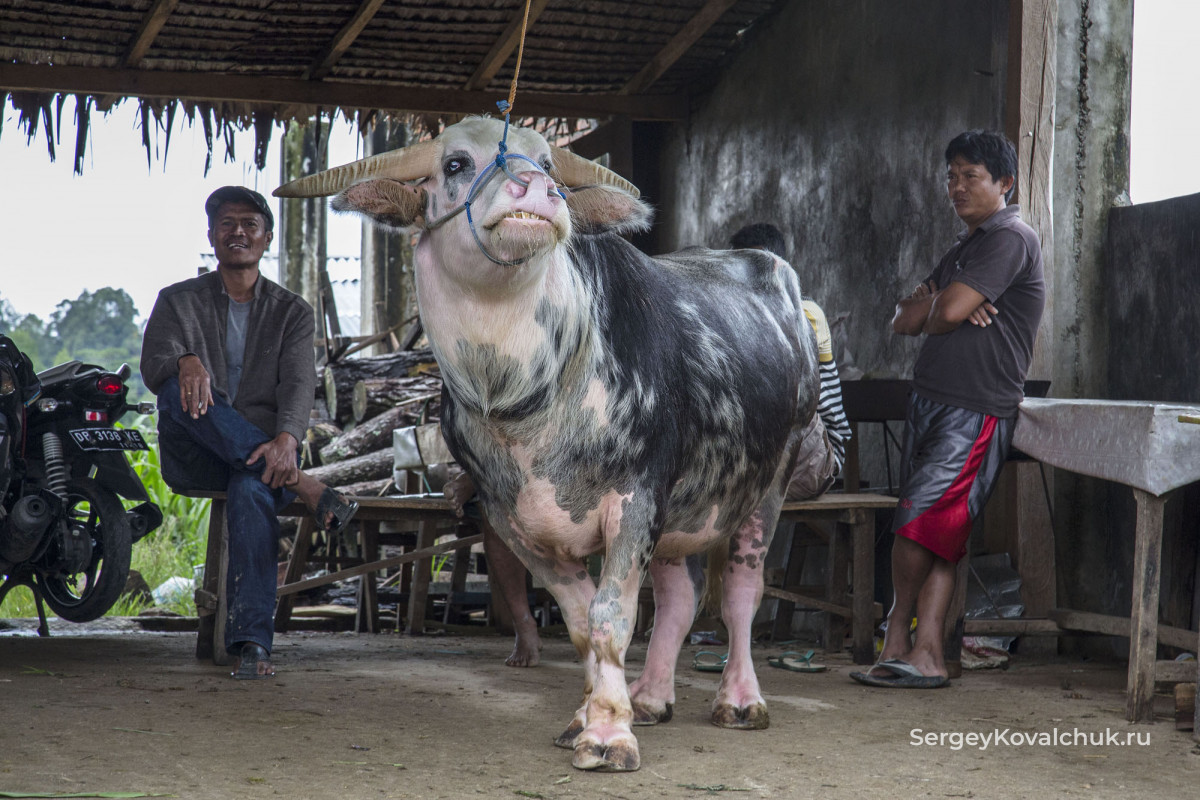
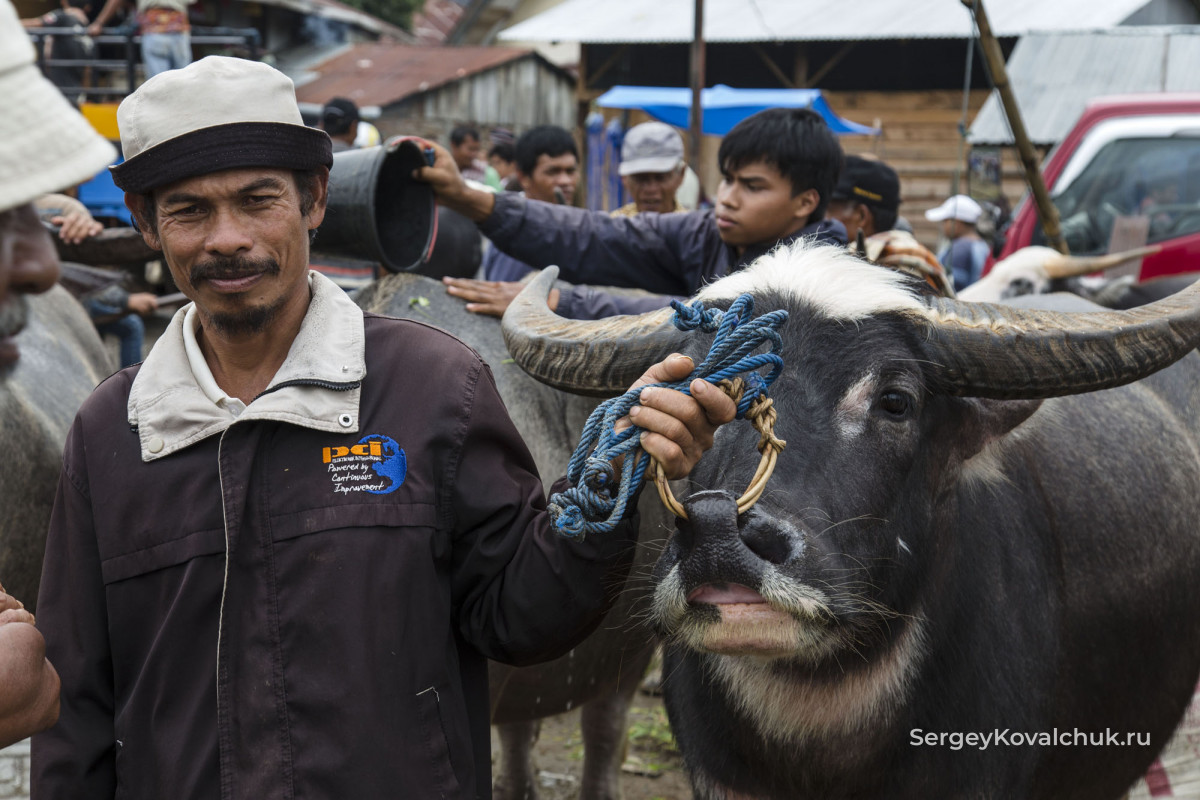
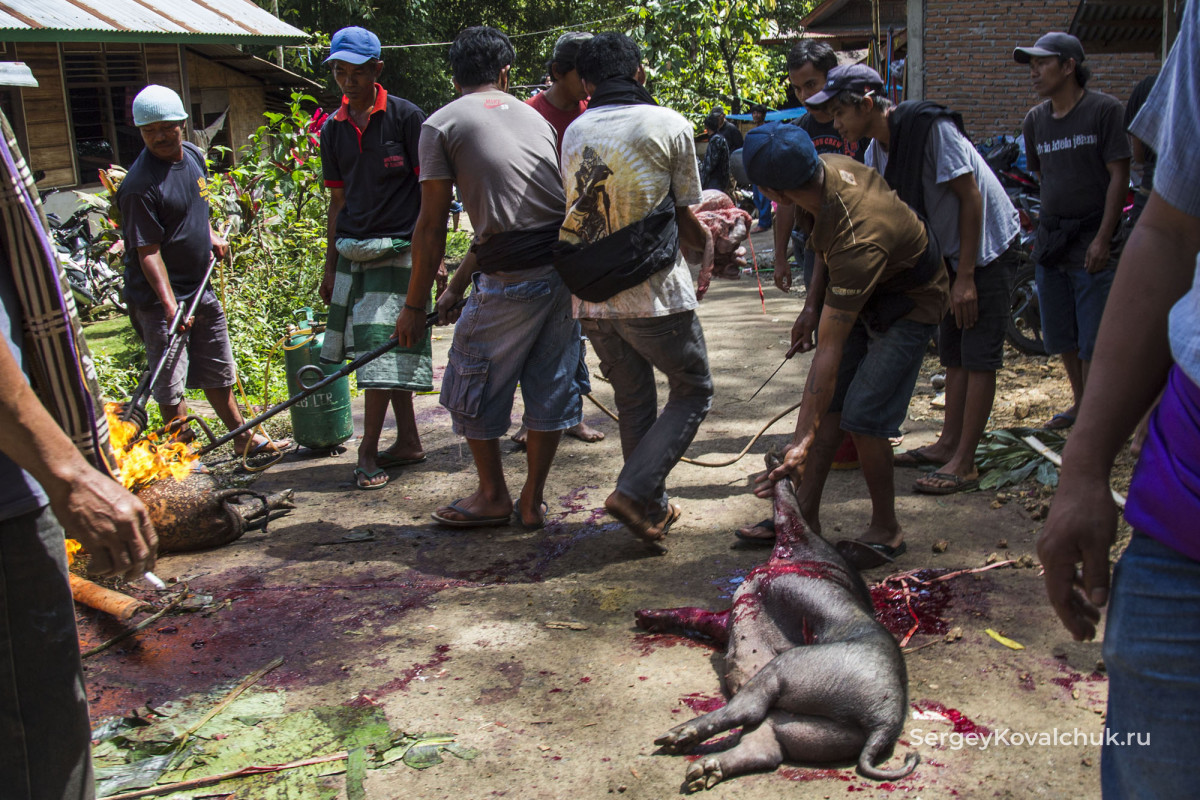
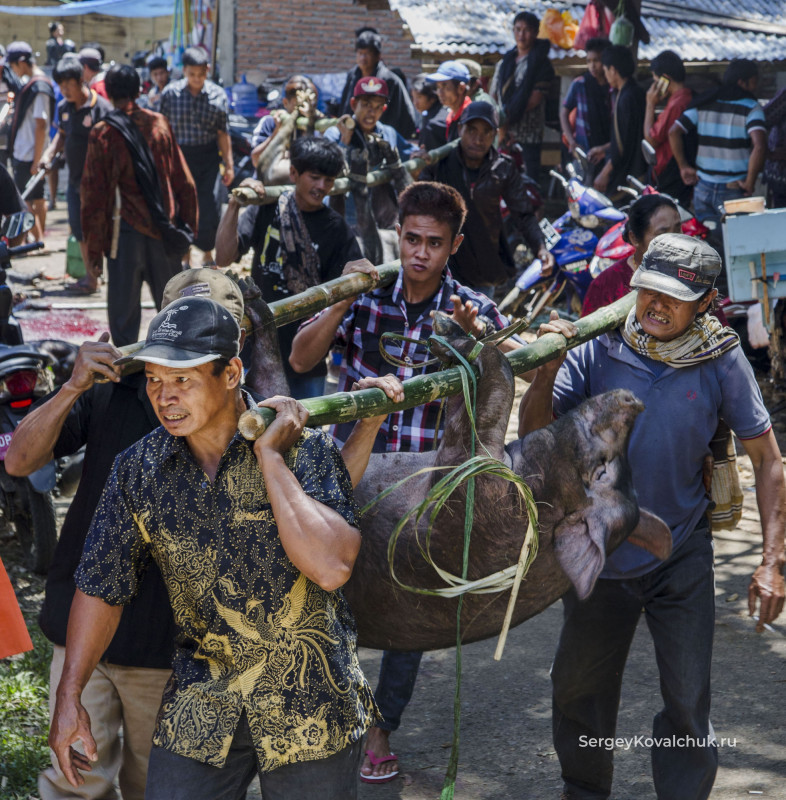
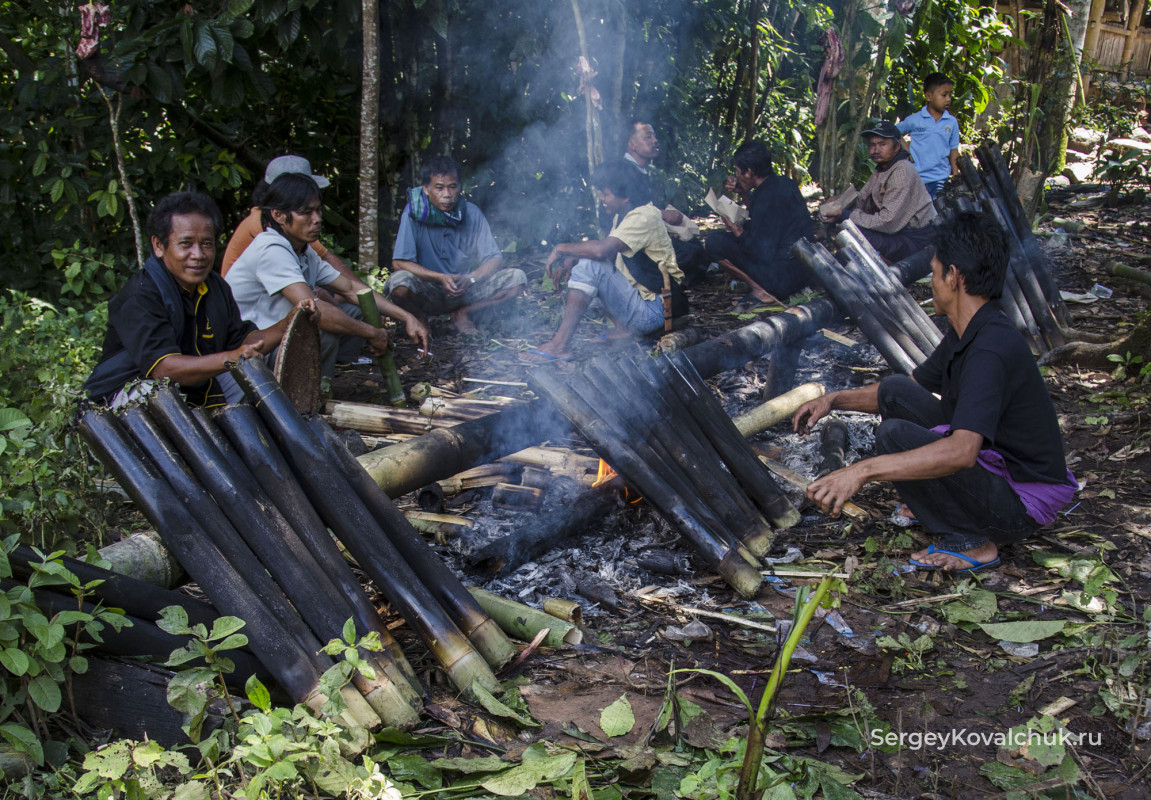

Buffaloes for ritual sacrifice at funerals are sold at a particular market, on an assigned number of days per month. The price for one animal can vary from one or two thousand US dollars, to tens of thousands.
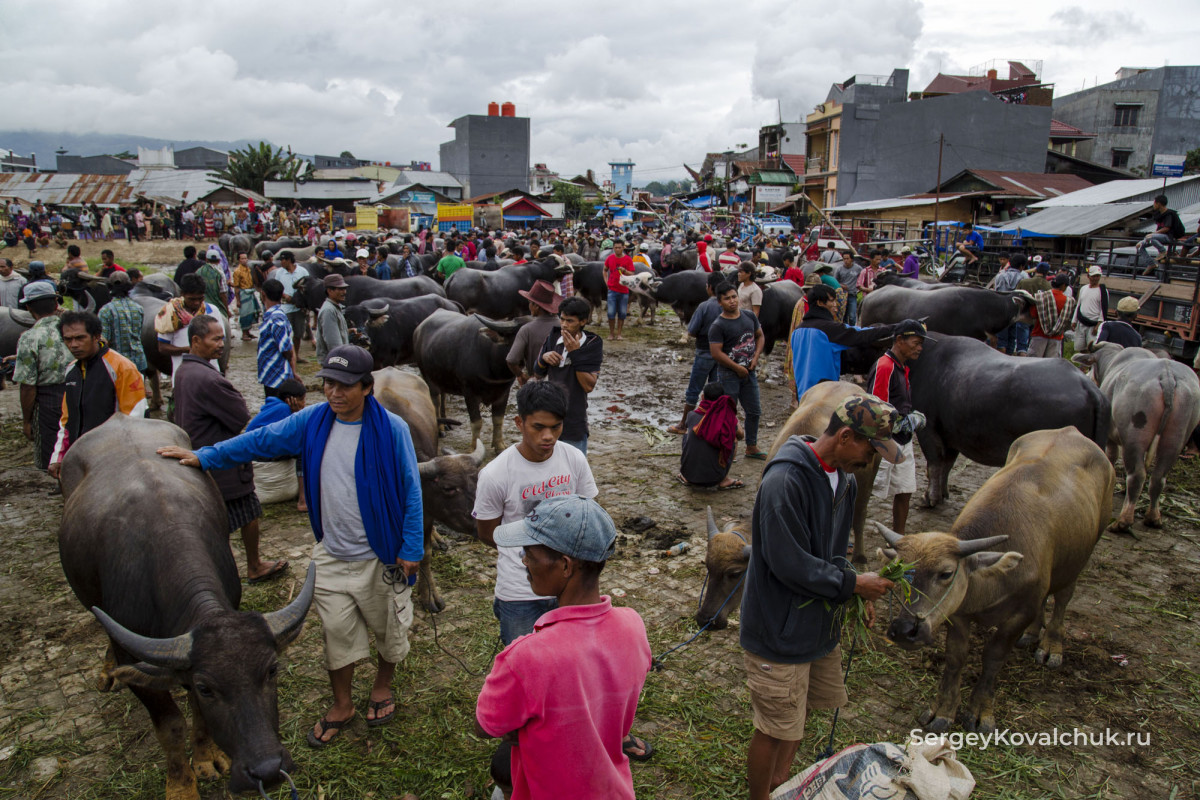
Buffaloes for ritual sacrifice at funerals are sold at a particular market
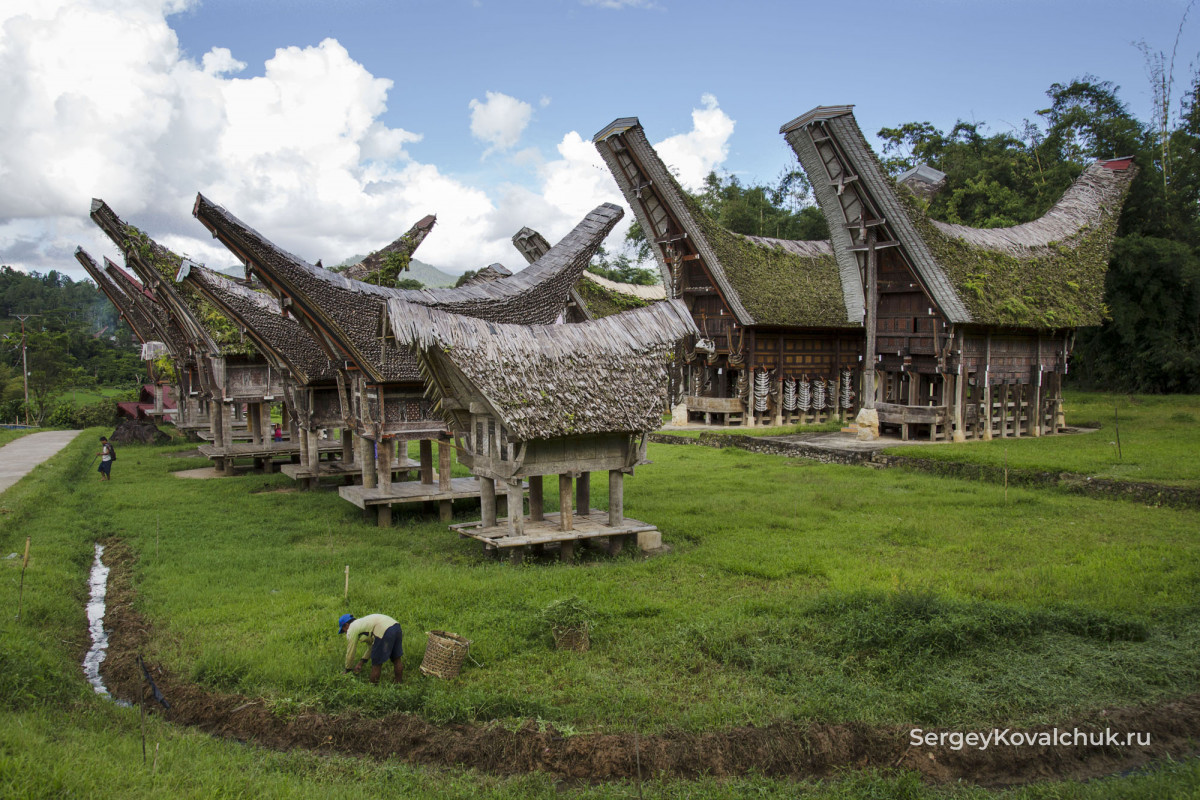
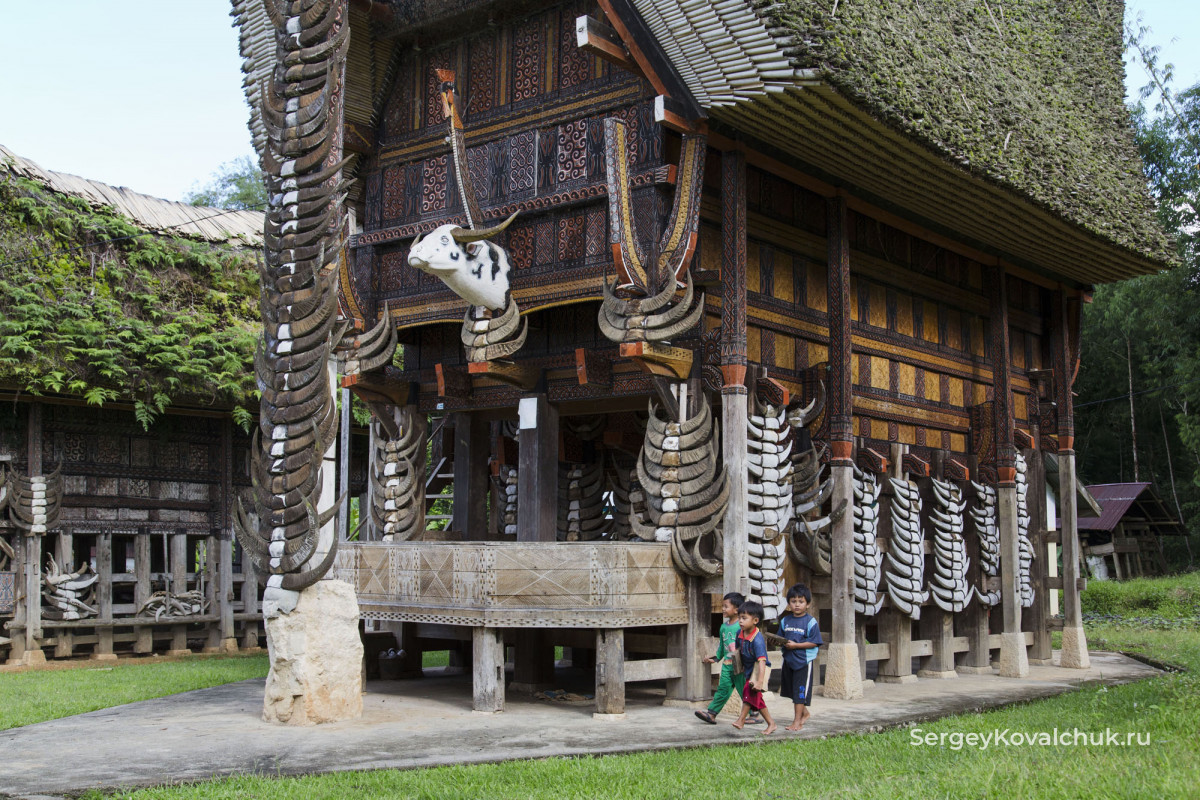
After the sacrifice, the horns of the animal are hung in front of the house. The highly-raised ends of the roof of the house also resemble buffalo horns. The richer a family is, the more buffalo horns are expected. Next a wooden statue of the deceased – often full-sized – is created, and taken to the burial site where the funeral ceremony is to take place.

The horns of the animal in front of the house