Funeral rites on the island of Sumba
East Indonesia
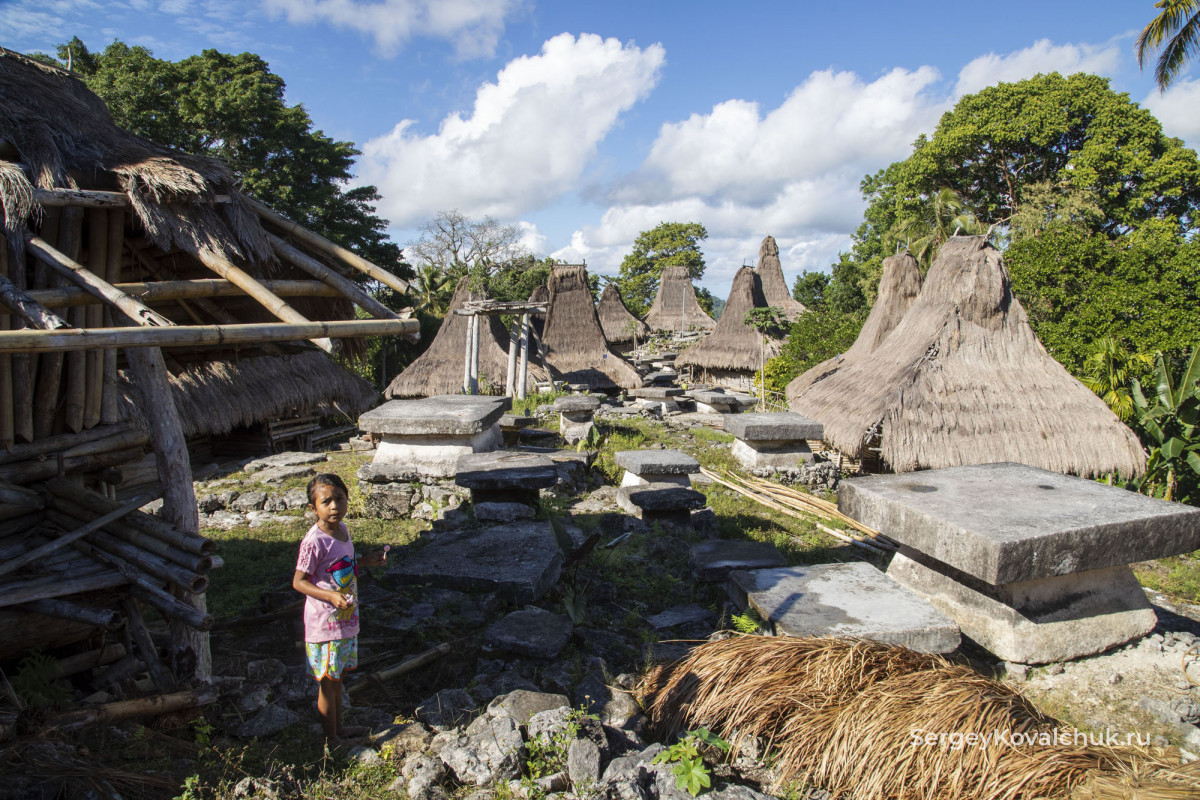
Following the Marapu traditions of belief on the island of Sumba, the body of the deceased is kept at their house after death – just as it is with the Toraja. This can go on for a long time, because it will take a great deal of time to accumulate the money needed for a traditional Sumbanese funeral. A huge stone boulder must be brought to the house, and hewn until it is cubic in shape. It is then hollowed out in the middle, and the body of the deceased placed inside it – and sealed with a huge slab of stone. Traditions of making such megalithic tombs go back to ancient times.
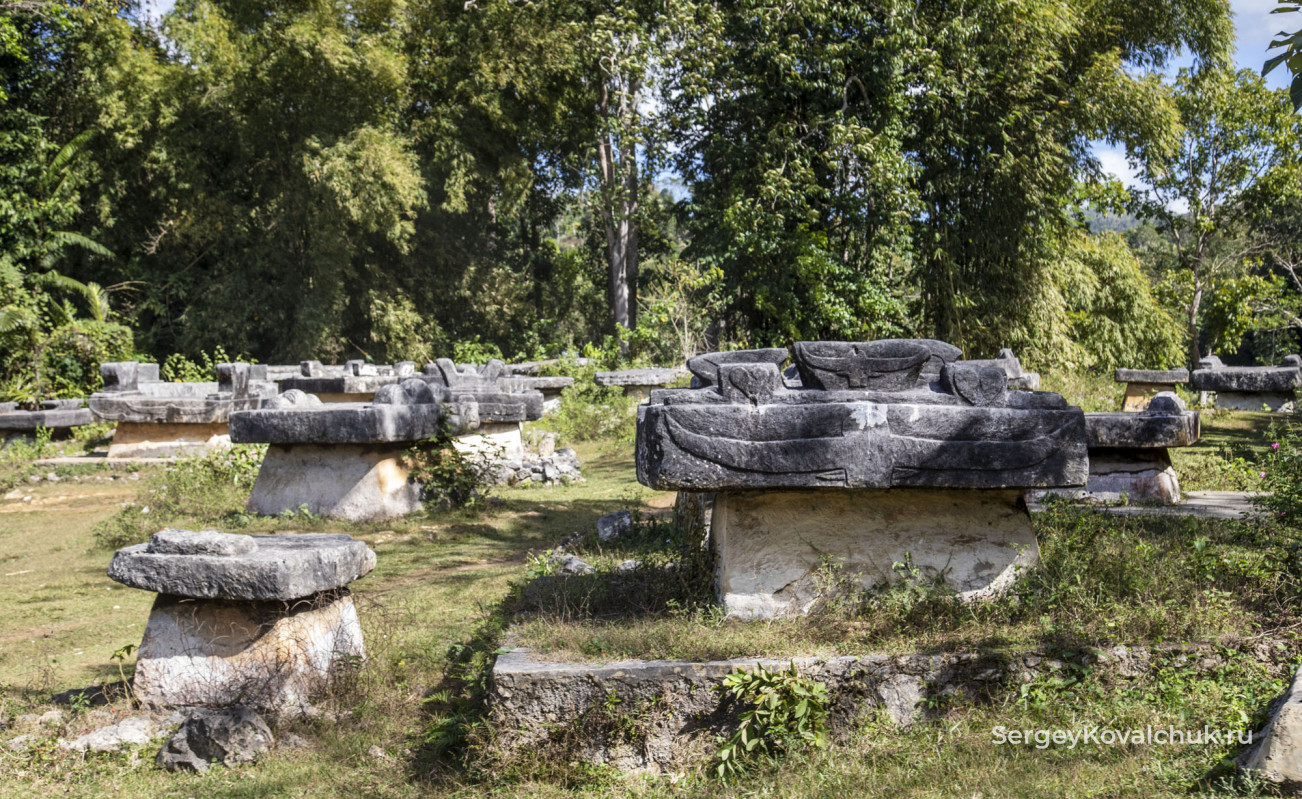
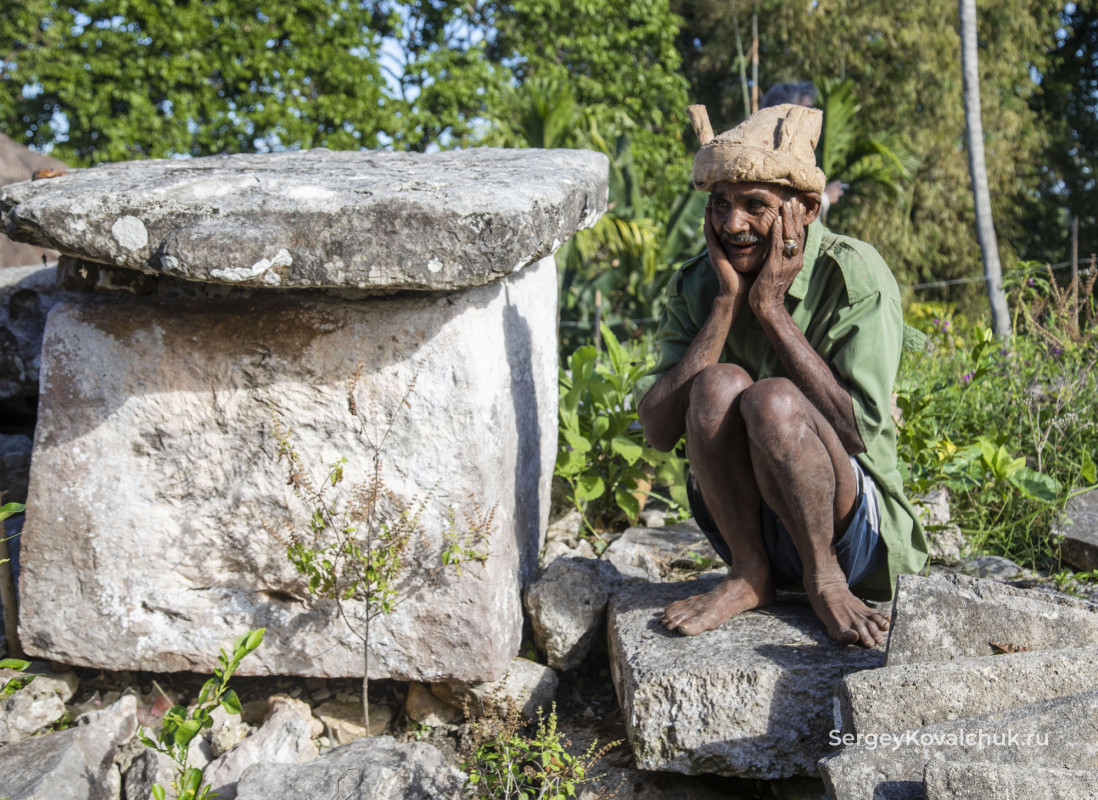
Nowadays they make these sarcophagi from concrete, or even from building blocks – although the ritual has not fundamentally changed. It is interesting that the gravestones have no inscriptions – who it was who left this world, or why. Information about the deceased is spread by word-of-mouth, from generation to generation. People in the village can remember the details of up to twenty previous generations. Several bodies can be buried in one tomb. It means each tomb is opened when there is a new burial. I was shown a very old tomb that was rather small. I asked 'How is the deceased placed in there?”. They explained that the body is put there in a seated position – the pose of a baby in the womb. 'As we come into the world, thus we leave it too.'
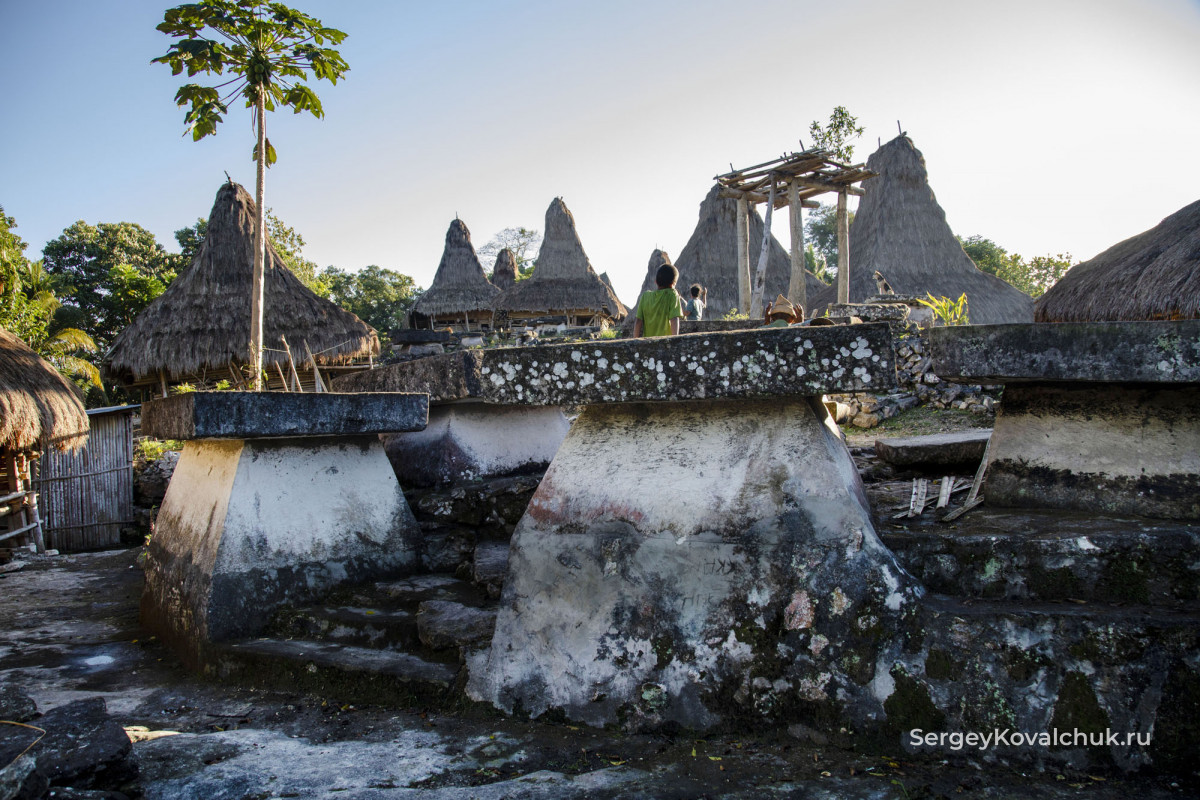
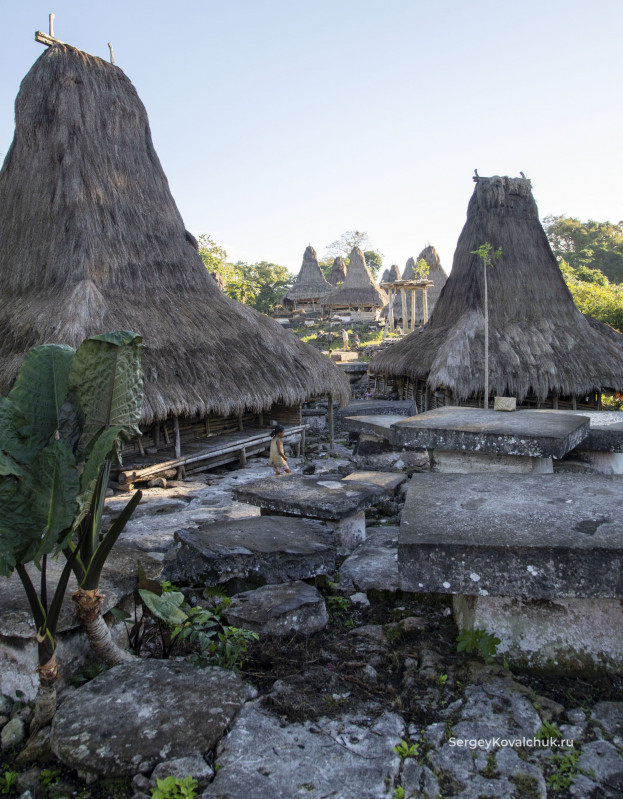
A typical village scene on Sumba – traditional houses with tall, grass roofs. It's quite easy to build this kind of home. The main support is from four strong wooden posts, standing on a stone foundation dug into the ground, and then covered over with crossways logs from above. Then everything else in the house is attached to this framework. Looked at vertically, there are three sections. The lowest section of the house is where the animals are kept. Above is for the owners, with places for sleeping, and an open hearth. The uppermost level is for storage. The principle is that all the materials are sourced locally, from the forest. Some say that the best kind of grass for the roofing might be brought in from another district. The roof has to be renewed every 4-5 years.
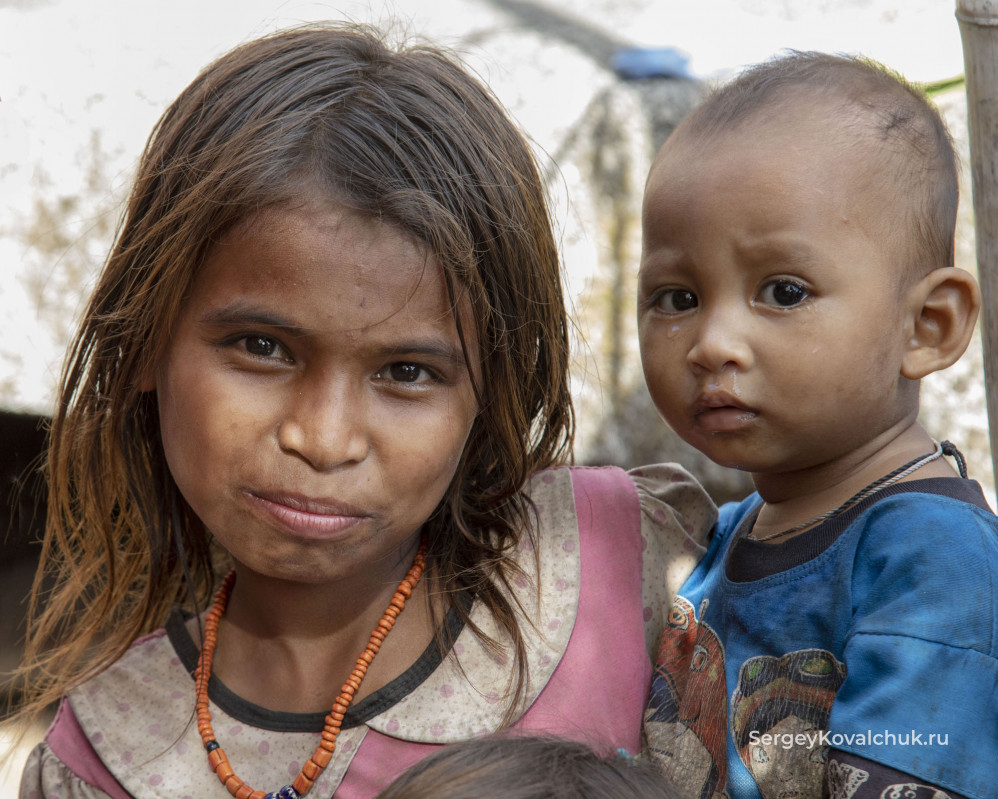
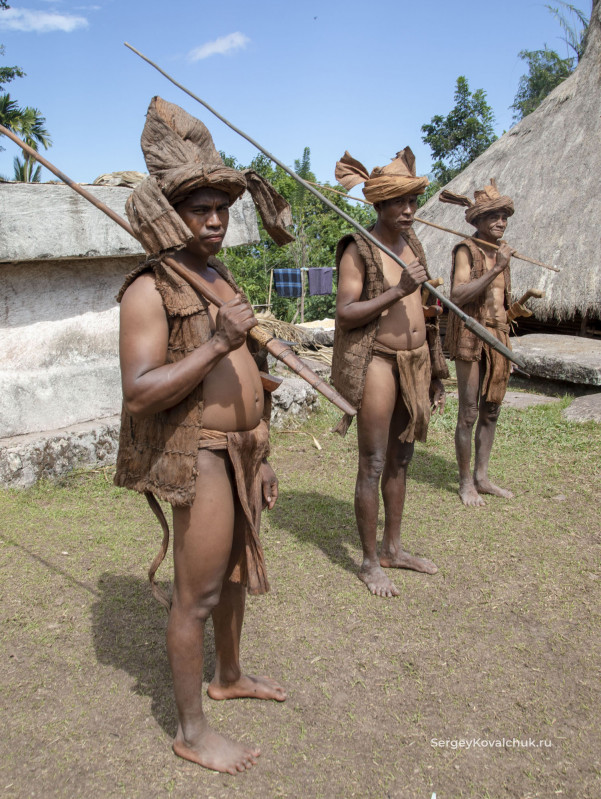
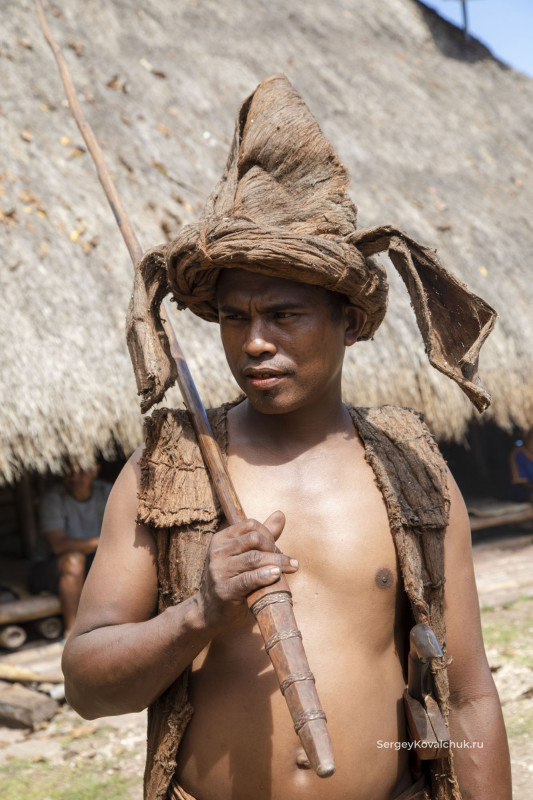
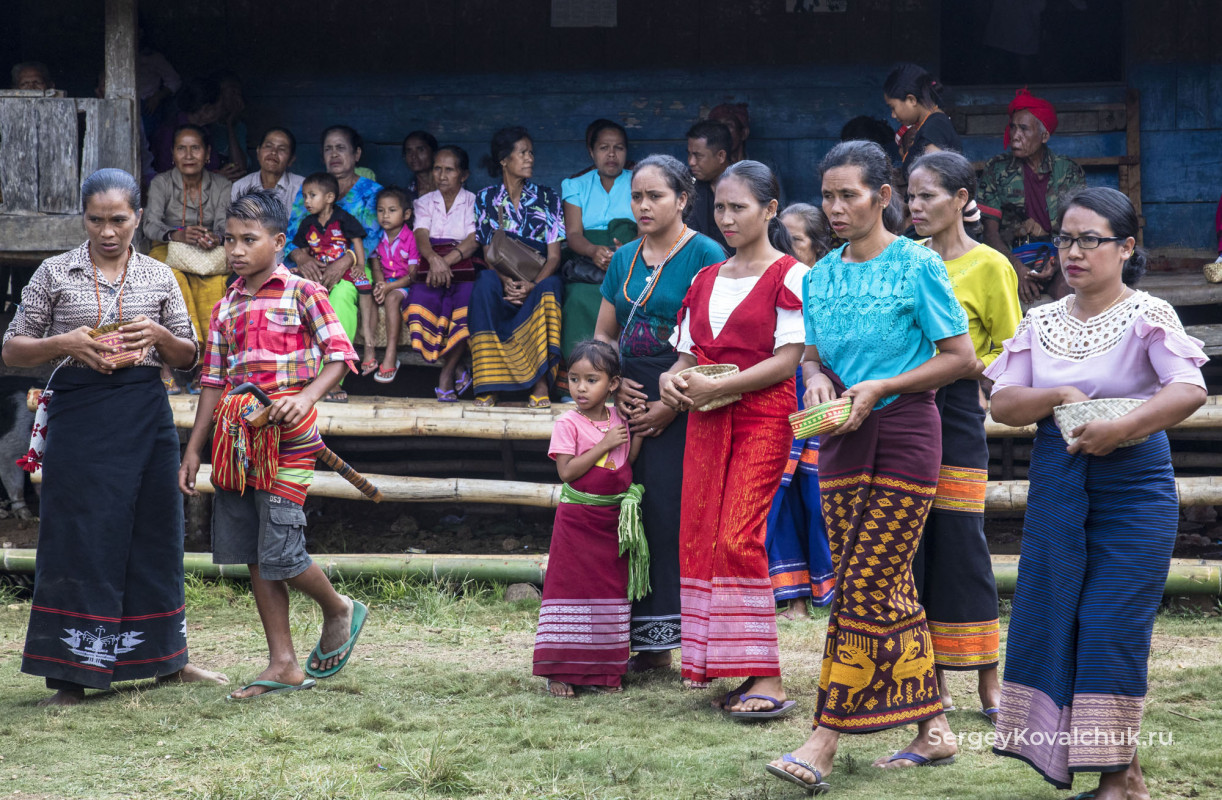
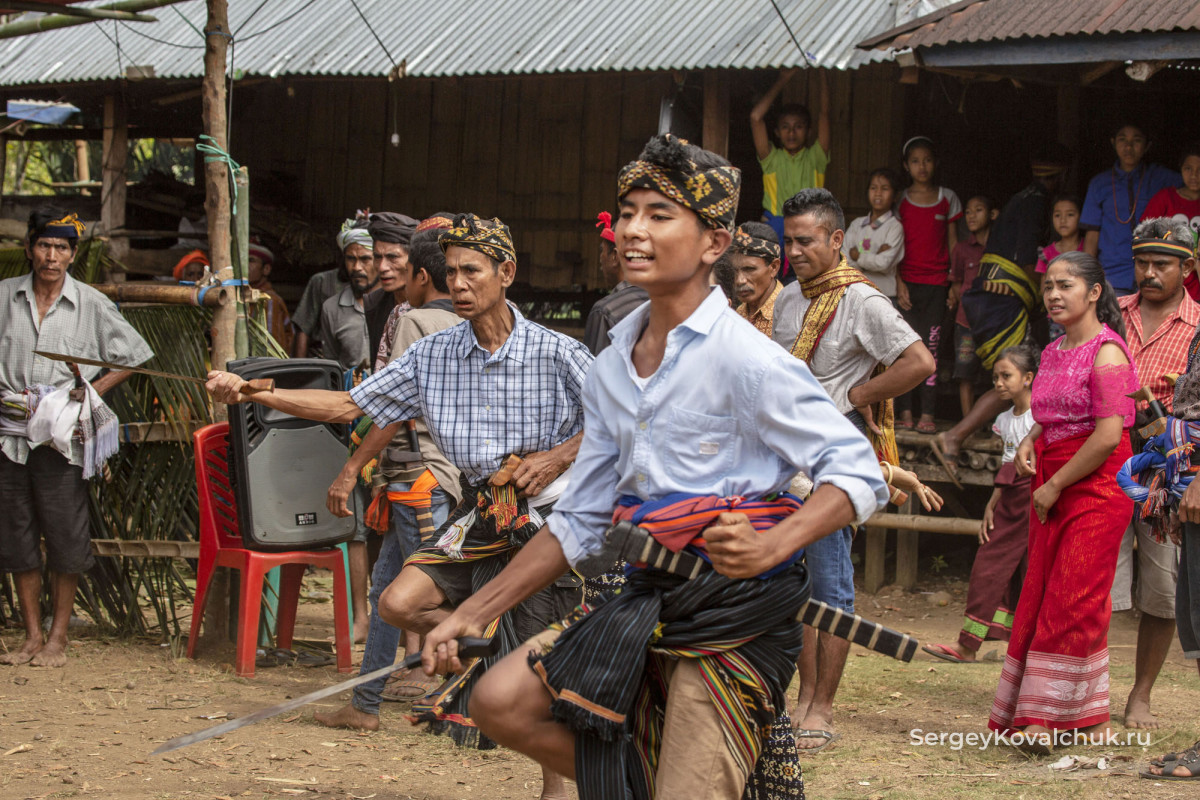
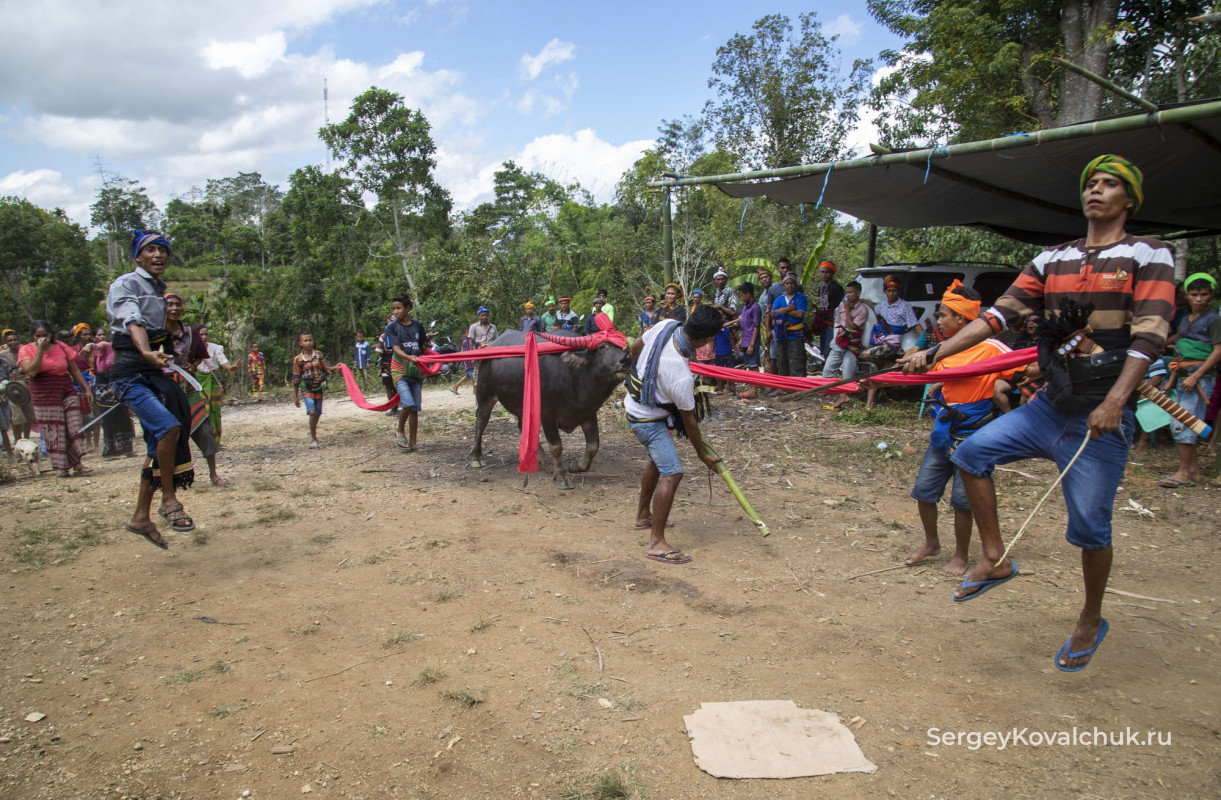
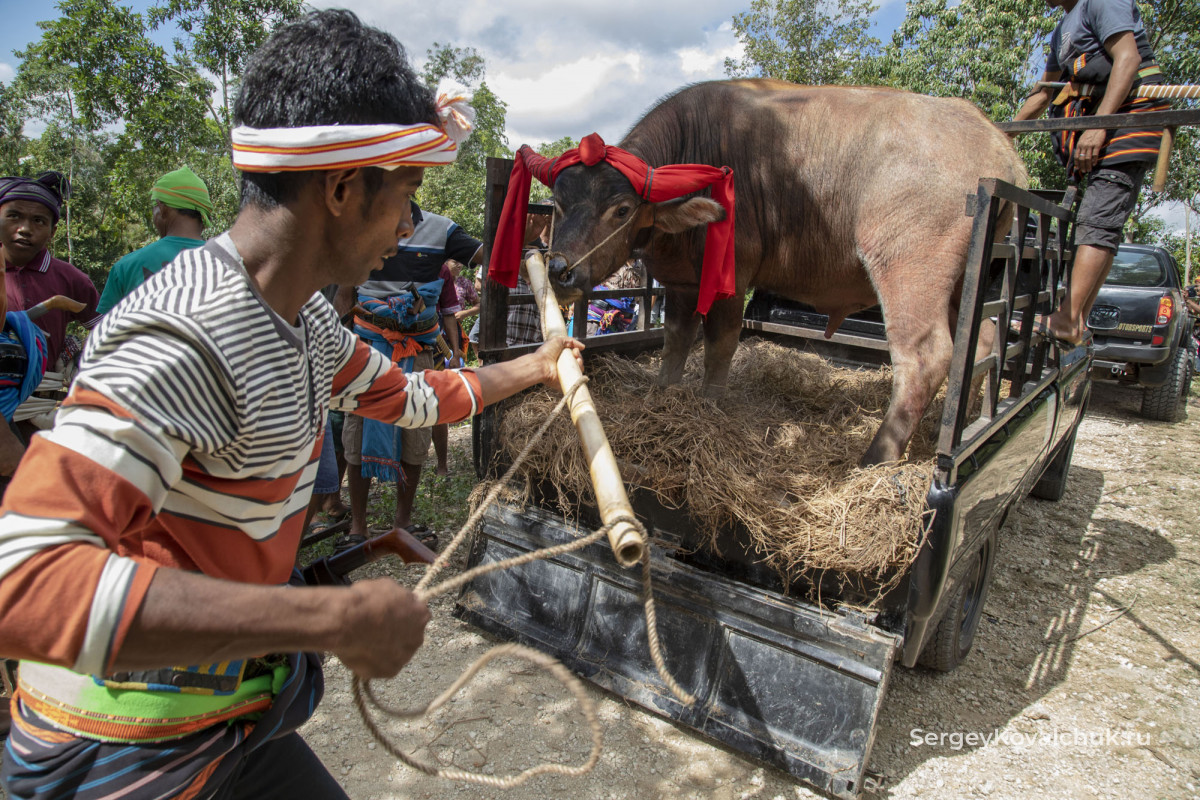
Funerals are some of the most solemn, ceremonial, and costly rites practiced in Indonesia. On the island of Sumba, we attended the funeral of a woman. When we came to the village, there were already many attendees, with more invitees arriving over the next three hours. Trucks and vans delivered pigs, while buffalo were led by long ropes tied to their horns. People attending the funeral are greeted with exclamations and dances – and given a betel quid as a sign of welcome. Our guide explained how people feel funerals are a mixture of feelings of grief, and of joy. As a greeting, people rub noses – an equivalent of kissing in other cultures. Later on we mastered this ritual ourselves. As guests, we were invited to some drinks. Some of the guests went to bid farewell to the body of the deceased, lying in her coffin – after which they joined the rest, waiting for the next stage of the funeral ceremony.

Buffalo were led by long ropes tied to their horns
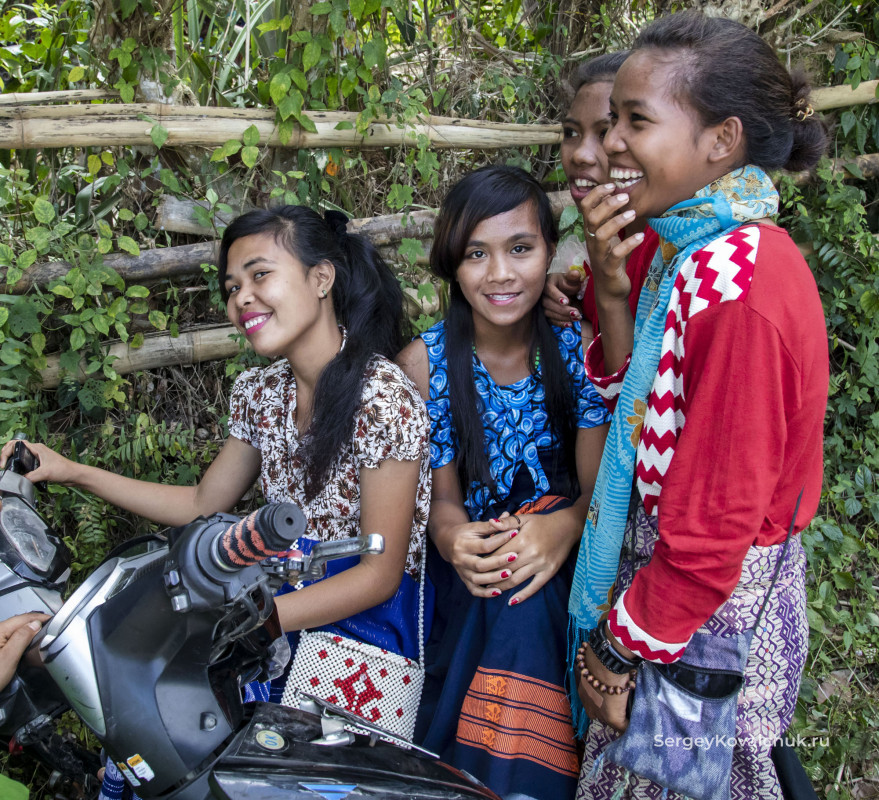
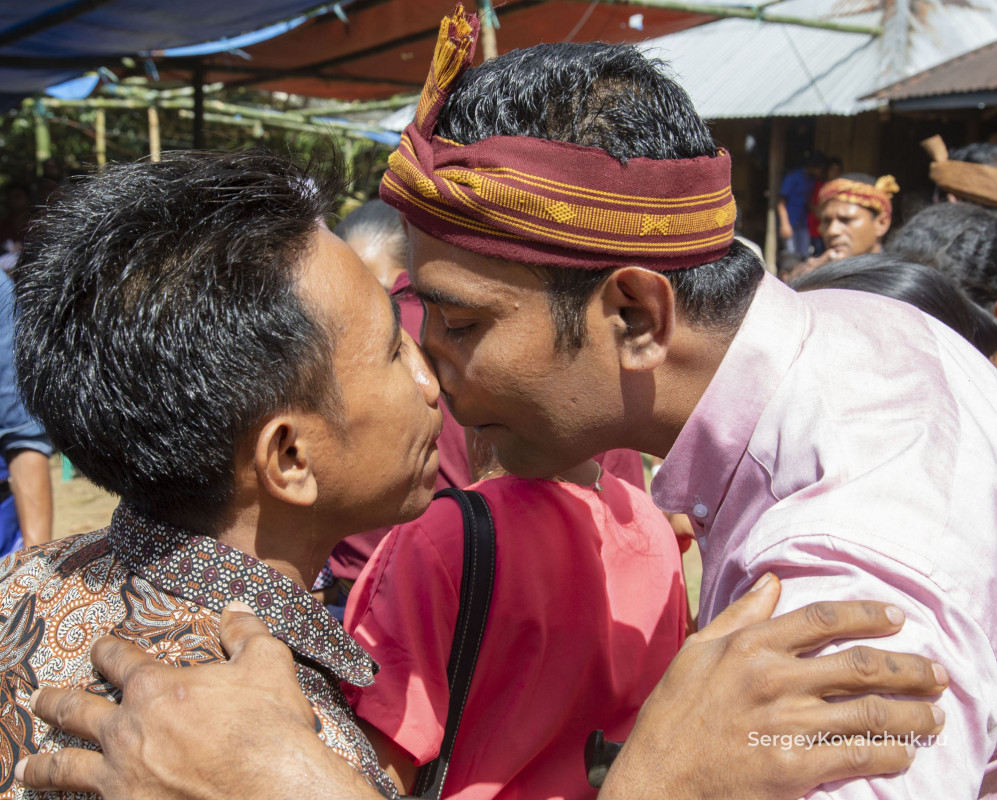
As a greeting, people RUB their noses
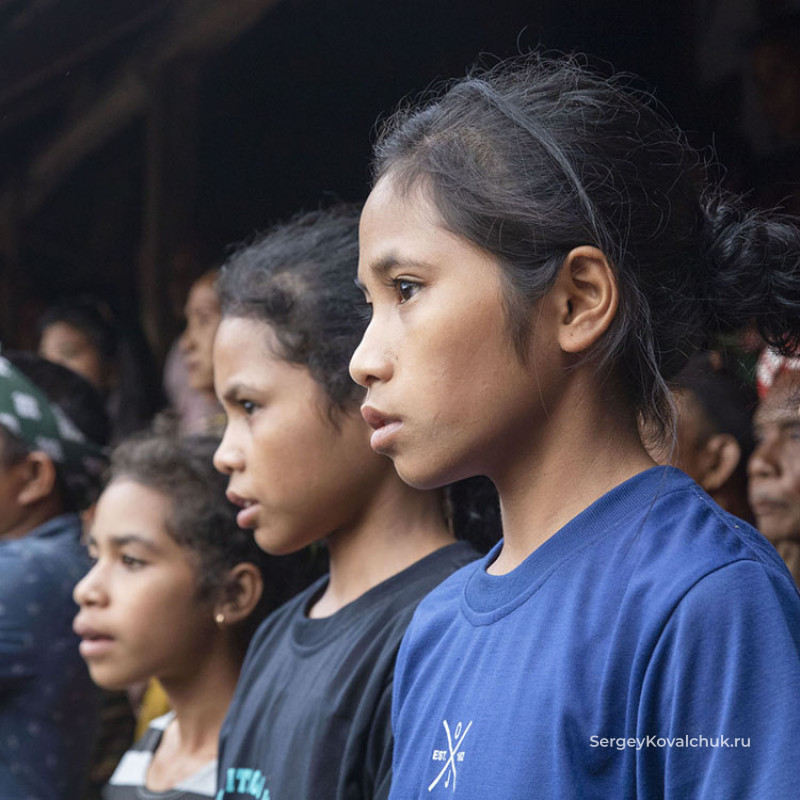
The majority of people on Sumba are Roman Catholics – but this doesn't preclude a fondness for the old beliefs and traditions. The service, conducted by a priest, goes on rather a long time – 30 to 40 minutes. Some of the older guests passed out leaflets with religious texts. They read and declaimed these texts in unison, and prayed. A whole team of women prepared food for the wake, in the courtyard of the house. At a particular moment, they began to feed the assembled guests – who now numbered nearly five hundred people. People formed a chain, and passed out plates of food to those already seated for the funeral. There was food for everyone!

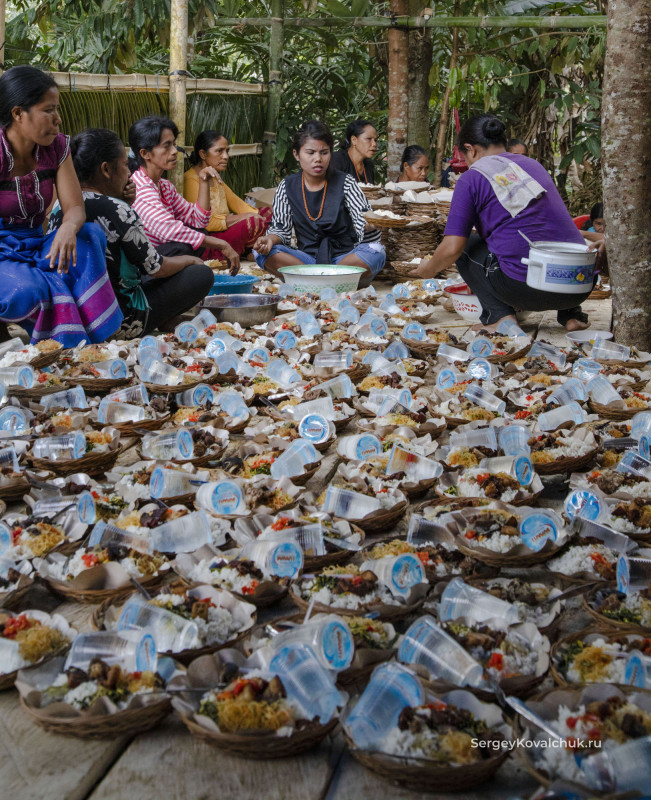
Following the long wait until all the guests had arrived, came the most significant moment of the ceremony – the animal sacrifice. We counted around twenty pigs and twelve buffalo. There was a short pause, while the family discussed how many of each animal should be slaughtered, in what way, and by whom.
The procedure for slaughtering the pigs was not very pleasant. I'd seen all this before. The slaughter of the buffalo was a new experience for me. To begin the ceremony, twelve pigs were brought to a central platform, and slaughtered. People immediately began to scorch the hides of the pigs, using blazing grasses.
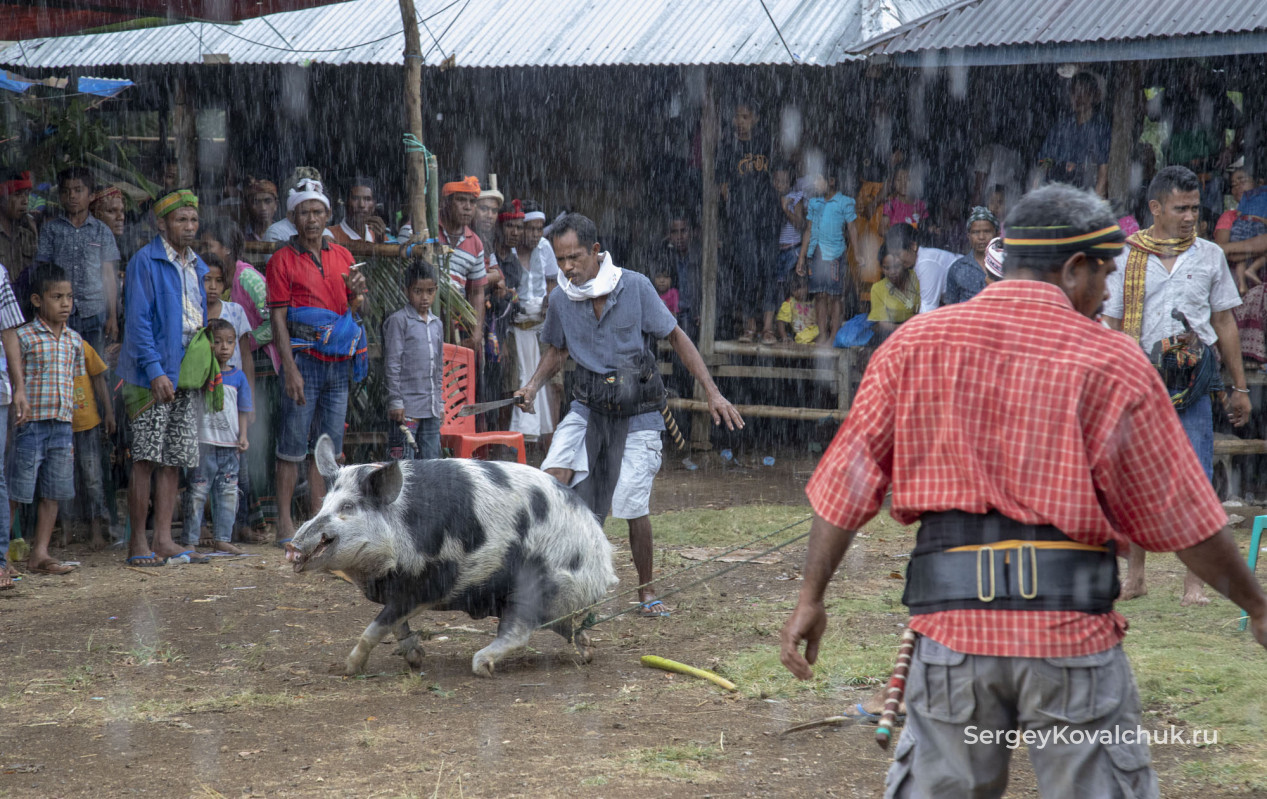
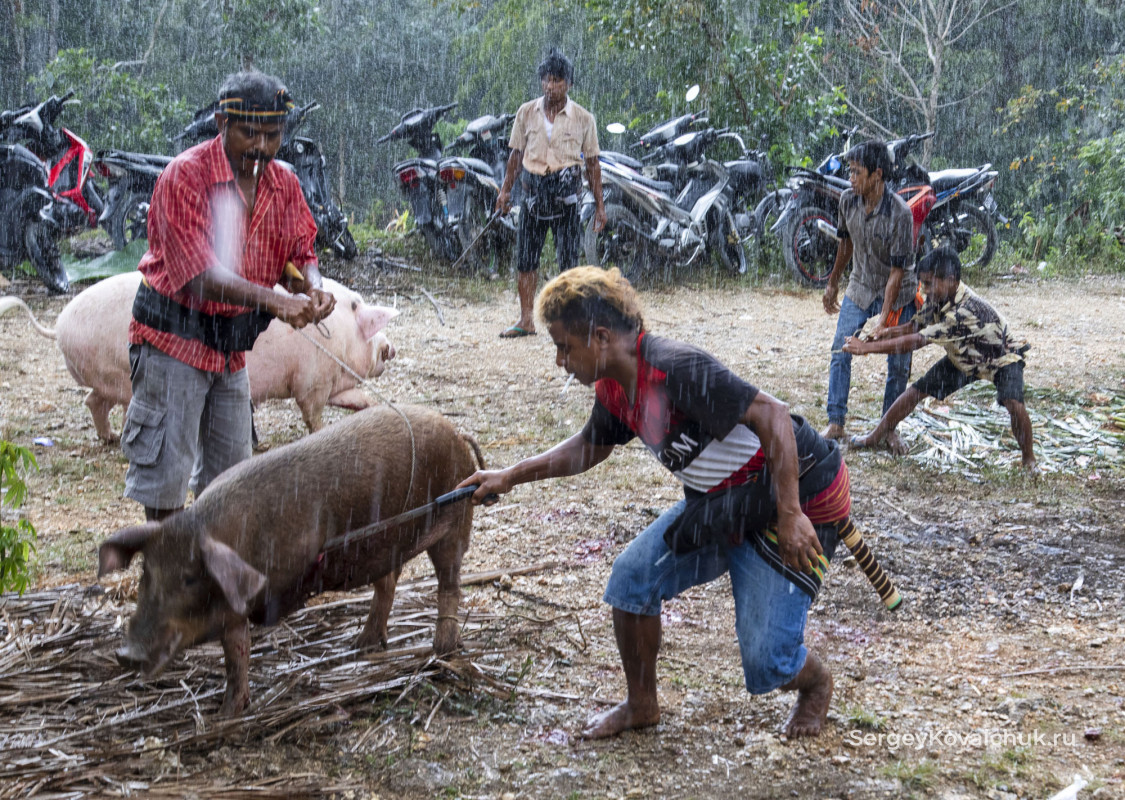

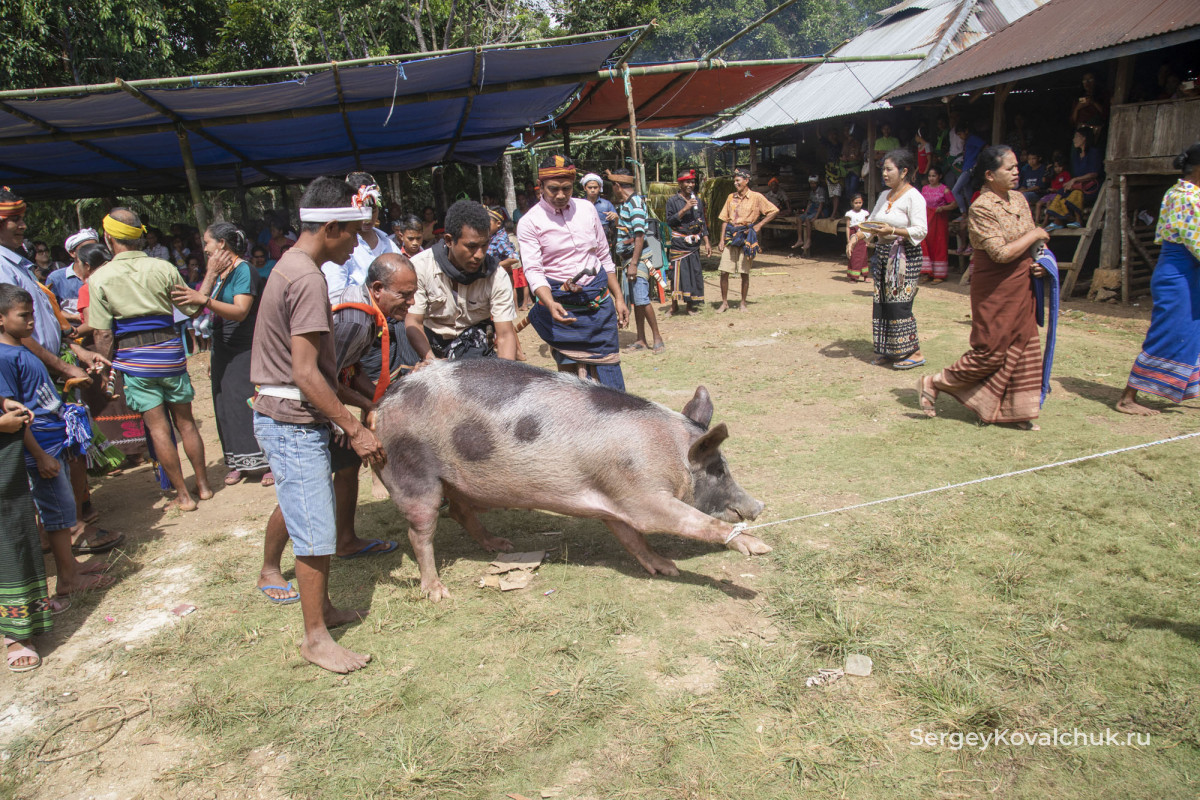
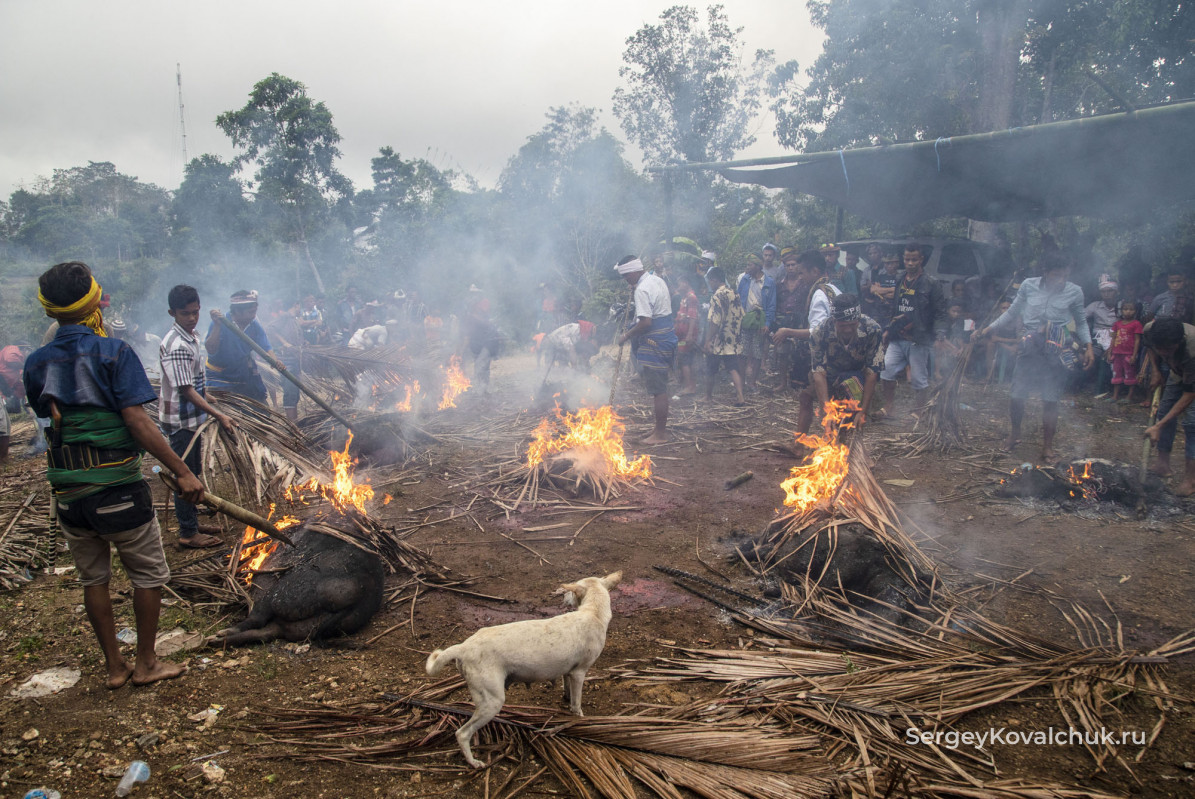
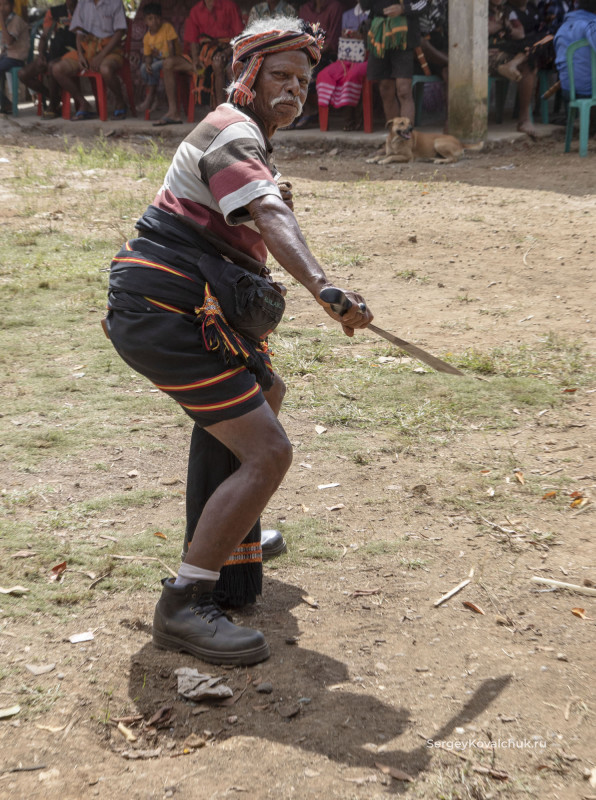
Once they had finished with the pigs, they began with the buffalo, killing them one by one. Two groups of men tethered the buffalo's head with ropes on either side, while one slit its throat with a large knife. Buffalo are strong animals and can withstand a lot – but ultimately they collapsed from the loss of blood. Altogether, five buffalo were slaughtered.
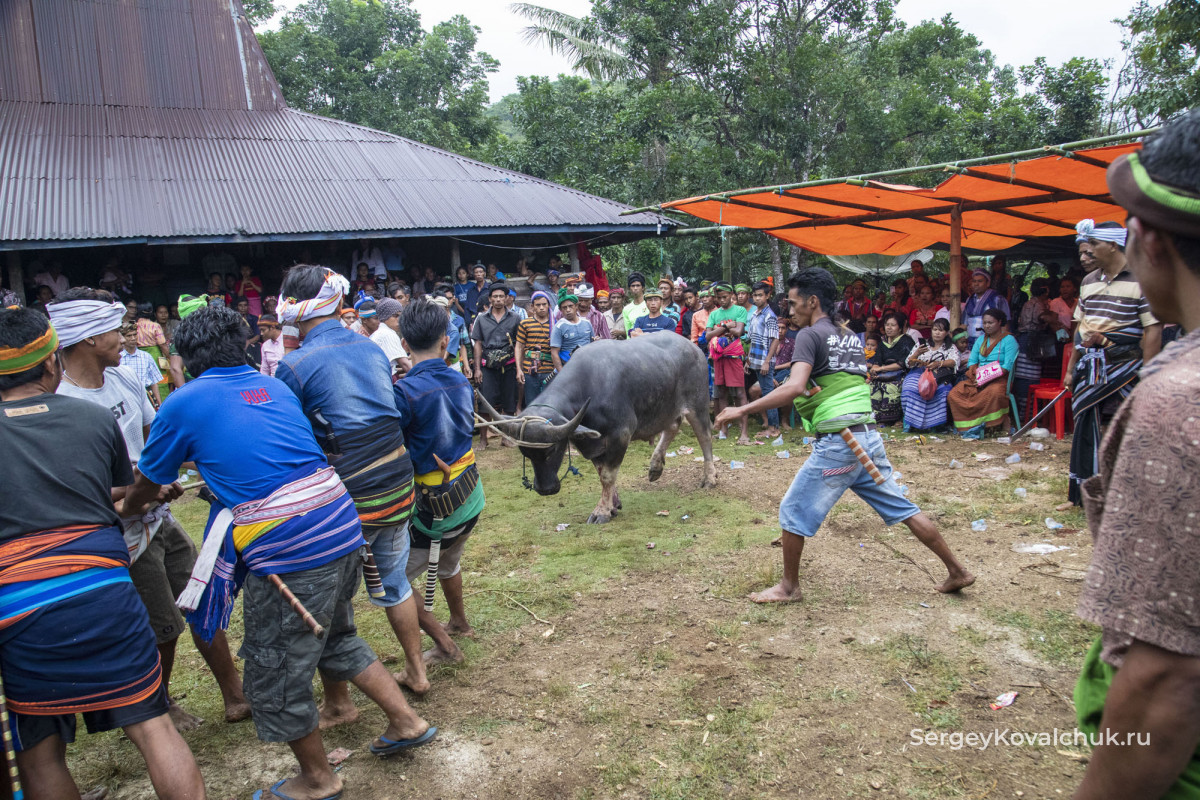


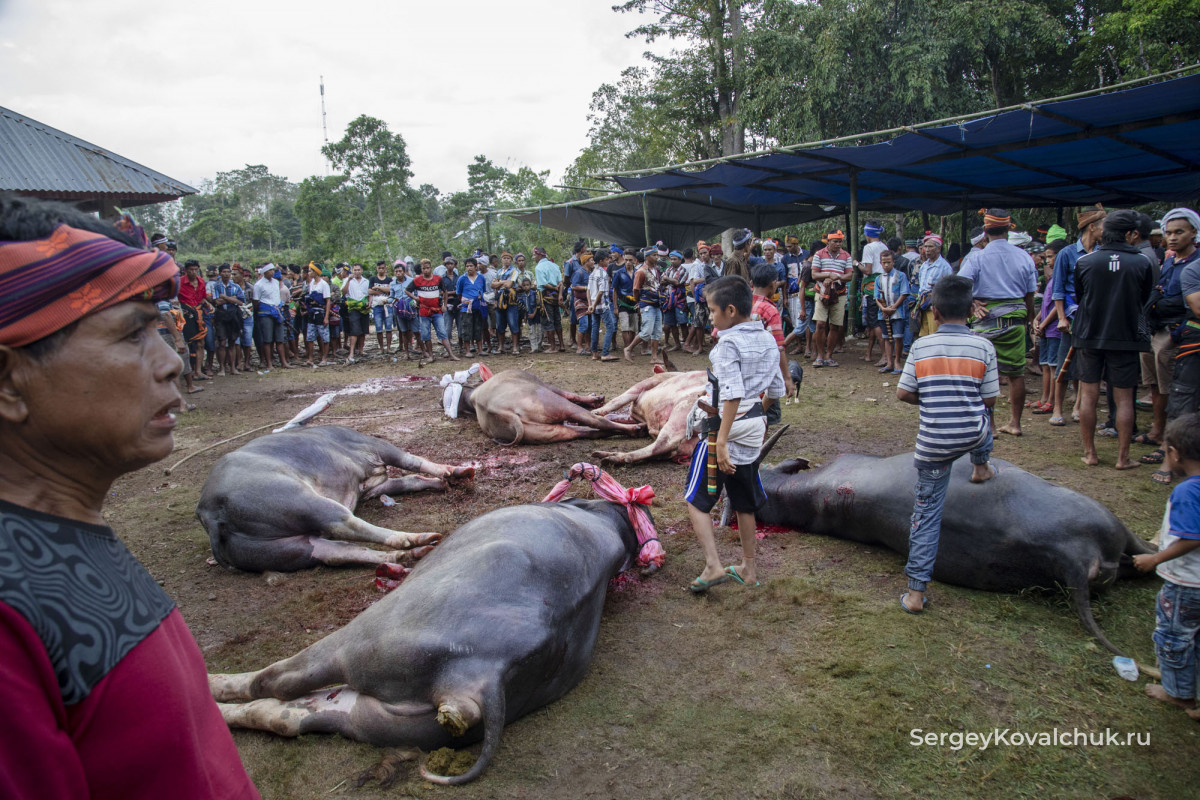
As soon as the animal sacrifice had taken place, the old lady's coffin was brought out of the house. It was carried past the buffalo carcasses, and laid in the concrete sarcophagus in the courtyard. Two people had already created the burial niche in it, for the body. The meat from the sacrificed animals is usually distributed among the guests, with the idea that the whole family should remember the dead during the meal. This is another part of the wake. I also remember the children were jumping around the carcasses of the dead buffaloes. Local people remain unaffected by such scenes, since they are used to them from childhood.
