Traditions of the Dani people
Baliem Valley in Papua Province, New Guinea
The fertile Baliem Valley is home to the Dani People – one of the most famous of the tribes native to the central part of Papua Province. This is largely because tourist visitors who come to these locations can observe the variety of life of Papuan people, who have preserved their traditions since times long gone. In fact, the tribes here lived in complete isolation for a long time – cut off by the remote landscape, in a valley surrounded by high mountains.


Today, the presence of tourists, and airport access at the modern regional centre of Wamena makes it possioble to see this culture, where ancient traditions and rituals continue to be observed.


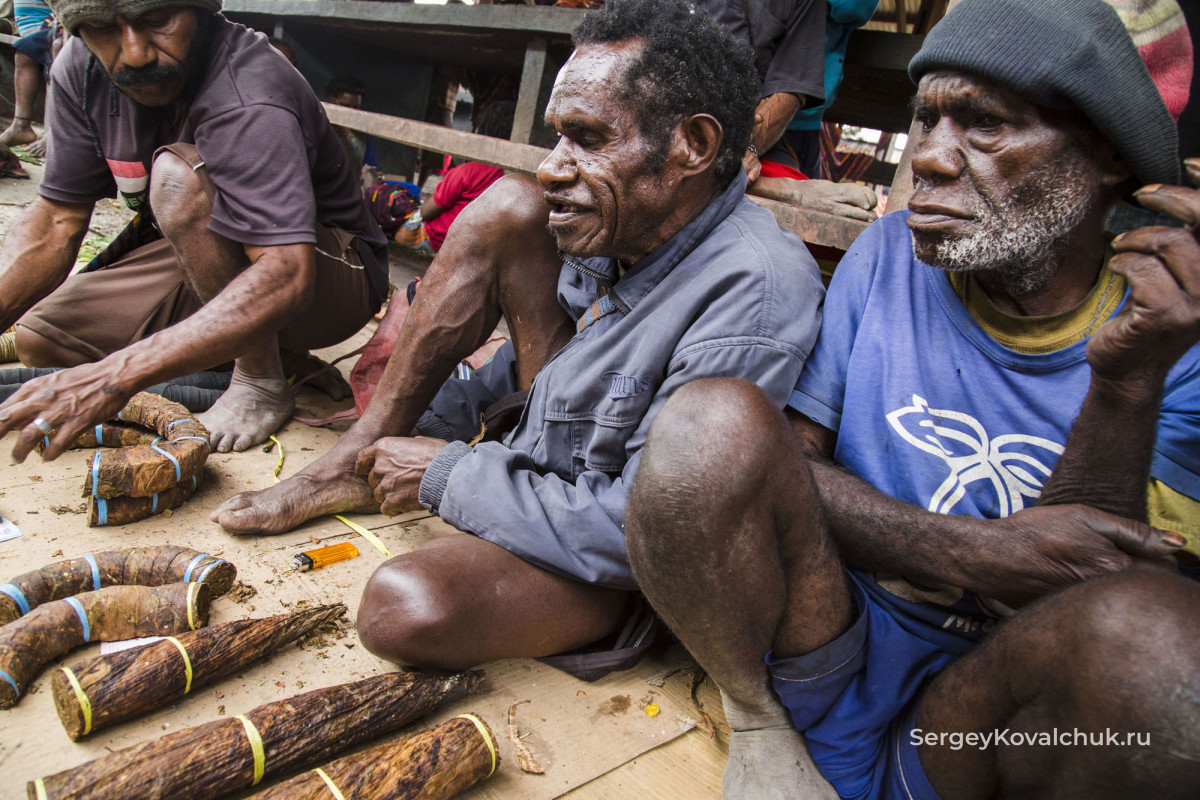
The Dani have often fought amongst themselves, with each tribe defending its arable farmland, and trying to expand its territory. Even today old grudges are remembered, and the tactics of force are used. I was accompanied by a sense of foreboding the whole time I was there – especially when visiting the city market in Wamena, to which villagers from outlying settlements come to sell their wares.



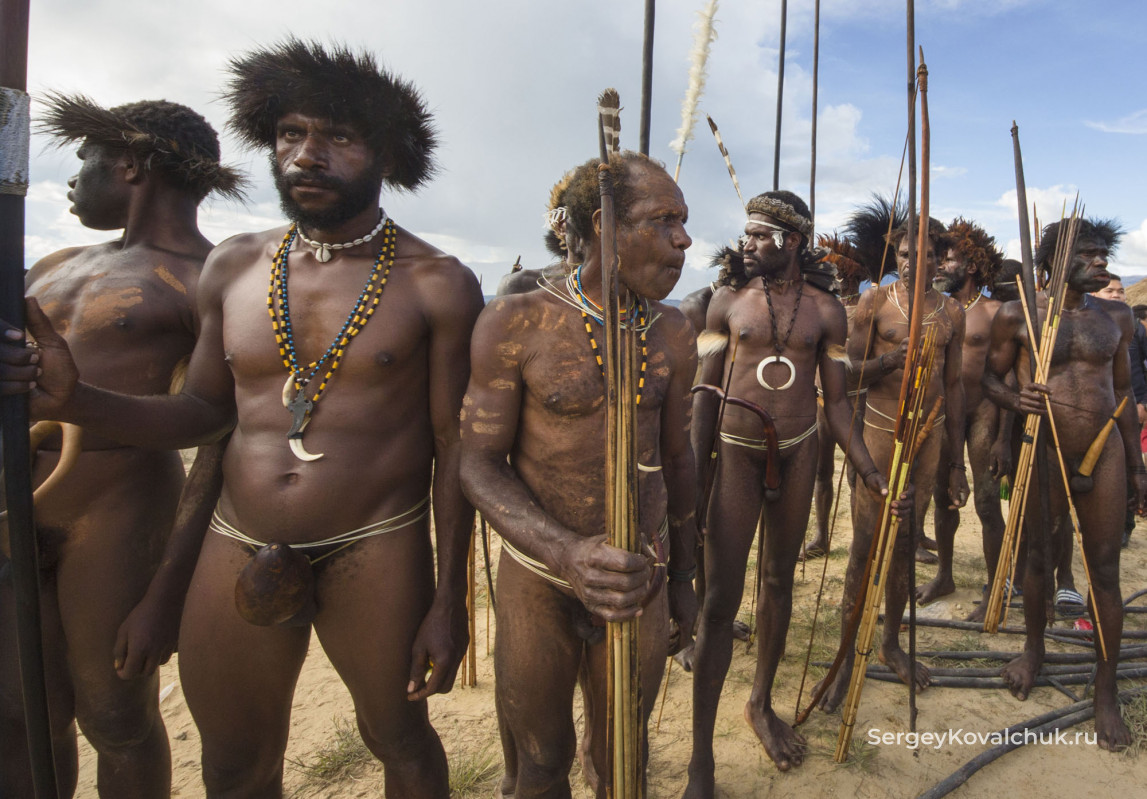
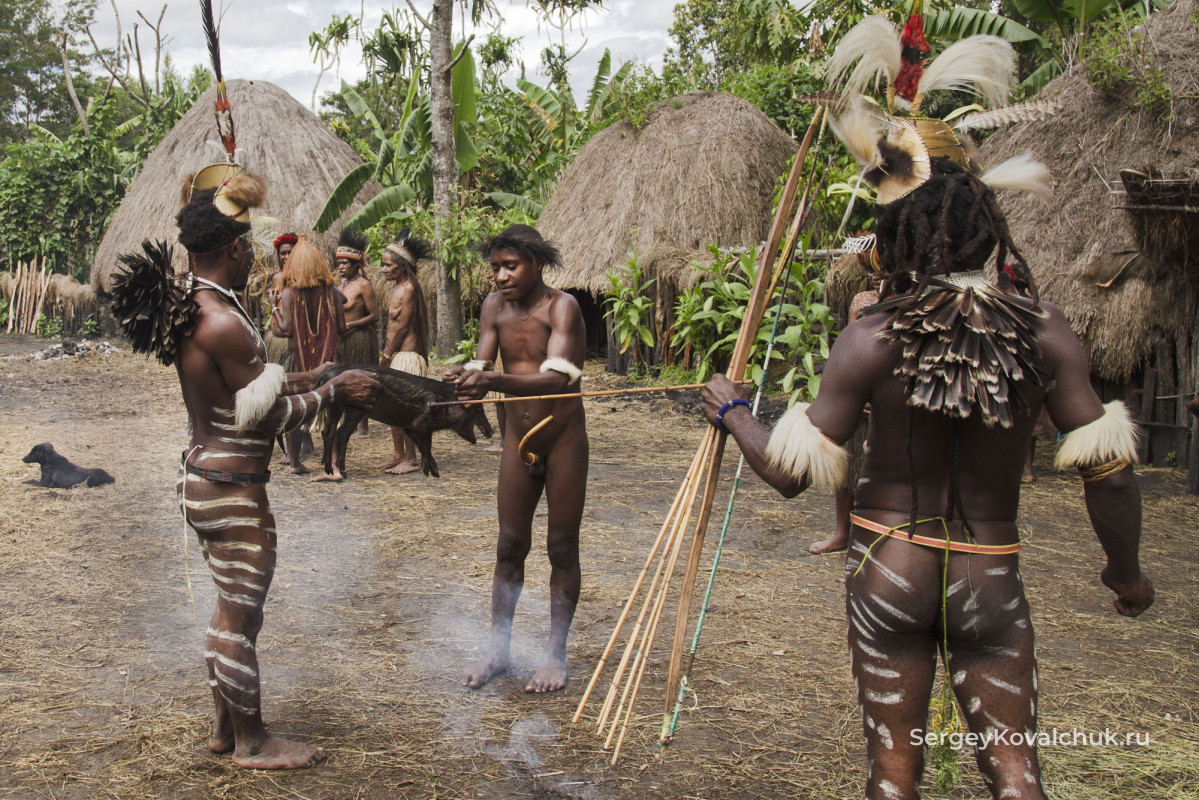
The lifestyle and local costume of the Dani is very unusual. The men most often go naked except for a jockstrap, which is known as a holim in the local language, or koteka in traditional Indonesian. In fact it's made from a long, marro dried pumpkin. It is tied on with string, just below the waist, with a cord slung around the hips, A separate thread holds it out erect, with a thread tied to the front. Special festive kotekas can be decorated with bird-of-paradise feathers, shells, and with pig tusks. Nowadays, this kind of traditional 'dress' is only worn on feast days or ceremonies. Even so, in Baliem village there are still men who habitually walk around wearing only their koteka, although this may be mainly as a way of earning some extra cash posting for tourist photographs.


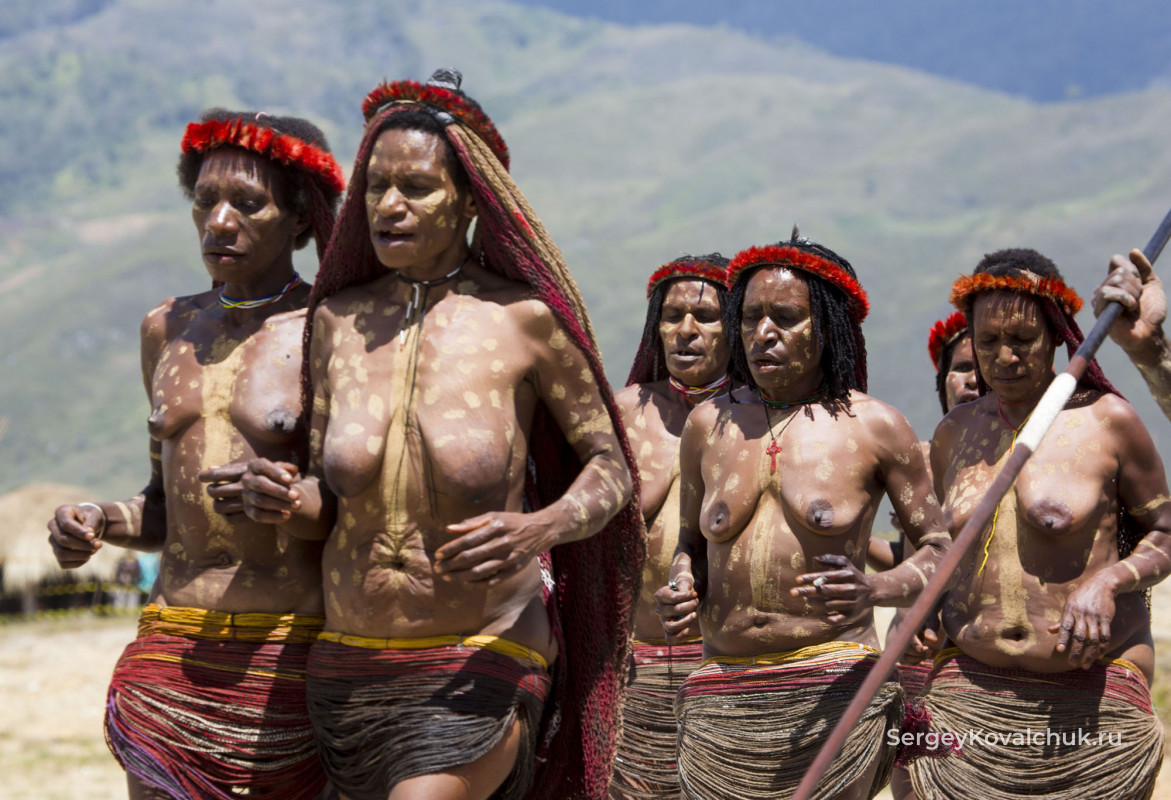
Dani women wear skirts, woven from natural plant materials. These can be downward-hanging sago-tree leaves, slung from a belt - or collected into rows, and wrapped around the thighs with cord. Women might also wear handbands, long amulets made of beads, and wear body-paint on their face and body.


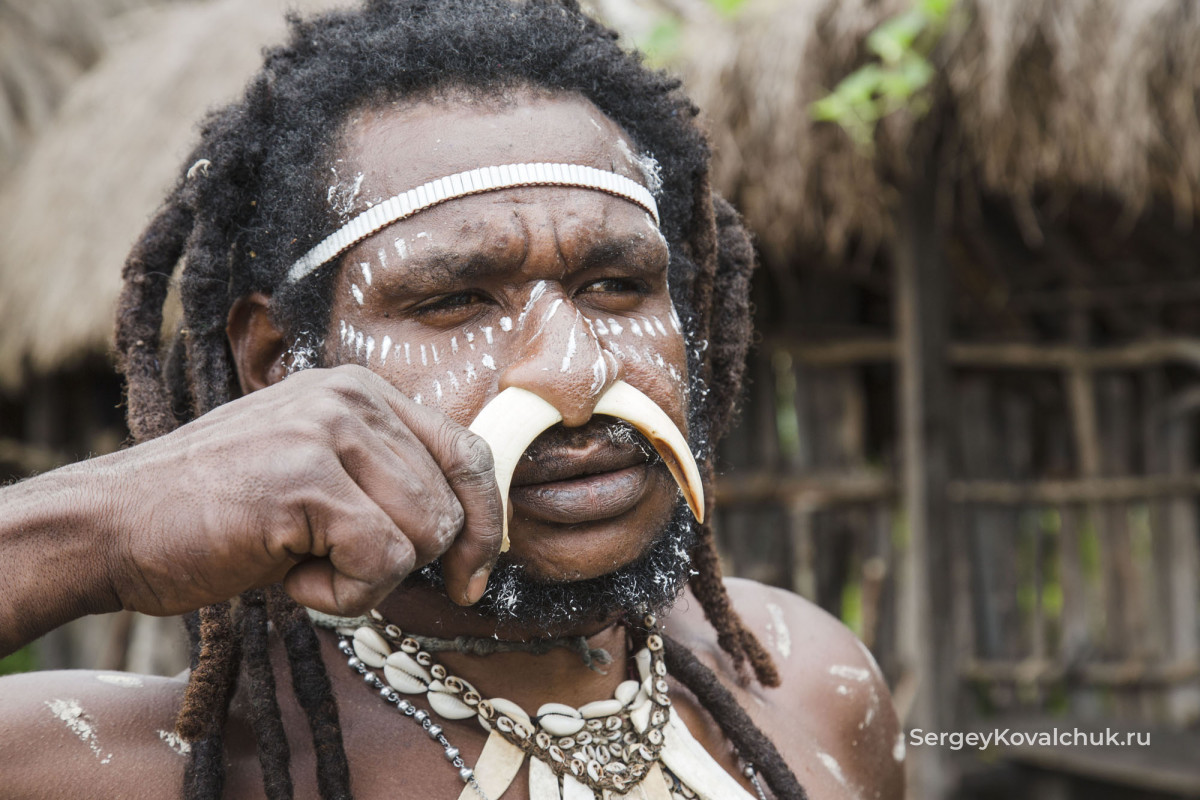
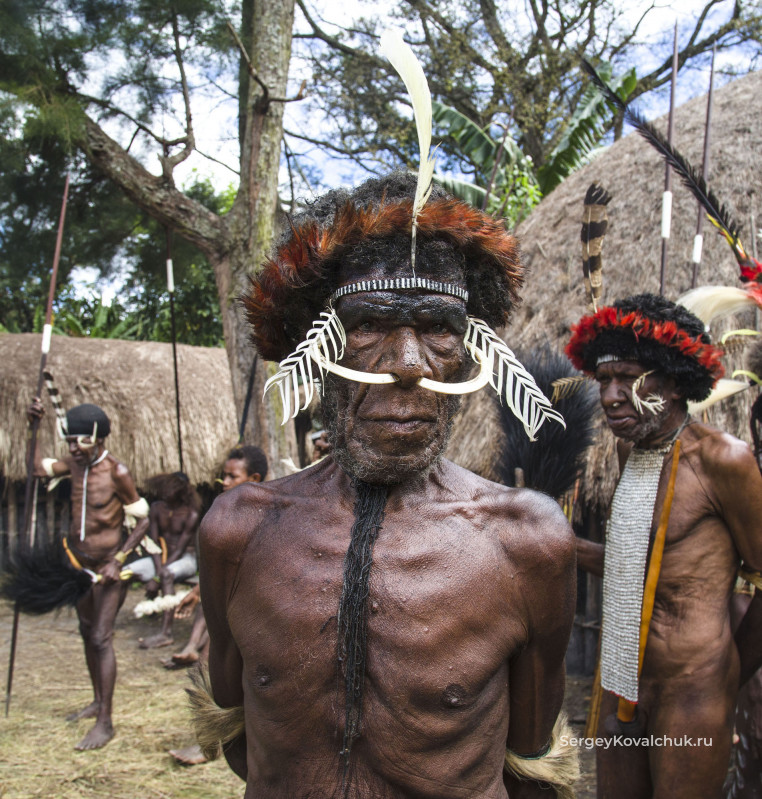
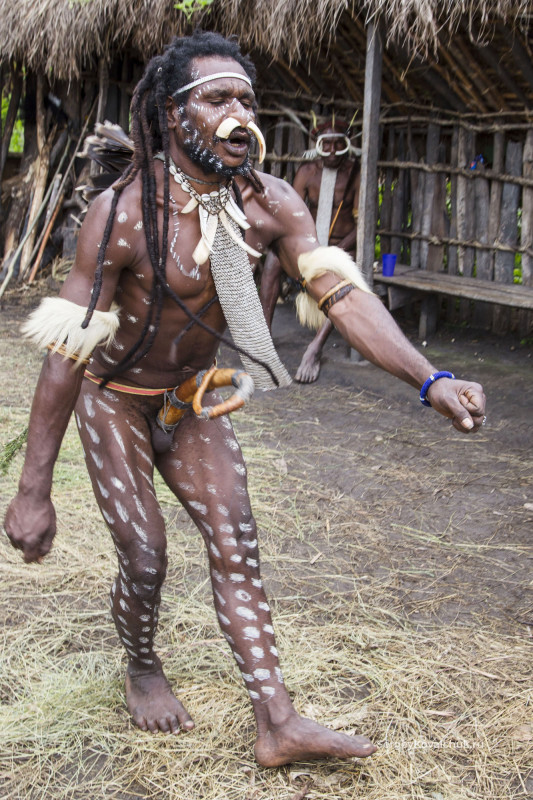
Dani men also decorate themselves during festivals, with feathers, animal hides, and animal tusks – as well as painting their faces with different patterns. The son of a village chief in Baliem Valley showed how to put on a traditional nose decoration.



During festive ceremonies, and also specially for tourists, the Dani people display some rituals which have come down from long ago. One of these, which was once of great importance, is the skill of getting a fire going by rubbing sticks together. It has to be said that the fire soon got started – it only took a few minutes for it to light.






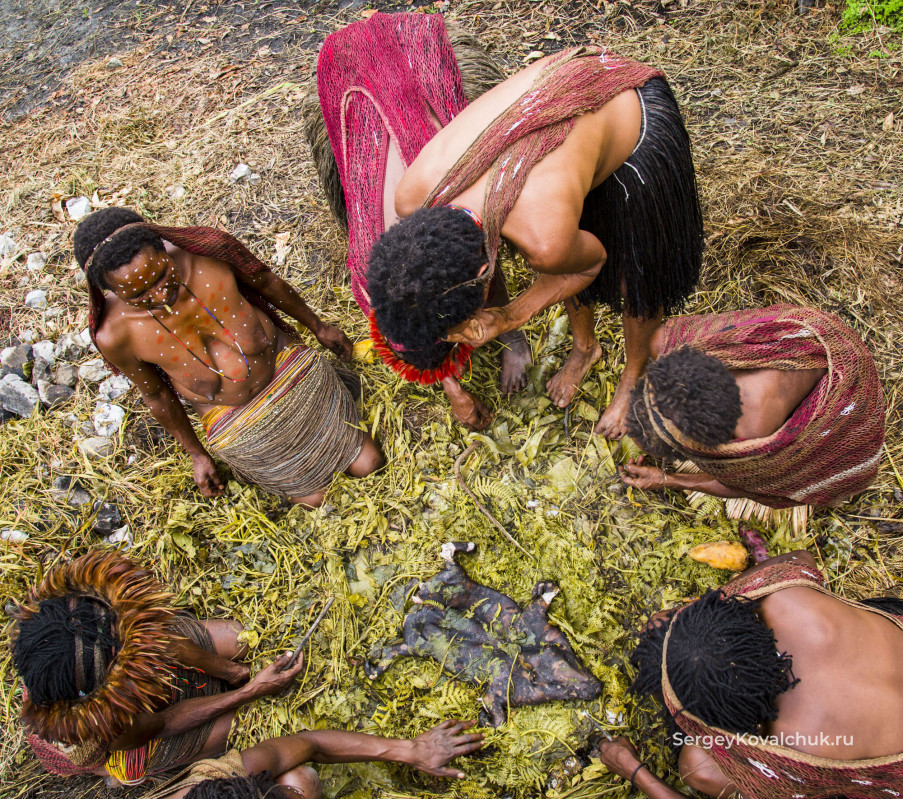
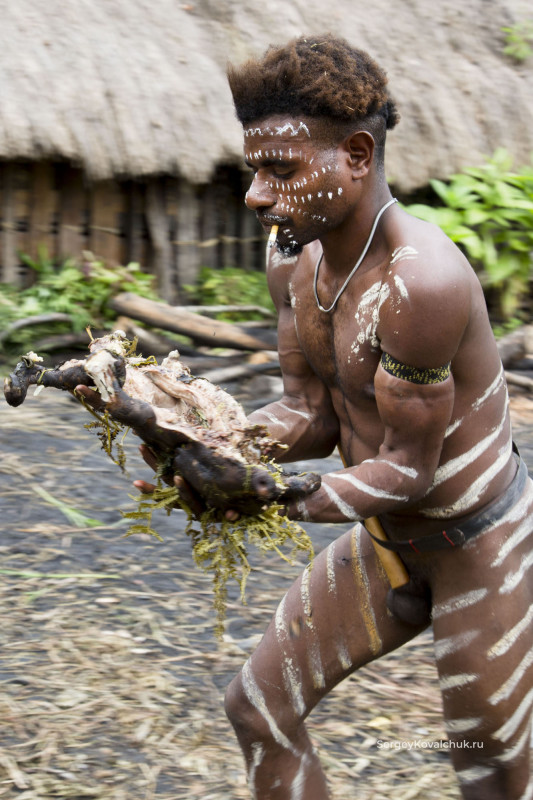
Another tradition about the Papuan Islanders, is the art of preparing and cooking a young sucking pig for the table. This process imitates an ancient ritual performed by hunters after a successful hunt. They pierce the piglet with an arrow, as though it has just been hunted in the forest – and then they roast the whole pig carcass over glowing coals.



The cooking fire is lit under a pile of special stones. Once it is burning nicely, they lay out the sucking pig with vegetables and herbs, and wrap it in large palm leaves. The whole 'oven' is insulated with straw. After an hour-and-a-half the stones are taken down, and the food is ready to eat. The cooked pork is shared out among all the villagers, and even the dogs get to pick over the bones.