Mentawai – life in the tropical rainforest
The Mentawai Islands
The Mentawai Islands are a chain of islands along the west coast of Sumatra. Visitors can reach the largest island, Siberut, on a three-and-a-half hour trip by express boat from Sumatra, or in ten or eleven hours on a standard boat. The inhabitants are the Mentawans, who number around 64,000 people. A part of the population still lives in the tropical rainforest, leading a hunter-gatherer lifestyle. There are neither roads nor electricity in the jungle, and local people follow traditional lifestyles, keeping animals and so on. Over recent decades the Indonesian government has attempted to resettle people from the rainforest, moving them to modern settlements which offer medical services and education for children.


Settlements on the Mentawai Islands are usually located beside rivers, and generally consist of several houses. Mentawans live in large, extended families. Each village has its own, hereditary shaman – whom villagers trust as their intermediary with the ancestral spirits and jungle deities – on whom, they believe, the prosperity of their clan depends.


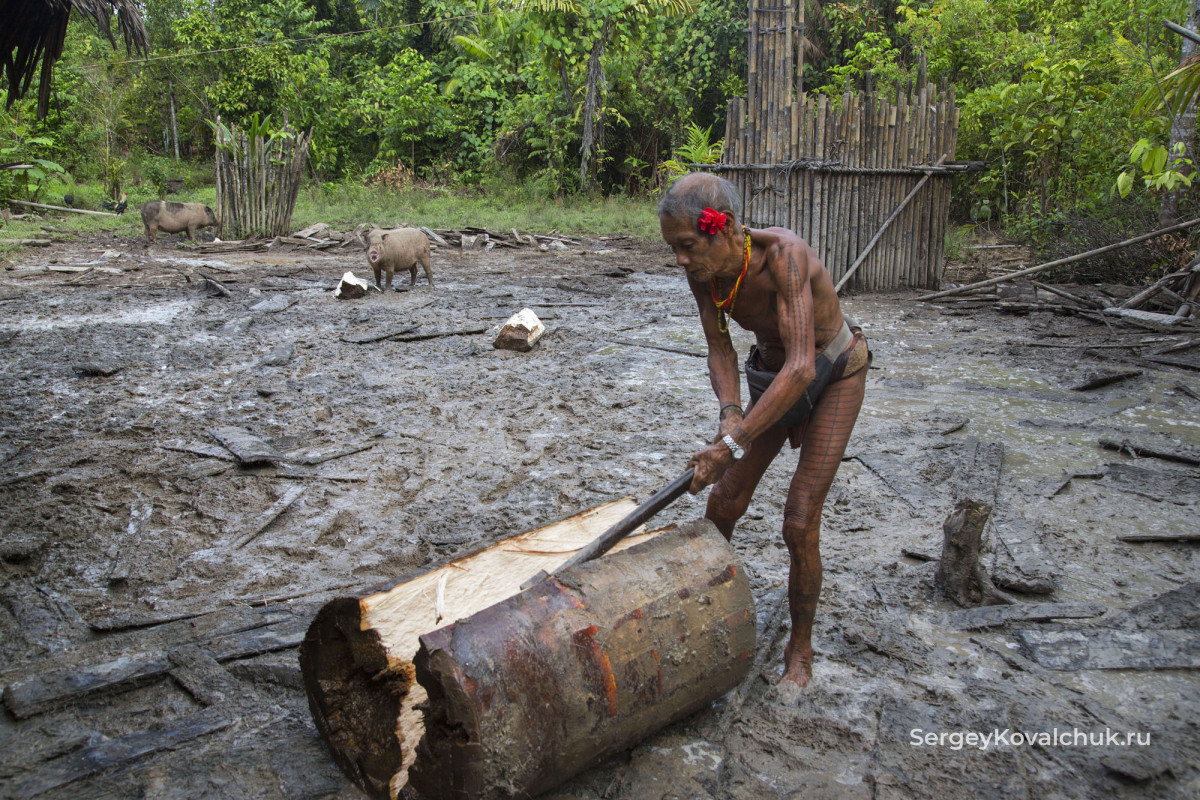
The basis of their daily diet is sago – which comes from sago-trees, a variety of palm. The animals eat sago too. They cut down the tree, strip the branches, and split the trunk into easily-managed sections for transportation. The trickiest part is manhandling the trunk sections over wooden rollers, up to the water's edge. I watched them cut down this sago tree, around three hundred metres from where I was staying. The trunk is hacked into smaller sections, to reveal its soft core. The animal fodder is ready.



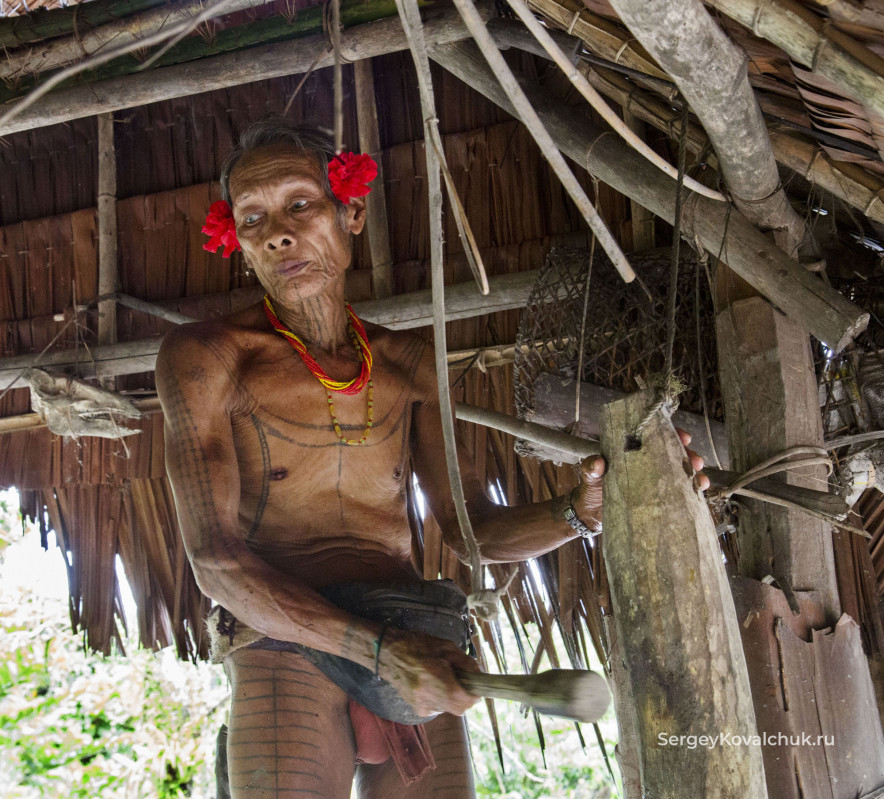
The domesticated pigs forage in the woods, but are summoned for their feeding time by banging a wooden log, which is hung from an outside beam of the house.
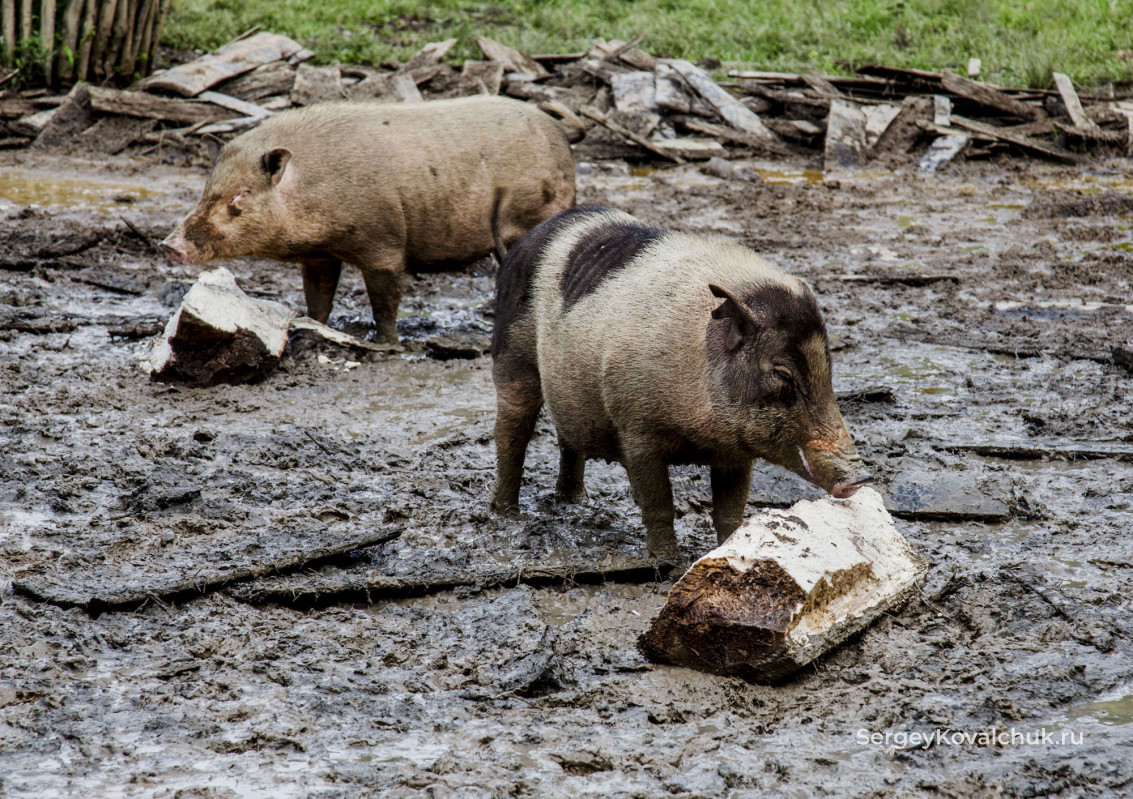
The pigs and chickens chow down on the sago with great pleasure.
To cook sago for human consumption, the soft core is first soaked and crushed, so as to wash out the excessive starch it contains, and make it more edible. Bamboo tubing is used to duct the starch out. Once the sago is dried, it's ground into a flour or cereal, from which numerous different dishes are made. Here we see one popular recipe, in which dough made from sago flour is wrapped in leaves, then baked over the fire. The taste is similar to baked potatoes. People here also dry and smoke local leaves, since there is no tobacco grown on the Mentawai Islands.


Traditionally Mentawan men wore a loincloth, from a fabric made from tropical tree bark. The bark is sliced off the tree, torn into long strips – then beaten to soften it, and washed in water. After the softening is completed by hand, a fibrous textile is obtained – and this is used to make clothes.


These women are fishing in the river. Their main catch are river shellfish, and small fish. They spread out a small net along the riverbank, and they keep their catch in a bamboo basket. It may be small-scale, but it's a valuable catch for them


Every home – even those which are under the administration of state regional authorities – has hunting gear. You can see skulls and bones of monkeys, bears, and other animals. Traditionally the Mentawans hunted with bow-and-arrow. I'm not sure how often they are used, but every home has bows on display. There are a great many wild boar in the forest – and the land has been turned-over.

You can see skulls and bones of monkeys, bears, and other animals.


There are two kinds of arrow – thin arrows with sharp tips for birds, and triangular-tipped arrows for hunting game. The arrow-tips are poisoned.

Wild Pepper is one ingredient of the poison, which is brushed on in several coats over the arrow-tips.