Dayak long houses
West Kalimantan
'Dayak' is a generic term for the whole group of native peoples of Kalimantan Island (Borneo). Over 200 different ethnic groups are part of the Dayak nation – all with their own languages and cultures. Dayaks are found not only in Indonesia, but also in adjacent regions of Brunei and Malaysia. In the quite recent past they had a fierce reputation, and were known as head-hunters – a practice which is now outlawed.
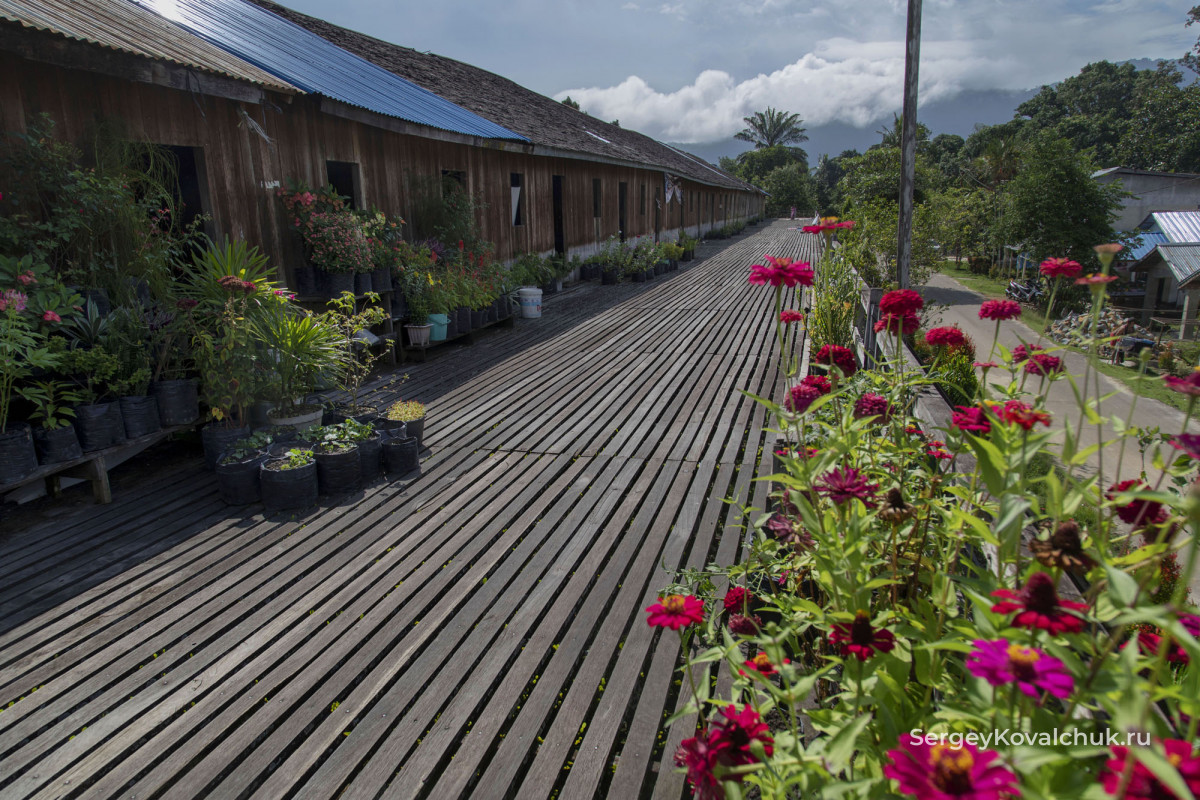
Traditional Dayak dwellings are called rumah panjang or rumah betang – both of which mean kins of long-house. These are community houses for extended families, and were once a very typical kind of dwelling in Indonesia. Today, however, there are fewer such long-houses. The one I was able to visit is located a good way from the town of Pontianak – the regional centre of West Kalimantan.

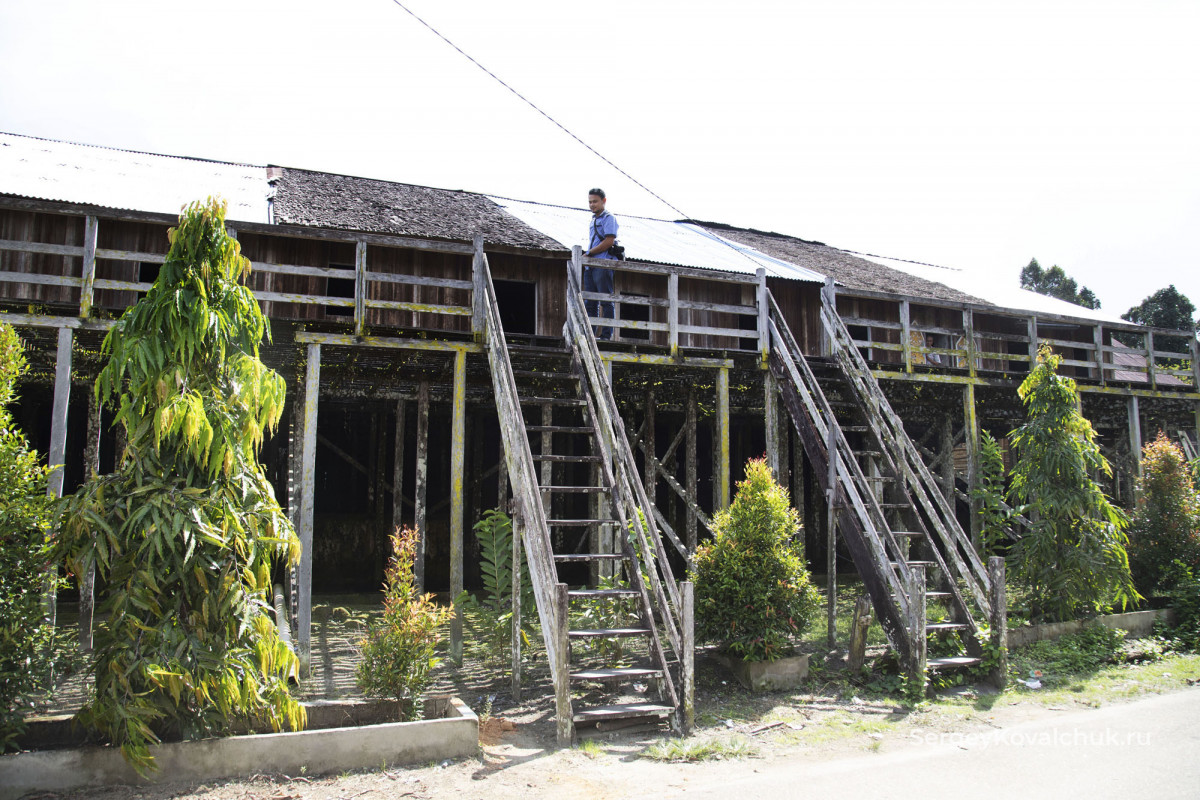
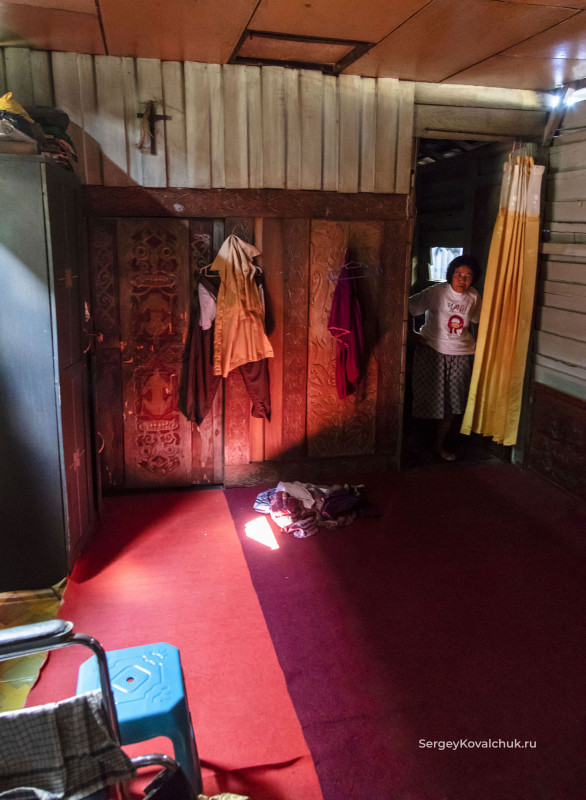
A long-house is a large residential home for an extended family, with a shared-area corridor from which doors lead to all the rooms. The long-house I visited was over 100 years old, and has 35 rooms – in which up to 135 people live. Every long-house has a second exit on the other side, leading to the veranda.


Every long-house has a second exit on the other side, leading to the veranda.
Each family has its own small balcony, with a little garden.


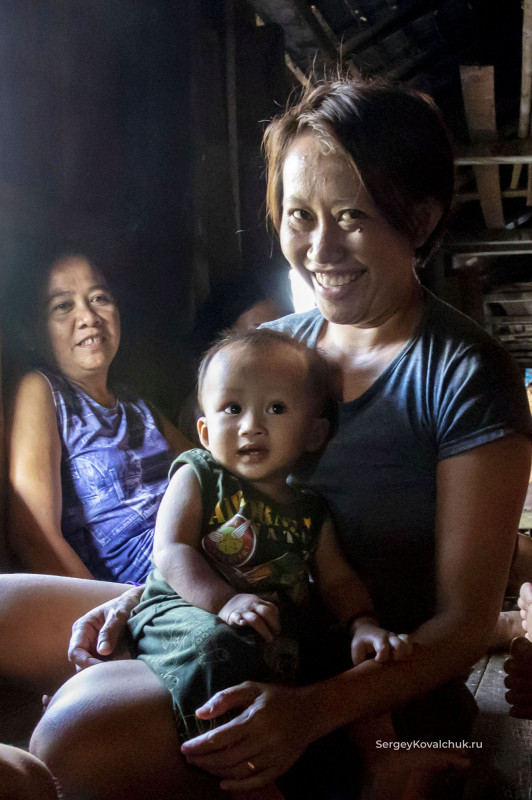
In the rather broad shared-area corridor there are columns of very durable timber – and community life is bustling there. There are groups of men, women, and teenagers, all chatting between each other. There's even a small cafe. People cook over an open fire here, but the rooms have their own water supply – laid-on at state expense. Even so, people told me that people are gradually moving out of such communal living spaces, and moving to more conventional houses.
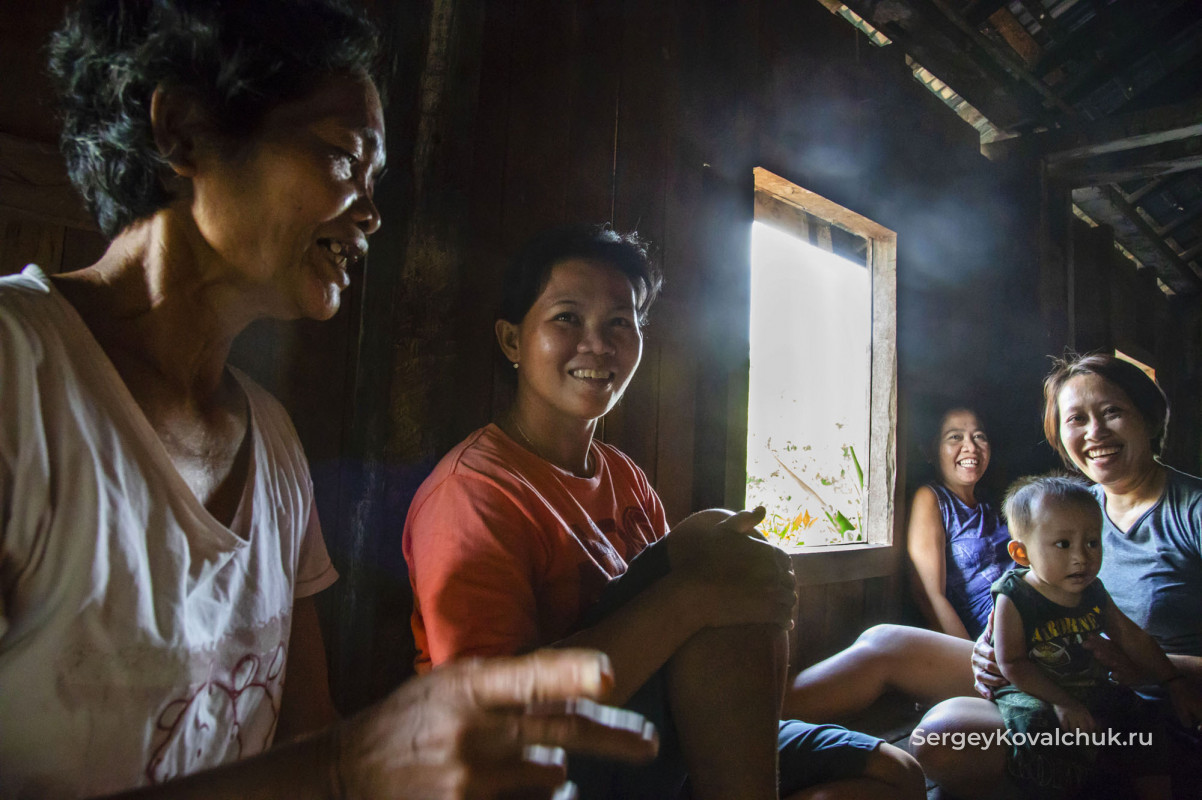




People cook over an open fire here, but the rooms have their own water supply – laid-on at state expense.

